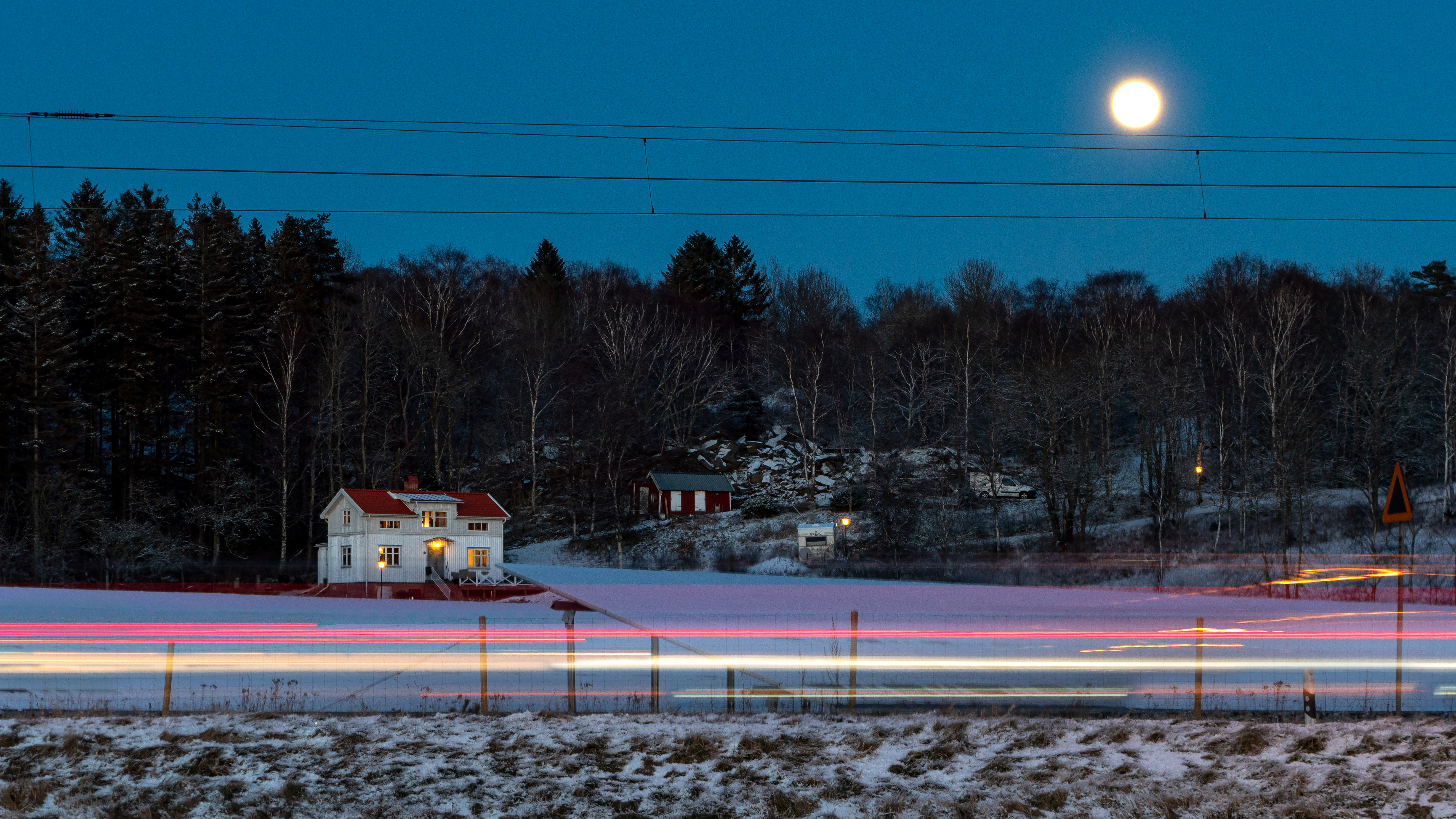
The smell of rain on dry ground has a name with a divine streak. Petrichor joins the Greek words for stone and ichor, the golden fluid said to run in the veins of the gods, and it was coined by two Australian chemists in a March 1964 paper in Nature titled Nature of Argillaceous Odour.
Isabel Joy Bear and Richard Grenfell Thomas were chasing something people had noticed for millennia. Wikipedia's petrichor entry notes that the Roman naturalist Pliny the Elder praised the sweet scent of earth when rain ends a long drought, and that French chemists tried and failed to pin down its chemistry in 1891.
Where the scent comes from
Bear and Thomas distilled rocks that had sat in warm, dry conditions and got an oily, fragrant extract. Their idea: during dry spells, plant-derived oils and other organic compounds soak into the pores of rock and clay, then water pushes them out.
That is only half the recipe. Soil bacteria, especially Streptomyces, make an earthy compound called geosmin, isolated in 1965, along with a cousin, 2-methylisoborneol. The human nose is startlingly tuned to geosmin; reviews cited on Wikipedia put the detection limit as low as several parts per trillion.
How the smell gets into the air
For half a century, nobody had filmed the delivery system. Then MIT mechanical engineer Cullen R. Buie and postdoc Youngsoo Joung pointed high-speed cameras at single drops hitting soil, work they published in a January 2015 study in Nature Communications.
What they saw looked like a glass of champagne. A raindrop hitting a porous surface traps tiny air bubbles, which race up through the drop and burst out in a fizz of aerosols. MIT's announcement of the study says the pair ran roughly 600 experiments across 28 surfaces, 12 engineered materials and 16 soils, some scooped from the campus and the banks of the Charles River.
The twist: light and moderate rain threw off far more aerosols than heavy downpours, which hit too fast for bubbles to form. That fits the everyday sense that the smell is strongest after a gentle shower on dry ground.
"It's a very common phenomenon, and it was intriguing to us that no one had observed this mechanism before," Buie said. On the petrichor link he was careful: "One hypothesis we have is that that smell comes from this mechanism we've discovered."
The numbers, lined up
- 1891: French chemists extract an odorous substance from soil but cannot identify it.
- 1964: Bear and Thomas name petrichor in Nature.
- 1965: geosmin is isolated from soil bacteria.
- 2015: MIT films raindrops launching aerosols, 51 years after the word was coined.
Limits
The MIT team proposed the bubbles as a likely route for the scent; the experiments tracked aerosols and dye, not smell molecules themselves. And petrichor is a blend of substances rather than one chemical, so its exact mix shifts with soil, plants and weather.
Smell science has a dark side too, from the corpse flower that heats itself to spread its stench to the single enzyme that makes onions bring tears. Bear and Thomas followed up in 1965 with a finding gardeners might not expect: the same oily extracts slowed the germination of several kinds of seeds.
Sources
- "Nature of Argillaceous Odour", Nature, 1964
- "Aerosol generation by raindrop impact on soil", Nature Communications, 2015
- "Rainfall can release aerosols, study finds", Massachusetts Institute of Technology, 2015
- "Petrichor", Wikipedia, 2026
Image: oatsy40, CC BY 2.0 via Wikimedia Commons
This article was produced with AI assistance and reviewed by our Editorial Desk. How we work.