A clip billed as the world’s biggest human catapult shot to the top of two Reddit boards this week, with one post saying a rider was fired 100.36 meters (329 feet) straight up. If that number holds, it would beat the height Guinness World Records lists for a reverse bungee launch by more than 30 meters.
That “if” matters. As of Tuesday, Guinness World Records’ own entry for the highest reverse bungee jump still shows 70 meters (229 feet 7 inches), set by actor David Hasselhoff at Battersea Power Station in London on June 30, 2011. We could not find a record page, certificate or statement from any organizer confirming 100.36 meters, and the Reddit posts themselves could not be opened for this story. Treat the new figure as a claim for now.
What a human catapult actually is
The ride in these clips is usually a reverse bungee, also sold under names like slingshot, catapult bungee or ejection seat. Two tall towers hold a pair of stretched elastic cords. The cords run down to an open steel ball with seats for two, which is clamped to the ground by an electromagnet. Switch the magnet off and the ball flies upward, with riders feeling somewhere around 3 to 5 g.
Standard models reach roughly 50 to 80 meters. Some permanent park versions go much higher. A SlingShot at Cedar Point in Ohio is listed at 360 feet (109.7 meters), and one at ICON Park in Orlando is said to pass 390 feet (118.9 meters), though that figure is described as unconfirmed.
How the numbers compare
Here is the 100.36-meter claim set against the other launch heights on record:
- Water blob launch: 28.22 meters (92.58 feet), set in Brunnen, Switzerland, on August 9, 2026, by flyer Robin Steiner with Luc Siegenthaler, Lennart Florczak and Tristan Kuhn, who jumped on the other end of the airbag.
- Reverse bungee record listed by Guinness: 70 meters, David Hasselhoff, London, 2011.
- The viral claim: 100.36 meters, about 43% higher than the listed reverse bungee mark.
The working for that last figure: 100.36 minus 70 is 30.36 meters, and 30.36 divided by 70 is 0.434, or roughly 43%. In everyday terms, 100.36 meters is close to the height of a 30-story building, assuming about 3.3 meters a floor.
Why a record and a ride height are not the same thing
Park rides publish how high the towers or the cars reach, but a Guinness title needs an attempt measured under the organization’s own rules and then approved. A clip can show a huge launch without anyone having filed the paperwork. That gap explains why a rider can go higher than 70 meters on a fairground tower without the listed record changing.
The blob record shows how quickly Guinness pages do update once a claim is approved: the Swiss team’s August 9 jump is already on the site with names, place and date.
What to look for next
If the 100.36-meter launch was a formal attempt, the clearest proof will be a new Guinness entry replacing Hasselhoff’s 70-meter line. Until then, the confirmed number is 70.
Further reading
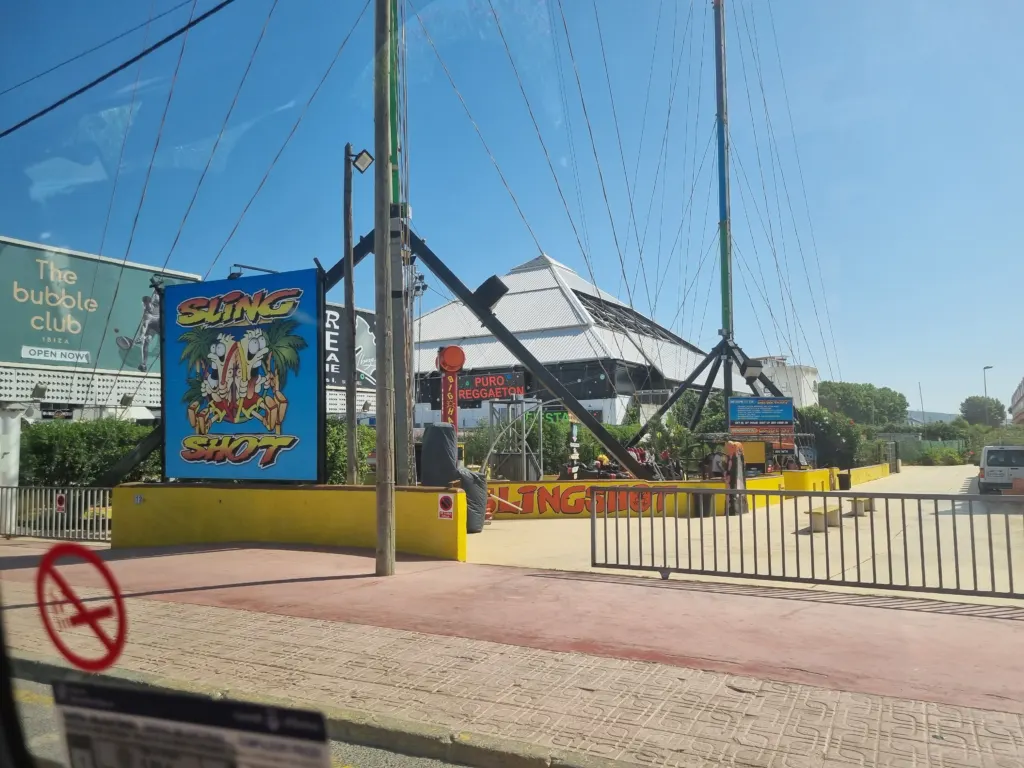
Illustrative image. Image: Captain Galaxy, CC BY 4.0 via Wikimedia Commons
This article was produced with AI assistance and reviewed by our Editorial Desk. How we work.