A University of Sussex experiment found that women picked the composer of more complex music as a short-term partner only at the most fertile point of their cycle, and showed no such pull when choosing someone for a committed relationship. It is one of the few lab results that sits underneath the viral lists of "hobbies women find attractive."
Those lists usually name the same handful of pastimes: playing an instrument, cooking, volunteering, making people laugh. Science has tested a few of them directly. Below, the papers' actual findings, and the spots where the internet runs ahead of the data.
Music: Darwin's oldest bet
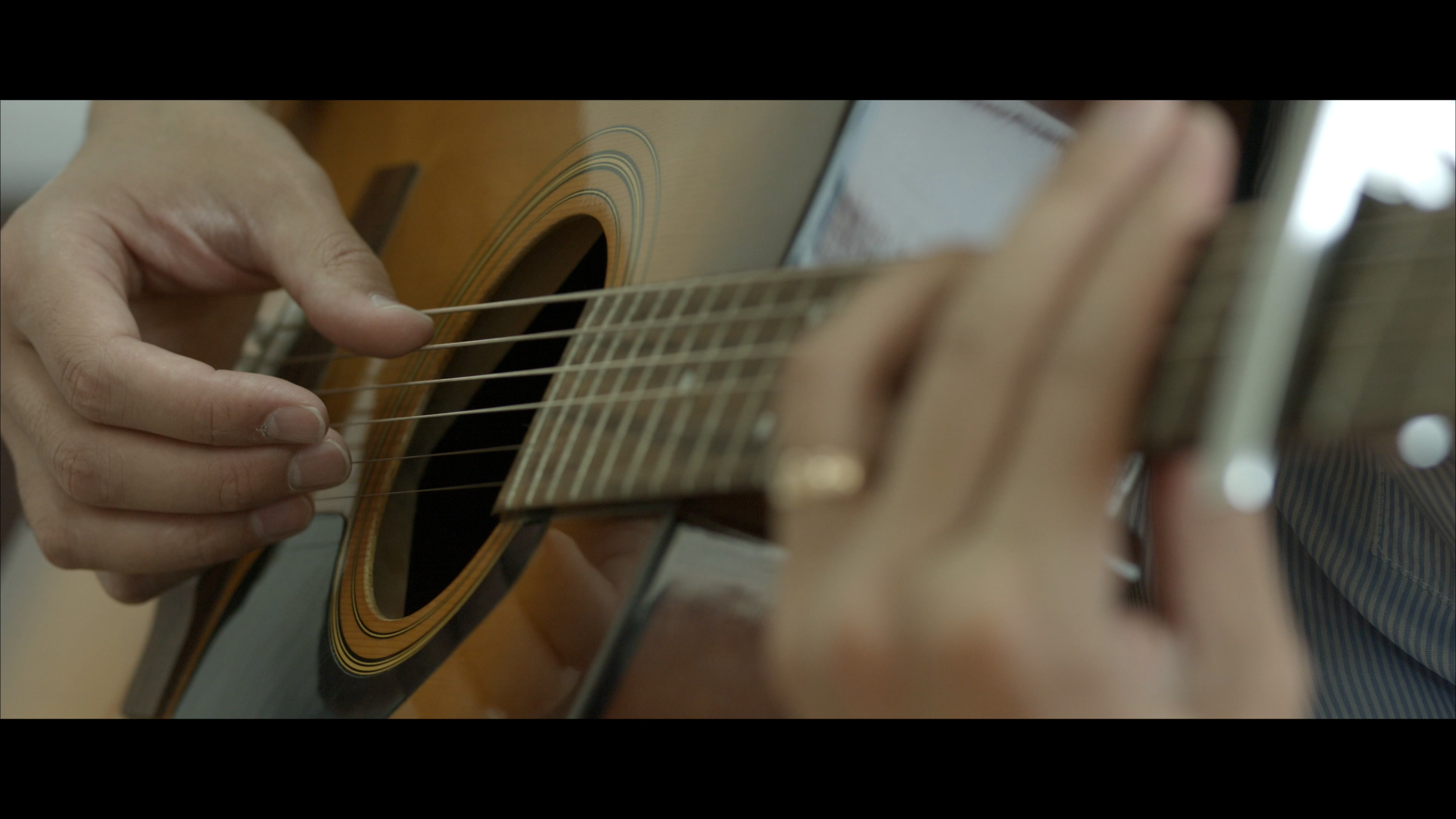
Psychologist Benjamin Charlton ran two-alternative forced-choice tests, asking women to pick between composers of simpler and more complex pieces. According to his 2014 paper in Proceedings of the Royal Society B, women "only preferred composers of more complex music as short-term sexual partners when conception risk was highest." A control test with visual artists showed no such shift.
Charlton called it the first empirical support for an idea Charles Darwin floated more than 140 years earlier. The paper quotes Darwin's line that musical notes and rhythm were first acquired "for the sake of charming the opposite sex." So the guitar cliche has a pedigree, though the effect was tied to a narrow window and to flings, not to long-term romance.
Kindness: the hobby that pays off
The strongest result belongs to the least glamorous pastime. A team at Nipissing University in Ontario and the University of Guelph ran two studies on generosity. In their 2017 paper in the British Journal of Psychology, people who scored higher on altruism said they were more desirable to the opposite sex and reported more partners.
The second study used money. Participants who were willing to give away potential cash winnings in a lab game reported more partners, and men who donated reported more lifetime dating partners. The pattern held even after the researchers controlled for narcissism, the Big Five personality traits and the urge to give flattering answers. Their reading: altruism works as a costly signal of qualities that are otherwise hard to see.
Humor, wordplay and the "mating mind"
Both findings fit a bigger theory. Evolutionary psychologist Geoffrey Miller has argued that humor, music, visual art, some forms of altruism and verbal creativity are courtship displays, a summary laid out in Wikipedia's overview of sexual selection in humans. One test of the idea found that men reached for rarer words when they were put in a romantic mindset, a 2008 study by Rosenberg and Tunney.
The same overview flags a 2020 finding that women rated a man as more attractive when his past relationships had ended mutually, and less attractive if he had been dumped. Call it the one hobby nobody lists: breaking up gracefully.
What the lists get wrong
None of these studies measured hobbies in the everyday sense. Charlton's participants heard music, not a date at an open mic, and the altruism studies relied partly on self-reported partner counts. The fertility-cycle link in particular is a contested area, and the theory that culture grew out of courtship has had critics since Darwin first published it in 1871.
What the evidence does support is narrower and more useful: displays of skill and generosity seem to register, and kindness has the broadest backing. For more on how attraction really works, read how a University of Kansas study found most people miss when they are being flirted with, what a Groningen study found about love at first sight, and why the sweaty T-shirt study linked scent to immune genes.
Sources
- "Menstrual cycle phase alters women's sexual preferences for composers of more complex music", Proceedings of the Royal Society B (University of Sussex), 2014
- Altruism predicts mating success in humans, British Journal of Psychology (Nipissing University, University of Guelph), 2017
- Sexual selection in humans, Wikipedia, 2026
Image: Nataev, CC BY-SA 4.0 via Wikimedia Commons
This article was produced with AI assistance and reviewed by our Editorial Desk. How we work.