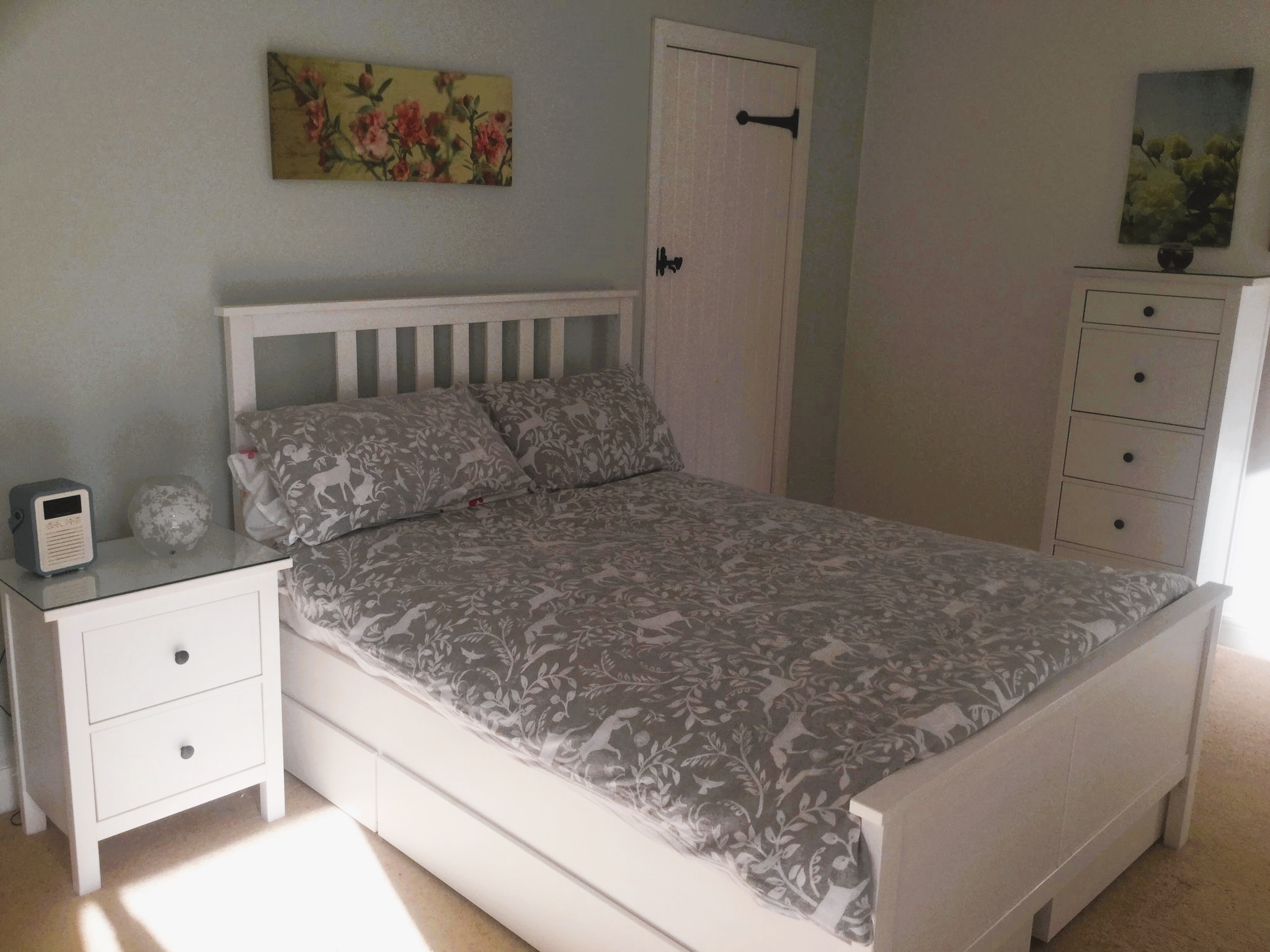
Sharing a bed with your partner may do something cozy to your brain overnight. In a sleep-lab study at Germany's Kiel University, couples who slept side by side got about 10% more REM sleep, the dream-heavy stage, and their sleep stages fell into step with each other.
The study, published in Frontiers in Psychiatry in June 2020 by Henning Johannes Drews and colleagues, wired up 12 young heterosexual couples, 24 people in all, and recorded their brain activity on two weekends: one sleeping together, one sleeping apart.
What changed when couples shared a bed
The headline numbers, from the paper's own tables:
- More REM. REM made up 23.0% of sleep time when partners shared a bed, versus 21.0% when they slept alone.
- Fewer interruptions. REM was broken up about 5.4 times a night together, against 8.5 times apart.
- Longer dream stretches. Unbroken REM runs averaged 22.0 minutes together and 13.4 minutes apart.
- In sync. Partners were in the same sleep stage for 46.9% of the night together, up from 36.6% apart.
The tradeoff was more fidgeting. Bed-sharers made more leg movements, about 61.5 a night compared with 50.9 alone. Total sleep time, how fast people fell asleep and deep slow-wave sleep did not change in any meaningful way.
The closer the couple, the tighter the sync
The romance angle is in the details. The researchers found that partners who rated their relationship as deeper showed more synchronization between their sleep stages. People who reported weaker social support saw the biggest REM boost from having their partner beside them.
Passion scores did not explain the effect, and neither did gender or whether the pair were both early birds or night owls. The couples were already committed bed-sharers, sleeping together on about 6.4 nights a week for an average of 19 months before the study.
Why would REM matter? According to Wikipedia's overview of REM sleep, it is the phase linked most closely with vivid dreaming, takes up about 20% to 25% of a typical adult's night, and was first defined in 1953 by Nathaniel Kleitman and his student Eugene Aserinsky. The Kiel team suggested that REM's role in emotional memory and social thinking could make shared sleep part of a feedback loop between closeness and rest.
What the study did not show
The authors were careful about limits. The sample was small, all participants were young and in heterosexual relationships, and the nights were spent in a lab in two adjacent single beds, each with its own duvet, rather than at home. They noted the effect might be even stronger in a couple's own bed. The study did not test whether the extra REM improved memory or mood, so it is a finding about sleep patterns, not a prescription.
It also lands as a counterpoint to the "sleep divorce" trend of couples moving to separate rooms: the data here simply show that sleeping apart changes how the brain cycles through the night.
For more on the science of attraction and closeness, read about the origin of cuffing season and the winter dating rush, what a Groningen study found about love at first sight, and how Arthur Aron's 36 questions turned strangers into confidants.
Sources
- “Bed-Sharing in Couples Is Associated With Increased and Stabilized REM Sleep and Sleep-Stage Synchronization”, Frontiers in Psychiatry (Kiel University), 2020
- “Rapid eye movement sleep”, Wikipedia, 2026
Image: Mossleegrange, CC BY-SA 4.0 via Wikimedia Commons
This article was produced with AI assistance and reviewed by our Editorial Desk. How we work.