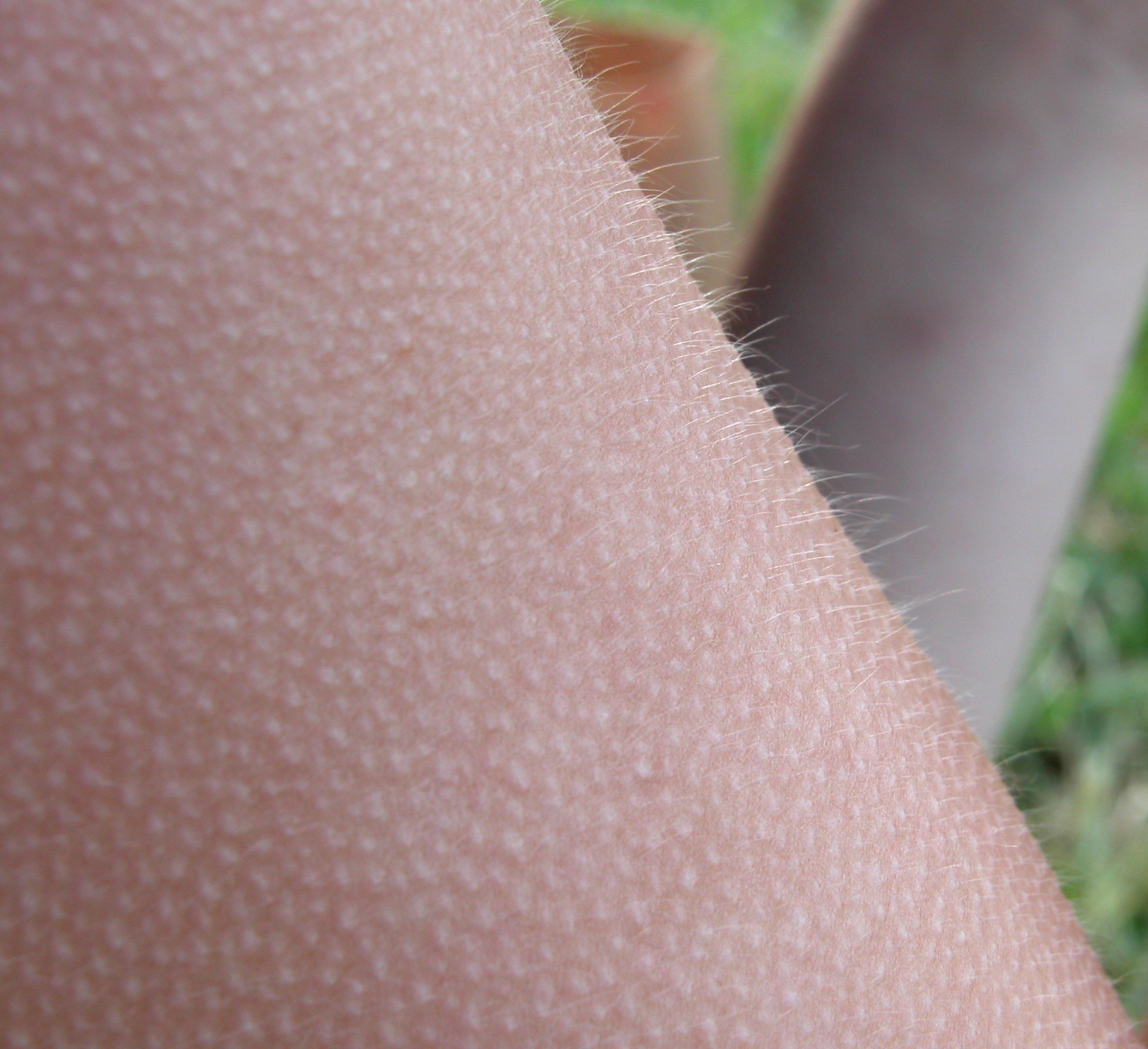
Goosebumps may do more than make your hair stand on end; they may also help it grow back. A Harvard-led team found that the same nerve that raises goosebumps also wires directly into the stem cells that regrow hair, keeping them active in mice. When that nerve signal was cut off, the stem cells slipped into what the researchers call deep quiescence, a kind of extended hibernation.
The 15-author study, led by stem cell biologist Ya-Chieh Hsu with colleagues at National Taiwan University, was published as "Cell Types Promoting Goosebumps Form a Niche to Regulate Hair Follicle Stem Cells" in the journal Cell in 2020. It has since been cited more than 140 times, according to the paper's Europe PMC record.
How one tiny muscle makes goosebumps
Each goosebump starts with an arrector pili muscle, Latin for "hair erector." These are small bundles of smooth muscle, each attached to several hair follicles and controlled by the sympathetic nervous system, the fight-or-flight wiring, as Wikipedia's arrector pili article explains. When the muscle contracts, the hair is pulled upright and the skin around it bunches into a bump.
In furry animals that trick traps a layer of warm air, or puffs up the coat to look bigger to a threat. In people the triggers are wider: cold, a tickle, fear, euphoria or arousal, a shivery piece of music, and even nails on a chalkboard, according to Wikipedia's goose bumps overview. Some people can raise goosebumps at will, an ability that seems to track with the personality trait called openness to experience.
Two parts of the goosebump machinery, one hair-growth niche
The Cell study found that the muscle and the nerve form a two-part niche, meaning a support system around stem cells. The sympathetic nerves form synapse-like contacts with hair follicle stem cells and talk to them through norepinephrine, a stress chemical. The muscles' job is to keep that nerve supply in place.
Without norepinephrine, the stem cells shut down their cell-division and metabolic machinery and switched on two "stay quiet" genes, Foxp1 and Fgf18. The relationship also runs the other way: during development, cells made by the hair follicle release a signal called Sonic Hedgehog that tells the muscle and nerve where to form.
The authors' conclusion, in their abstract, is that nerves "can modulate stem cells through synapse-like connections and neurotransmitters to couple tissue production with demands." In plain terms, the body may use one circuit both to react to a chill in the short term and to adjust hair growth over the longer term.
What the mouse study does not show
This was work in mice. It does not show that cold showers, scary films or goosebump-inducing songs will thicken anyone's hair, and the paper does not test human hair loss. It describes a mechanism, not a treatment.
Why a goose, of all birds
The name comes from plucked goose skin, whose feather pores leave similar bumps. French, Spanish and Japanese pick the chicken instead; Hebrew uses the duck, and Russian and Ukrainian speakers feel ants on the skin. The phrase "cold turkey" may come from the same look, the goose-pimpled skin of a refrigerated plucked bird.
For more on the body's odd reflexes, see Badiyaa's explainer on the hypnic jerk that jolts people as they fall asleep, and for the other kind of goosebumps, our look back at the Goosebumps TV series' final episode in 1998.
Sources
- "Cell Types Promoting Goosebumps Form a Niche to Regulate Hair Follicle Stem Cells", Cell (Shwartz et al., Harvard University), 2020
- "Europe PMC record PMID 32679029", European Bioinformatics Institute (EMBL-EBI), 2026
- "Arrector pili muscle", Wikipedia, 2026
- "Goose bumps", Wikipedia, 2026
Image: Ildar Sagdejev (Specious), CC BY-SA 3.0 via Wikimedia Commons
This article was produced with AI assistance and reviewed by our Editorial Desk. How we work.