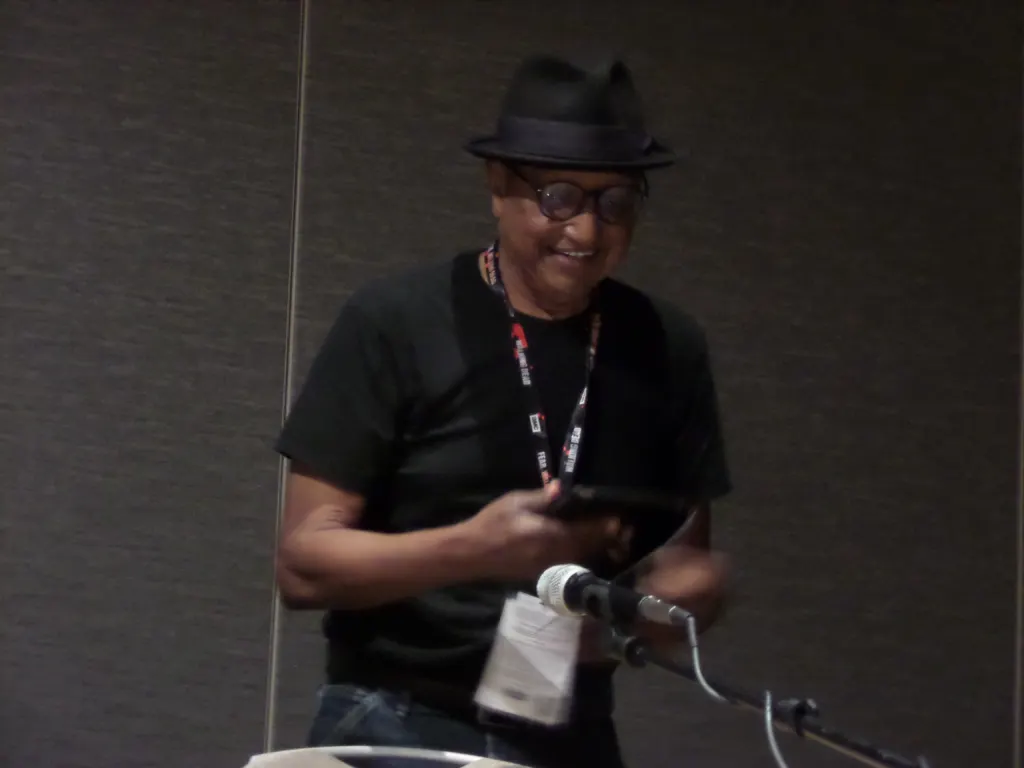
Floyd Norman’s Oscar arrived 70 years after his first day at Walt Disney’s studio. The 91-year-old animator, whom the Academy of Motion Picture Arts and Sciences calls Disney’s first Black animator, received an Academy Honorary Award at the 17th Governors Awards in Hollywood on November 15, 2026.
We covered the night itself in our report on how Ridley Scott, Glenn Close and Floyd Norman received honorary Oscars. This piece looks at the career that got him there, a run that touches almost every era of American animation from hand-drawn fairy tales to computer-animated toys.
An inbetweener on Sleeping Beauty
Norman grew up in Santa Barbara, California, and said he fell for animation as a boy watching Dumbo and Bambi. After studying illustration at Art Center College of Design in Pasadena and assisting comic artist Bill Woggon, he joined Disney. The Academy dates his start to 1956; other biographical accounts say he was hired in 1957 as an inbetweener, the artist who draws the frames between the key poses, on Sleeping Beauty.
He became the first African American artist to stay at the studio over the long term. The Army drafted him after Sleeping Beauty, and when he came back in 1960 he worked on One Hundred and One Dalmatians and The Sword in the Stone.
His break into story work came from doodles. Walt Disney saw the cartoons Norman drew to amuse colleagues and reassigned him to story, and he helped Larry Clemmons shape The Jungle Book. The Academy also lists Mary Poppins, Robin Hood and shorts such as Donald in Mathmagic Land and Winnie the Pooh and the Honey Tree among his Disney credits.
Fat Albert, the Smurfs and a Mickey Mouse strip
After Walt Disney died in 1966, Norman left to start Vignette Films with animator Leo Sullivan. The small company made six animated films and was among the first to make films about Black history. The pair also worked on segments for Sesame Street and on the original 1969 Fat Albert television special.
The 1970s and 1980s took him through the Saturday morning factories of Hanna-Barbera and Ruby-Spears. His television credits run from Josie and the Pussycats and Jabberjaw to The Smurfs, Pac-Man and Garfield and Friends. Back at Disney in the 1980s, he was the last writer of the Mickey Mouse newspaper strip before it ended.
From Mulan to Monsters, Inc.
The digital era did not push him out. Norman worked in story on The Hunchback of Notre Dame, Mulan and Dinosaur for Disney, and on Toy Story 2 and Monsters, Inc. for Pixar. Here is the span in one line:
- 1959: Sleeping Beauty, his first Disney feature
- 1967: The Jungle Book, his story work for Walt Disney
- 1969: the first Fat Albert special, made outside Disney
- 1999: Toy Story 2, fully computer-animated
- 2001: Monsters, Inc.
That is 42 years between his first feature and his last Pixar credit on that list, and Norman was still working on Free Birds in 2013.
A long line of honors
The Oscar caps a shelf that already included induction into the Black Filmmakers Hall of Fame in 1979, the Winsor McCay Award at the 2002 Annie Awards, and the title of Disney Legend in 2007. He has also been the subject of the 2016 documentary Floyd Norman: An Animated Life.
Norman has long defended his old boss against charges of racism. “Spike Lee, who I respect a great deal as a filmmaker, made a comment once about Walt being a racist, and I’d have to say Spike, you never met Walt. I did,” he said in an interview quoted in his biography.
Academy President Lynette Howell Taylor said Norman “is the legendary animator who has broken barriers and inspired generations of artists over his remarkable career.” The same ballroom also honored Glenn Close, whose eight Oscar nominations without a win made her the evening’s other headline. Norman turns 92 on June 22, 2027.
Further reading
Image: Joe Crawford, CC BY 2.0 via Wikimedia Commons
This article was produced with AI assistance and reviewed by our Editorial Desk. How we work.