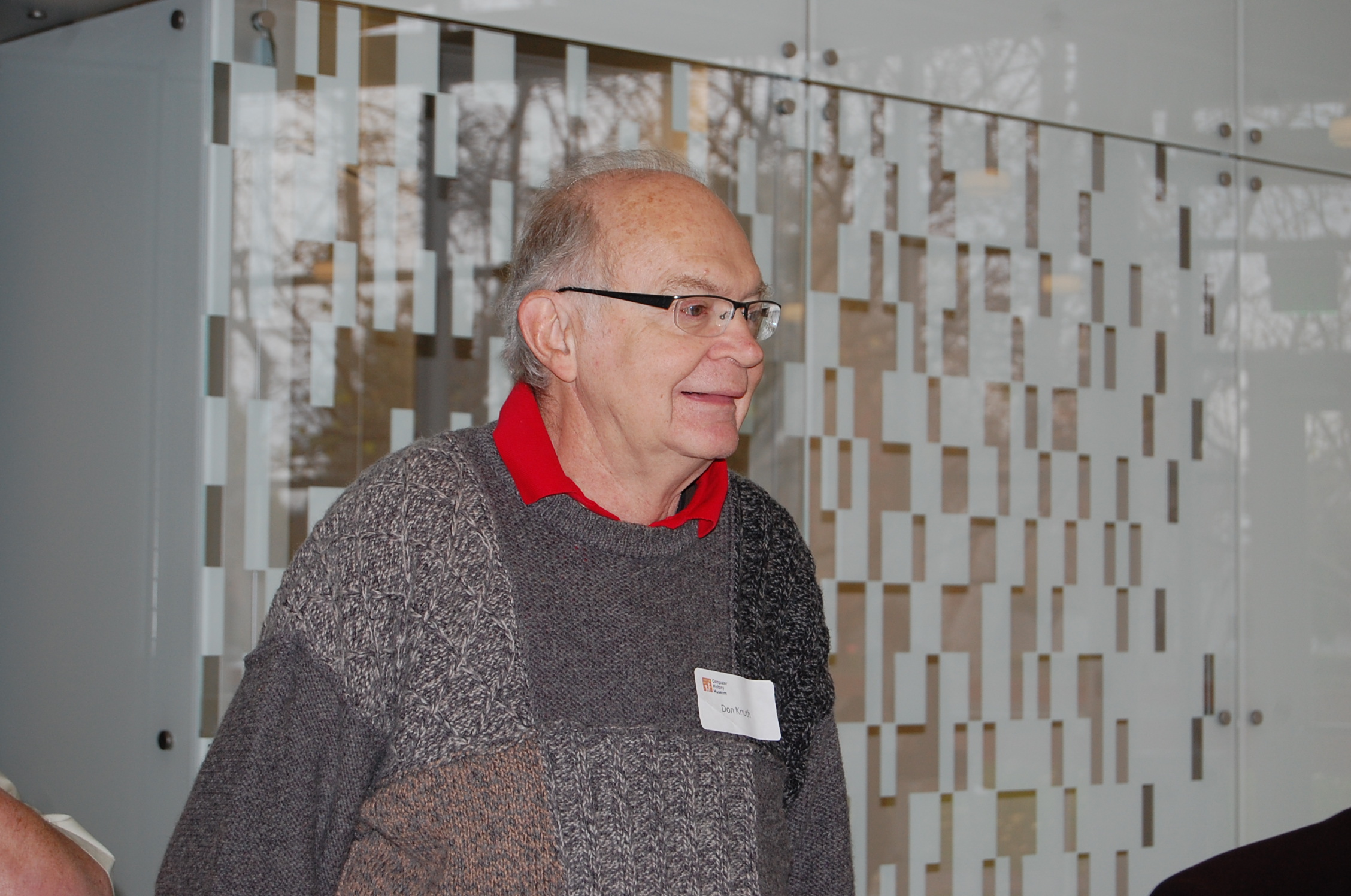
Donald Knuth has spent almost six decades paying strangers to find his mistakes. Now the Stanford computer scientist says there are simply too many of them landing on his desk, and he is blaming artificial intelligence.
"Help, I'm drowning!" reads the heading at the top of Knuth's Recent News page at Stanford. Below it, the 88-year-old author of The Art of Computer Programming thanks the volunteers who keep "ferreting out mistakes" in his books, then delivers the bad news: "the rise of 'AI' has meant that I'm now receiving more reports than I can possibly handle. Therefore a temporary moratorium has become necessary."
He does not say how long the pause will last. The word he chose, temporary, is the only clue.
The most famous bug bounty in computing
The moratorium matters because Knuth's error reports are not ordinary feedback. Since the first volume of The Art of Computer Programming appeared in 1968, he has rewarded the first person to spot each error with a check for $2.56, which he calls one hexadecimal dollar, or 256 cents. A useful suggestion earns 32 cents. Wikipedia's history of the Knuth reward check notes that he had written more than 2,000 of them by October 2001, and that most were framed rather than cashed.
Check fraud ended the paper version in October 2008. Since then, finders get certificates from the fictional Bank of San Serriffe, and Knuth publishes every balance. The Bank of San Serriffe's public ledger, dated June 21, 2026, sets par at 0x$1 to $2.56. Its top account, held by Udo Wermuth, stands at 0x$c16.e8. Converted from hexadecimal, that is about 3,094.9 hex dollars, or roughly $7,923 in error bounties from a single reader.
AI as both helper and headache
The twist is that the same news page is full of AI praise. Knuth writes that a Korean friend, Soojin Nam, found a serious bug in his old SPIDERS program "with the help of Claude," and that GPT 5.4 found three improvements to a 2020 note of his. Another heading reads, in full, "'AI' greatly surprised me for the first time."
So the tools are helping people find real errors. They also appear to be helping far more people send in reports, faster than one man in his late eighties can read them. Call it a victim of his own bounty.
What is still on Knuth's calendar
None of this slows the books. Volume 4A was published in 2011 and Volume 4B at the close of 2022, according to Knuth's Wikipedia biography and his own update. Volume 4, Fascicle 7, a 304-page paperback on constraint satisfaction, arrived just before the end of February 2025 and forms the first third of the future Volume 4C.
His next public date is Thursday, December 3, at 5 p.m. Pacific time in Stanford's NVIDIA Auditorium, where his 30th annual Christmas lecture carries the title "Claude and The Art of Computer Programming." It is fair to expect the moratorium to come up.
Badiyaa has covered the people who keep old software habits alive, including the author who spent 1,244 hours on a book about learning to play Vim, and the basics behind how Base64 encoding works.
Sources
- Knuth: Recent News, Stanford University, 2026
- The Bank of San Serriffe, Stanford University, 2026
- Knuth reward check, Wikipedia, 2026
- Donald Knuth, Wikipedia, 2026
Image: vonguard, CC BY-SA 2.0 via Wikimedia Commons
This article was produced with AI assistance and reviewed by our Editorial Desk. How we work.