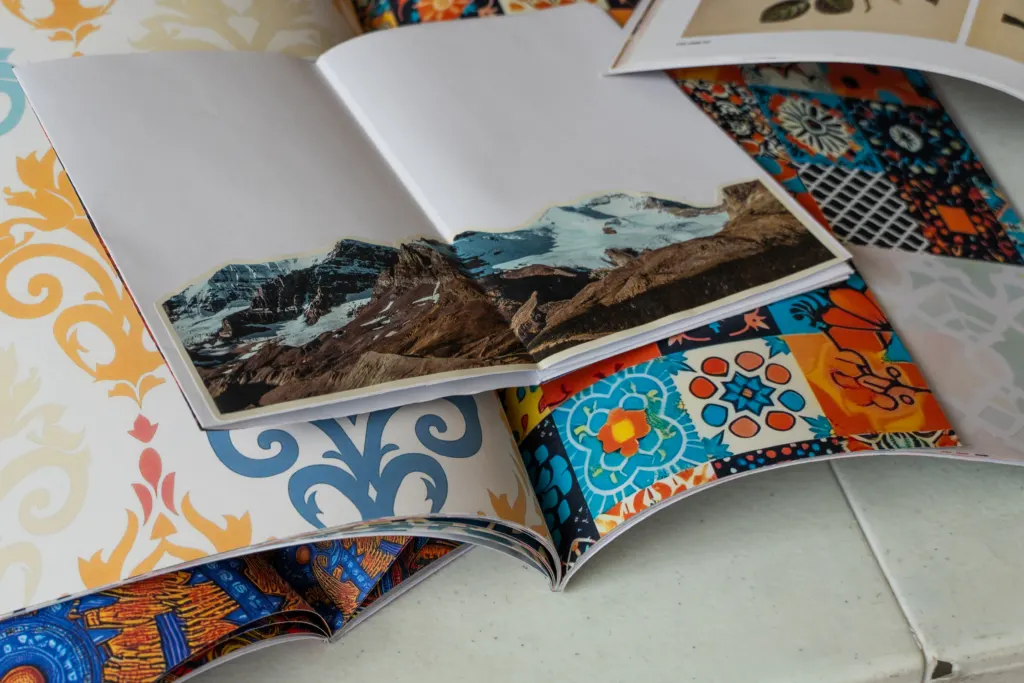
One sheet of paper, one cut and a few folds: that is all an eight-page zine needs, and a free web app called Dirty Little Zine now does the fiddly layout part inside the browser. It arranges eight panels on a single US Letter or A4 page and exports the result as a 300 DPI JPG or a PDF ready to print, according to the Dirty Little Zine project page.
Nothing is sent to a server. The editor runs entirely on the user’s own machine, needs no account and keeps working offline once it has loaded.
What the tool handles for you
The hard part of a one-sheet zine is that half the panels print upside down, and the page order looks scrambled until the paper is folded. Dirty Little Zine rotates and orders the panels automatically, so the cover, three inside spreads and back come out right. Users can drop a photo into any panel, choose whether it fills or fits the space, type a caption for each page and drag panels to reorder them. The page says the tool was built by Filmrick and pitches it at photographers, illustrators and writers who want a quick booklet without professional design software.
How to fold the sheet
Once the page is printed, the classic eight-panel fold takes about a minute:
- Fold the sheet in half the long way, crease it, and open it again.
- Fold it in half the short way, then in half again, so the creases mark eight equal panels. Open it flat.
- Fold it in half the short way once more and cut along the center crease from the folded edge to the middle, stopping where the creases cross.
- Open the sheet, fold it the long way, and push the two ends toward each other so the cut opens into a diamond.
- Flatten the pages around the cover and press the spine.
A quick bit of math shows how small the result is. An A4 sheet is 210 by 297 millimeters, so each of its eight panels is about 74 by 105 millimeters, the size of an A7 card. On US Letter paper (8.5 by 11 inches), each page is 2.75 by 4.25 inches.
A very old format
Small homemade magazines are far older than the web. The Wikipedia history of zines traces the word fanzine to 1940, when Russ Chauvenet used it in his own fanzine, Detours, and credits The Comet, published in 1930 by a Chicago club, as the first science fiction fanzine. Punk fans later photocopied titles such as Sniffin’ Glue, which ran for 12 issues.
Zines are usually defined as runs of 1,000 copies or fewer, and many never pass 100. Libraries now collect them: the Long Beach Public Library became the first public library in California to lend zines in 2015, and the Tate and the British Library hold archives.
For another small make-it-yourself project, see our story on turning an old folding card table into a plank-top desk, and browse more oddities in Badiyaa’s Offbeat section.
Dirty Little Zine is free to use at its own website, on Letter or A4 paper.
Sources
- Dirty Little Zine: Free 8-Page Printable Zine Maker, Filmrick, 2026
- Zine, Wikipedia, 2026
Image: Fhwatson, CC BY 4.0 via Wikimedia Commons
This article was produced with AI assistance and reviewed by our Editorial Desk. How we work.