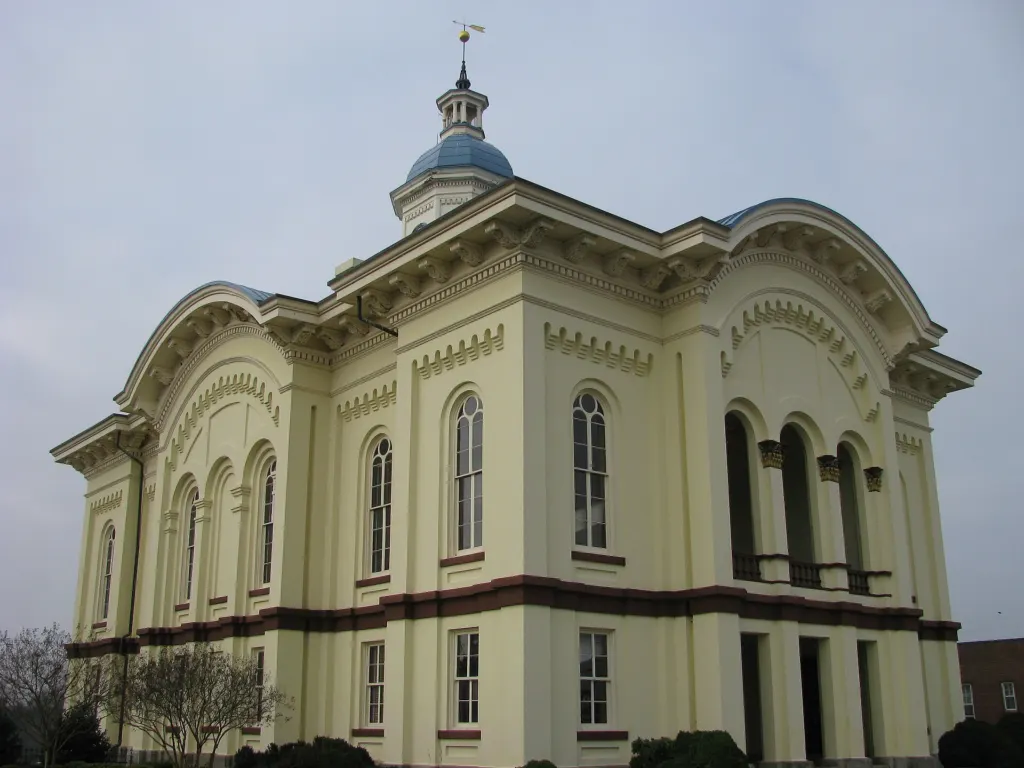
Cassandra Henderson finished school in Yanceyville, North Carolina, in 1968. In August she moved back into the same three-story brick building, this time as a tenant of a one-bedroom apartment, 58 years after her graduation.
The former school now holds the Dillard School Apartments, 53 income-based homes for older residents in rural Caswell County. Before the conversion it had stood empty for more than 20 years. Alex Walker of DreamKey Partners, the developer, described broken windows, missing sections of the gym roof and an interior left open to the weather.
“Some of my happiest years were here, and I can remember them like they happened yesterday,” Henderson said in an interview published last week. She still recalls the bus stopping at the front steps, the metal lockers along the halls and the auditorium, whose wooden seats have been restored.
Why she could not come home sooner
Henderson spent years in Richmond, Virginia, and wanted to be back near family and friends. The obstacle was a place to live. “My sister said, ‘Why don’t you move back home?’ I said, ‘There’s nowhere for me to move,’” she recalled.
Her county’s figures explain the problem. About 42% of renters in Caswell County and 20% of homeowners are cost-burdened, the standard term for households spending more than 30% of gross monthly income on housing. Across North Carolina there is an estimated shortfall of 215,000 affordable rentals for extremely low-income households, and seniors head 29% of the 348,000 renter households in that bracket.
How the rent works, in numbers
The apartments are studios and one-bedrooms. Tenants pay no more than 30% of their income in rent, and federal housing money covers the rest. This is not assisted living: residents have to manage on their own, but the building has elevators, accessible features and shared community rooms.
Set that 30% cap against the open market. The North Carolina Housing Finance Agency puts the state’s median monthly rent at about $1,338. To pay that without crossing the 30% line, a household needs about $4,460 a month in gross income ($1,338 divided by 0.30). A retiree living on $1,500 a month would pay at most $450 (0.30 times $1,500) at Dillard, a gap of $888 a month against the median.
Demand matched the math. When leasing opened last year, applicants outnumbered units and waitlists formed, said property manager Charity James. “For seniors here, the housing market isn’t where it should be,” she said.
The money came from stacking sources: the US Department of Housing and Urban Development’s Section 202 program for senior housing, plus state and federal historic tax credits. Walker credited “the significant grant from HUD” with making the restoration possible. This year the Affordable Housing Tax Credit Coalition honored the project in its 2026 rural housing category.
A building with 120 years of history
The site’s story runs far deeper than one graduating class. In outline:
- 1906: Seven Black residents of Caswell County bought a four-room house on four acres to open a school.
- 1924: A four-classroom building went up with public money and private gifts, including support from the Rosenwald Fund.
- 1934: Under principal Nicholas Longworth Dillard, it won state accreditation as Caswell County Training School, the county’s first secondary school for Black students.
- 1951: The three-story brick building opened. In 1955 it became the only high school in the county, Black or white, accredited by the Southern Association of Colleges and Schools.
- 1961 to 1969: Renamed Caswell County High School, it had 838 students in grades 9 to 12 in the 1967-68 school year, the one in which Henderson’s class graduated.
- 1969 to 2002: After Dillard died in February 1969 and the schools integrated, the building reopened as N. L. Dillard Junior High, named for him, until a new middle school replaced it.
- 2009: An organization that owned the building, including county commissioner Erik Battle, worked with the University of North Carolina School of Government on plans for an early college and community center. The building still stayed empty until the housing conversion.
- 2018: The Caswell County Training School was added to the National Register of Historic Places.
Why schools make good homes
Adaptive reuse is the planners’ term for giving a building a job it was never designed for while keeping its structure and shell. At Dillard that meant keeping the front entrance students once used and restoring the auditorium’s wooden seats instead of tearing them out. Keeping the building also avoids demolition, which can add 5% to 10% to the cost of new construction. Across the US, hundreds of empty schools, factories, hotels and warehouses have already been converted to affordable housing.
The catch is money and timing. Dillard sat empty for two decades and needed a federal grant plus two layers of tax credits before anyone moved in. For Henderson, the wait ended in August. “Being back is like a shot of adrenaline or a vitamin,” she said. “This is where I am meant to be.”
Further reading
- Wikipedia: Caswell County Training School
- Wikipedia: Nicholas Longworth Dillard
- Wikipedia: Adaptive reuse
Image: NatalieMaynor from Jackson, Mississippi, USA, CC BY 2.0 via Wikimedia Commons
This article was produced with AI assistance and reviewed by our Editorial Desk. How we work.