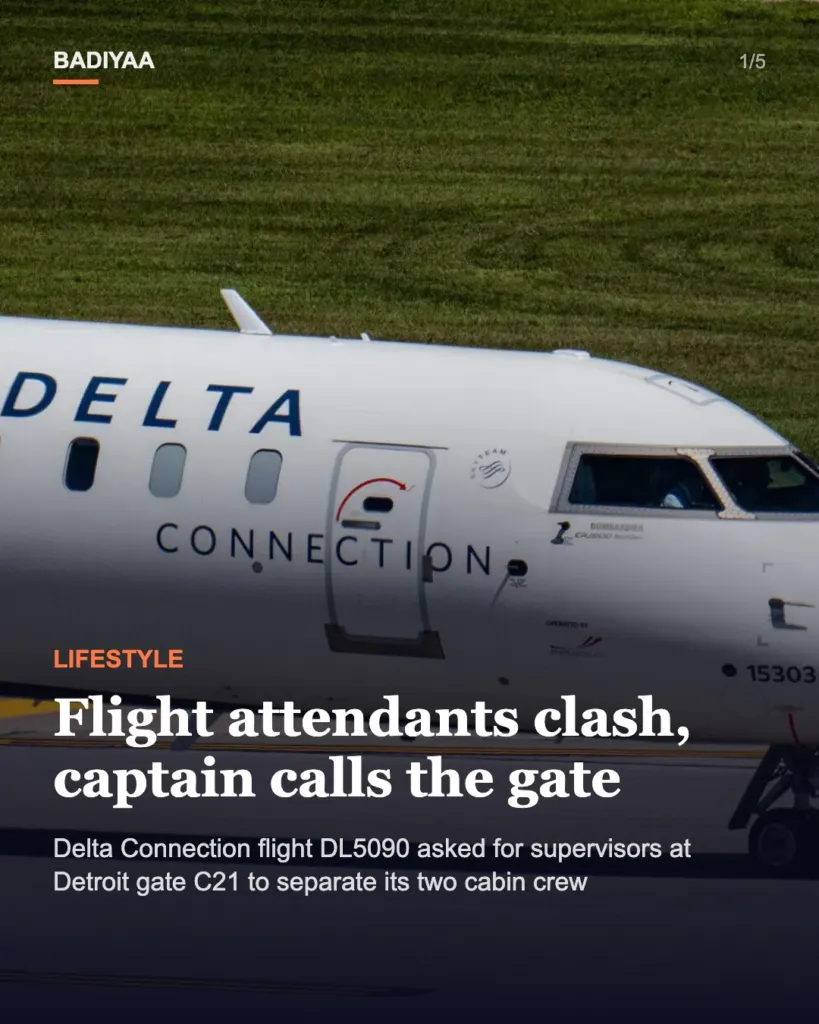
Two flight attendants were at odds so badly on a Delta Connection flight into Detroit last Tuesday evening, October 13, that the captain radioed ahead during the approach and asked for supervisors to be standing at the gate when the jet pulled in.
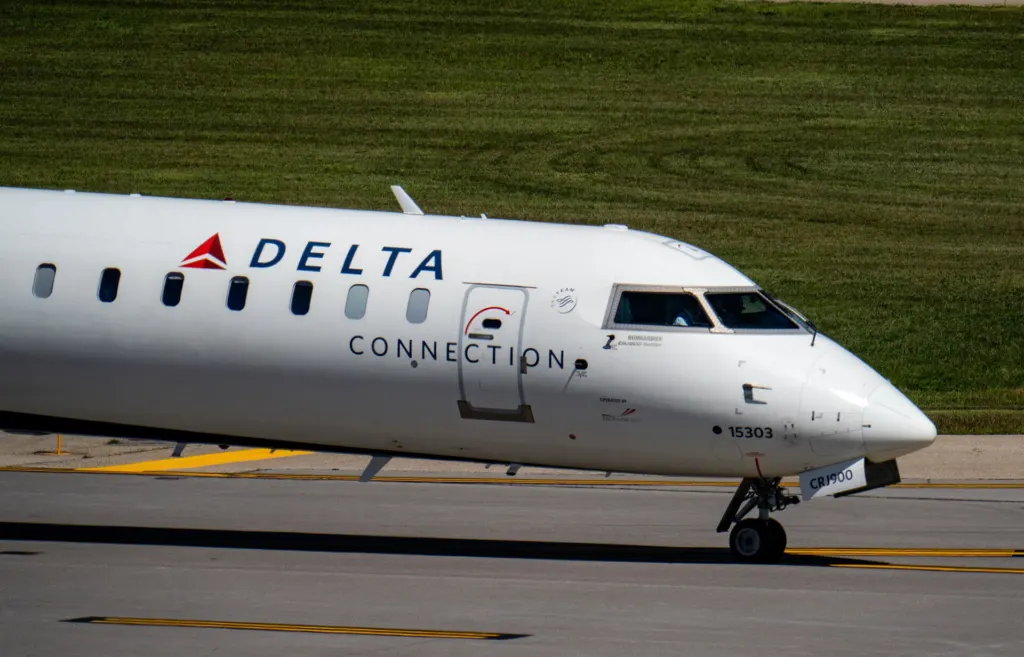
The flight was DL5090, a 508-mile hop from Greenville-Spartanburg International Airport in South Carolina to Detroit Metropolitan Wayne County Airport. It left Greenville at 7:00 p.m. Eastern time on a Bombardier CRJ900 registered N132EV, flown for Delta by its regional subsidiary Endeavor Air. According to a transcript of the radio exchange that aviation trackers shared from air traffic control audio, the flight deck told ground operations:
“We are experiencing conflict issues among the flight attendants and will likely need to separate them to prevent further escalation or an incident.”
The jet touched down safely on runway 21L a few minutes after that call and taxied to gate C21, where inflight management staff were waiting. What the two crew members disagreed about has not been made public.
Who is actually in charge once the doors close
For passengers, the striking part is that the cabin crew became the problem the pilots had to manage. US rules leave no doubt about who handles that. Under federal aviation regulation 14 CFR 91.3, the pilot in command is directly responsible for the aircraft and is “the final authority as to” how it is operated.
Scheduled airlines such as Endeavor fly under a stricter rulebook, Part 121, and one section of it, 121.533, spells out the chain of command. During flight time the captain is in command of both the aircraft and its crew, and has authority over other crewmembers and their duties “without limitation.”
What a captain cannot do from the cockpit is run a workplace investigation. Airline procedures expect a cabin disagreement to be settled first between the two colleagues, then by the lead flight attendant or purser. Only when it threatens operations or safety does the captain step in, and the usual tool is the one used here: asking supervisors or managers to meet the aircraft. Follow-up on the ground can involve unions and confidential employee assistance programs, while the pilots keep their minds on flying.
What “ground intervention” meant this time
A common assumption is that a captain asking for someone to meet the aircraft means police. On this flight, the request recorded in the transcript was for inflight management and supervisory staff, not law enforcement. No arrests or charges have been reported, and the call itself framed the separation as a way to stop things from getting worse.
Why separating them is harder on a small jet
The math on a regional jet is tight. Endeavor’s CRJ900s seat up to 76 passengers across Delta First, Delta Comfort and Delta Main. Federal rule 121.391 sets the minimum cabin crew by seat count:
- 10 to 50 seats (on larger payload aircraft): one flight attendant
- 51 to 100 seats: two flight attendants
- Over 100 seats: two, plus one more for each additional block of up to 50 seats
A 76-seat CRJ900 sits in the 51-to-100 band, so it needs two flight attendants whenever passengers are aboard. That is the entire cabin crew on this type. If one of the pair is taken off the next trip, the jet cannot board passengers again until a replacement arrives. Detroit is one of Endeavor’s seven crew bases, alongside Atlanta, Cincinnati, Minneapolis/St. Paul, New York’s JFK and LaGuardia, and Raleigh/Durham.
Why airlines treat crew friction as a safety issue
Aviation has hard lessons about people who stop working well together. On December 1, 1993, a Northwest Airlink Jetstream 31 operated by Express Airlines II, a company in Endeavor’s own corporate lineage, hit trees on approach to Hibbing, Minnesota, killing all 18 people aboard. Federal investigators found that the captain’s record of hostile, intimidating conduct toward first officers helped break down communication in the cockpit, and the crew failed to watch their altitude during a night landing in poor weather.
That case involved pilots, not cabin crew, but it is part of why modern training stresses crew resource management: disagreements get handled privately and escalated through set channels, from the lead flight attendant to the captain to managers on the ground. The October 13 radio call was that last step.
The aircraft involved is 17.6 years old. It was first delivered to Atlantic Southeast Airlines on February 23, 2009, moved to ExpressJet at the end of 2011, and has flown in Endeavor’s fleet since November 23, 2017.
Further reading
- eCFR: 14 CFR 121.533, responsibility for operational control
- eCFR: 14 CFR 121.391, flight attendants
- Wikipedia: Endeavor Air
Image: Tony Webster, CC BY 2.0 via Wikimedia Commons
This article was produced with AI assistance and reviewed by our Editorial Desk. How we work.
Spot an error? Help verify this story
The story in 5 slides