For decades the story went like this: about 540 million years ago, oxygen flooded the deep sea, and animals exploded into the diversity we know. A team led by the University of Utah now says the deep ocean never got that memo. Its oxygen came and went for at least another 160 million years.
"It wasn't like someone flipped a switch and the deep ocean became forever oxygenated," lead author Chadlin Ostrander said in Stanford's write-up of the research. "Just a decade ago, it was thought that a deep ocean oxygenation switch was flipped around 540 million years ago. Our new dataset pushes that forward in time by at least 160 million years."
Reading oxygen in thallium
The evidence sits in mudrocks laid down on the ancient seafloor and now exposed along the Peel River in Canada's Yukon. The team, which included Stanford geobiologist Erik Sperling, measured isotopes of thallium, a heavy metal found in trace amounts in Earth's crust. Thallium is a sneaky witness: its isotopes get sorted strongly only when manganese oxide crusts form on an oxygenated seafloor, so a shift in the ratio hints at how much of the deep ocean had oxygen.
The results, published in a 2025 paper in Science Advances, cover roughly 485 million to 380 million years ago, the stretch right after the Cambrian burst of animal life. The record swings up and down. One long oxygen-rich spell appears between about 405 million and 386 million years ago, and then the deep sea seems to slide back toward widespread anoxia.
"It is very rare to have such a continuous and well-preserved record of Earth's ancient oceans," Sperling said of the Peel River site.
A timeline of an oxygen-starved planet
Put this study beside other recent work and Earth's oxygen story looks far messier than the textbook version:
- About 2.3 billion years ago: the Great Oxidation Event puts free oxygen in the air. A 2025 study in Nature Communications led by Andy Heard used vanadium isotopes in South African shales to show the shallow seas picked it up within a few million years, which the Woods Hole Oceanographic Institution's release calls "a geological blink of an eye."
- About 540 million years ago: the Cambrian explosion, long tied to a deep-ocean oxygen switch.
- 485 to 380 million years ago: the thallium record shows deep oxygen still flickering on and off.
- After about 380 million years ago: the point after which, according to the new paper, sustained oxygen in global bottom waters must have arrived.
From the first oxygen in the air to a reliably breathable deep sea, that is a gap of more than 1.9 billion years.
Why it matters
If big, energy-hungry sea animals thrived while the deep ocean kept losing its oxygen, then oxygen may not have been the simple on-switch for complex life that many researchers assumed. "None of it seems to require substantial and sustained deep ocean oxygenation," Ostrander said.
Limits
Thallium tracks oxygen indirectly, through the burial of manganese oxides, and the record is anchored on one Yukon section plus a global set of mudrocks. The team still cannot say when the deep sea finally became permanently oxygenated. "That's the one disappointment of our findings," Ostrander said.
Badiyaa has followed oxygen in the modern ocean too, in the Scripps record showing the ocean soaking up more carbon, and the deep past in a study on how Earth may have made its own water.
The new date to beat is 380 million years ago: somewhere after that line, the deep ocean finally kept its oxygen for good.
Sources
- "Dynamic deep marine oxygenation during the Early and Middle Paleozoic", Science Advances (Ostrander et al.), 2025
- Oxygen levels fluctuated wildly long after the Cambrian explosion, Stanford Doerr School of Sustainability, 2025
- "Onset of persistent surface ocean oxygenation during the Great Oxidation Event", Nature Communications (Heard et al.), 2025
- A new study reveals how oxygen first reached Earth's oceans, Woods Hole Oceanographic Institution, 2025
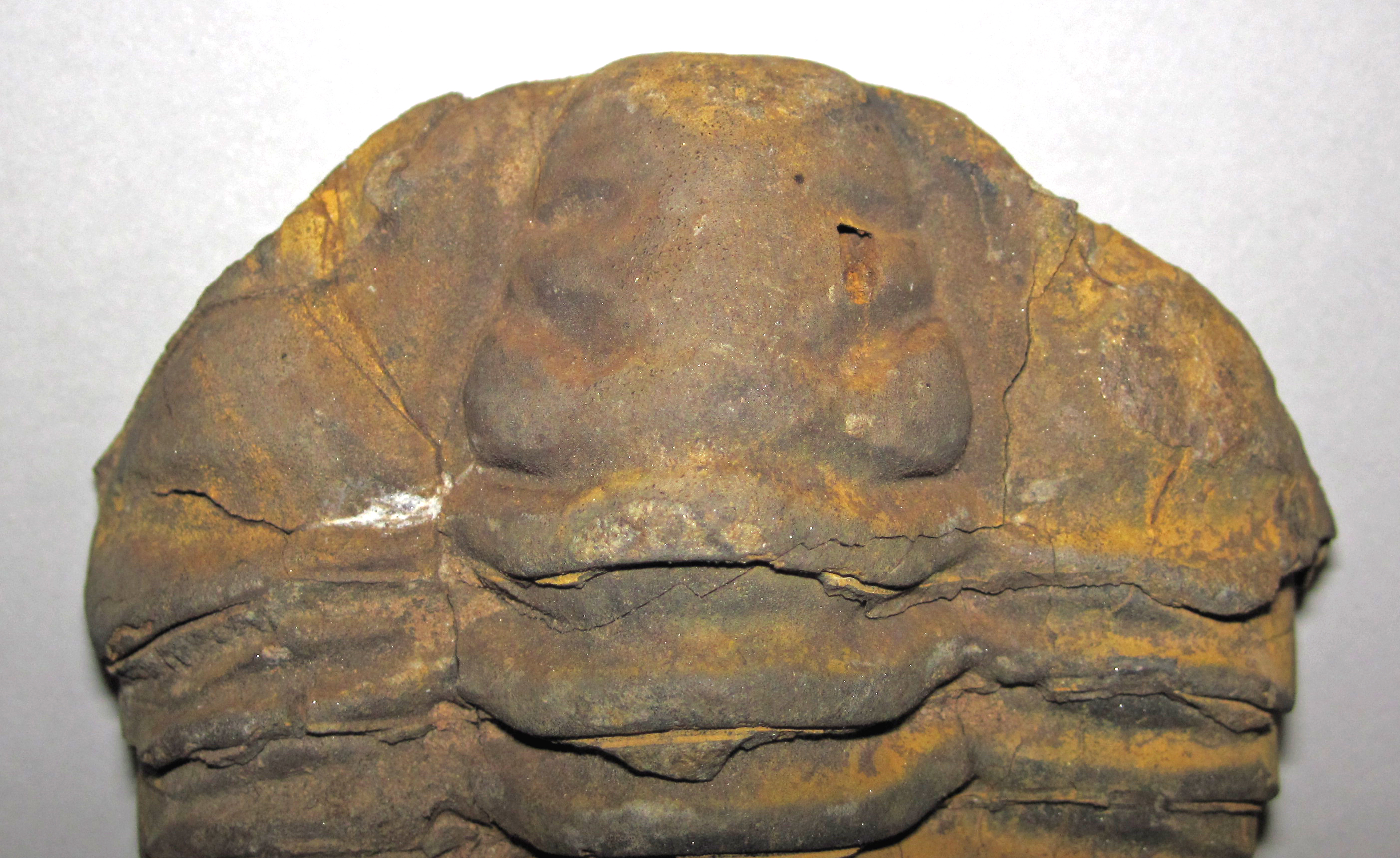
Image: James St. John, CC BY 2.0 via Wikimedia Commons
This article was produced with AI assistance and reviewed by our Editorial Desk. How we work.