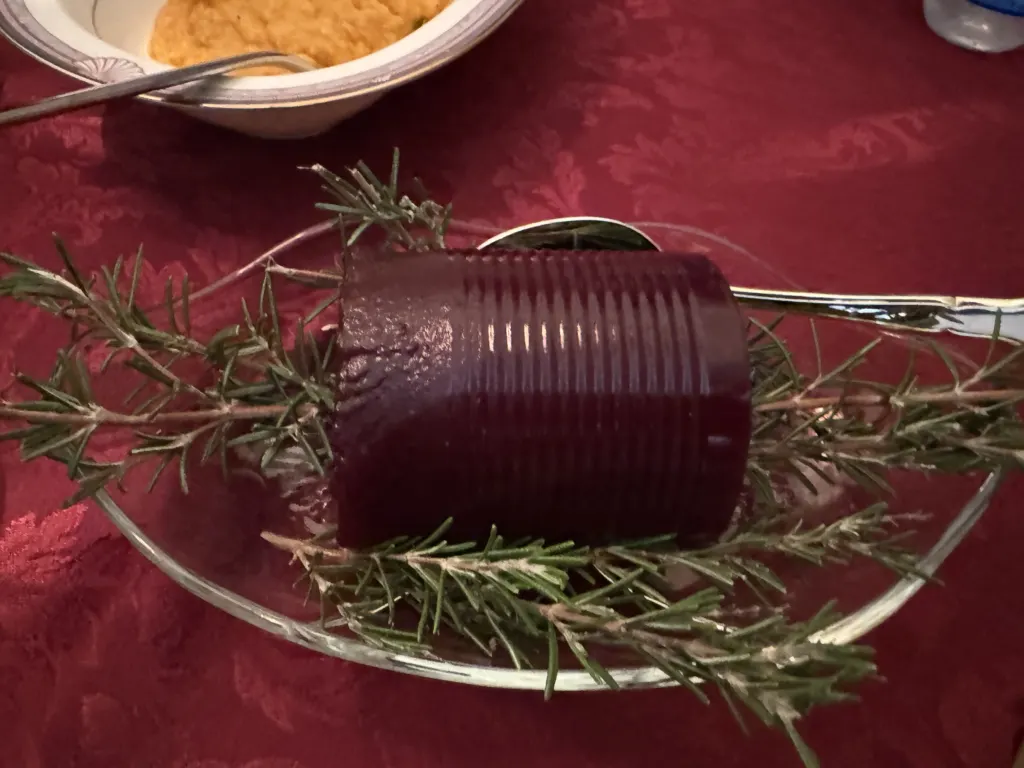
The ridged, can-shaped cylinder of cranberry jelly that slides onto Thanksgiving plates has been a national product since 1941. That year the growers’ cooperative now called Ocean Spray took its jellied cranberry sauce “log” nationwide, and the berry stopped being a strictly seasonal crop.
The man behind it was Marcus Urann, a lawyer who became a cranberry grower in Massachusetts. He was the first grower to can cranberry sauce, and he had been selling a commercial version locally since 1912.
From a lawyer’s bog to a cooperative
Urann first offered his sauce to shoppers in Hanson, Massachusetts. For years it stayed a local, holiday-only business. Growers sold cranberry jelly and a much tarter juice than today’s for Thanksgiving and Christmas, and little else.
In 1930 Urann joined two other growers to scale up. Elizabeth F. Lee grew cranberries in New Jersey, and John C. Makepeace was the largest grower in the country at the time. Together they formed a cooperative called Cranberry Canners, Inc., based in Hanson. Working as a cooperative let members set prices together without being treated as a monopoly under antitrust law.
A timeline of the can
- 1796: Cranberry sauce first appears as a partner for turkey in American Cookery by Amelia Simmons, the first known cookbook written by an American.
- 1912: Urann sells the first commercial cranberry sauce in Massachusetts.
- 1930: Urann, Lee and Makepeace found Cranberry Canners, Inc.
- 1933: The co-op launches Cranberry Juice Cocktail.
- 1941: The jellied sauce goes on sale nationwide, so cranberries can be bought all year.
- 1946: With new members in Wisconsin, Oregon and Washington, it becomes the National Cranberry Association.
- 1957: It takes the Ocean Spray name, bought along with a logo from a fish company in Washington state.
Why the can mattered
Fresh cranberries arrive in autumn and spoil. A sealed can turned a short harvest into a product that could sit on a shelf in July, which is why 1941 marks the point where cranberry sauce went from a regional holiday side to a fixture across the US. The jellied form is meant to come out of the can whole, then be sliced at the table or served as one piece.
The sauce itself is simple. The most basic version is cranberries boiled in sugar water until the berries burst and the mix thickens. North American versions are usually sweeter than European ones, which lean sour.
Older than the can, younger than the myth
Cranberries on a North American feast table go back much further than Urann. In 1606, the Mi’kmaq people introduced French settlers at Port-Royal, in what is now Nova Scotia, to the berries. The settlers wrote home about eating “small red apples”, and Acadians still call cranberries pommes de prés, or meadow apples.
The Pilgrims’ famous harvest meal in Massachusetts is a different story. No primary source mentions cranberries at that First Thanksgiving. The foods actually recorded are Indian corn, wild turkey, waterfowl and venison, and sugar was too scarce for a sweet sauce.
The bird that usually sits beside the sauce took a long route of its own, explained in how the turkey traveled from Mexico to Europe and back to Jamestown, and the full plate adds up to about 4,500 calories by one industry estimate.
Counting the years
From Urann’s first local sauce in 1912 to this year is 114 years. From the national launch in 1941, it is 85. Thanksgiving falls on Thursday, November 26, 2026, which makes this the 86th Thanksgiving with jellied cranberry sauce on sale nationwide, counting 1941 as the first.
Further reading
Image: Missvain, CC BY 4.0 via Wikimedia Commons
This article was produced with AI assistance and reviewed by our Editorial Desk. How we work.