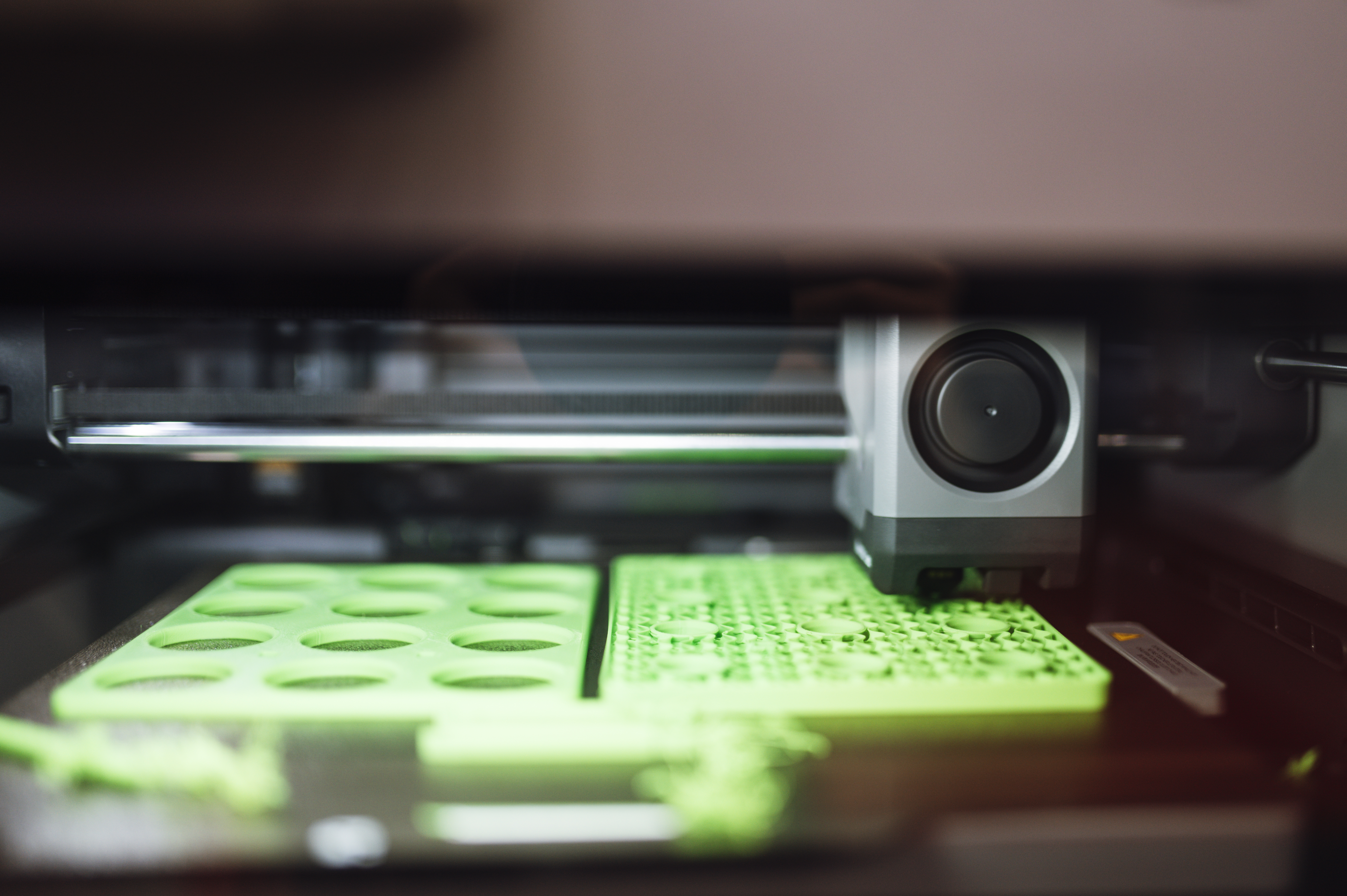
Six seconds. That is how fast Bambu Lab says its new P3C 3D printer can park one print head, grab another, switch material and get back to work. The machine is a tool changer: instead of one nozzle that has to purge old plastic every time the color changes, it carries a rack of separate heads and swaps between them mid-print.
Tool changers used to be the stuff of pricey workshop rigs. Bambu Lab pitches the P3C as its way of bringing the idea down to the desk, calling it an "Advanced Tool Changer 3D Printer Made Affordable" on the company's P3C product page. It has not published a price on the pages we read, so the "affordable" claim is the company's own.
Seven heads, one rack
The trick is a system Bambu Lab calls Swaptek. According to Bambu Lab's P3C FAQ, each print head, which the company calls a PrintTool, has its own power and data line. That lets the next head start heating before the swap, and a contact sensor checks nozzle temperature. A retractable rack moves up and down to line the head up with the carriage, then tucks away so tubes do not rattle during printing.
Out of the box the P3C ships with five 1.75 mm PrintTools, each with a 0.4 mm hardened-steel nozzle. The rack holds seven. Add two more heads and the printer can lay down seven colors with what the company calls near-zero purge, though it admits a little plastic still goes onto the wipe tower at each change.
Want more than seven? The FAQ says the P3C can take up to four extra filament units hooked to the first head, for a ceiling of 22 colors. Colors that share a feed path still need purging, so the extra range comes with more waste.
The numbers on the spec sheet
The official P3C technical specifications list a build volume of 256 by 256 by 260 mm, a top toolhead speed of 1,400 mm per second and acceleration up to 25,000 mm per second squared. The nozzle reaches 300 °C and the bed 110 °C. The combo, with its seven-spool AMS 3P filament box sitting on top, weighs 26.5 kg, about 58 pounds, and stands 935 mm tall when stacked.
A few other details stand out:
- An H11 HEPA filter and coconut-shell carbon filter for fumes.
- A 1080p camera with AI monitoring that watches for "spaghetti" failures and clogs.
- Optional cutting and drawing heads, so the same machine can score paper or sketch.
- Wi-Fi 6 only: no Ethernet port and no network kill switch.
Where it sits in the lineup
The P3C is the smaller sibling of Bambu Lab's flagship H3C tool changer. Set side by side in the company's FAQ, the H3C has nine tool slots, a larger 330 by 320 by 325 mm build area, a 350 °C nozzle and a heated chamber reaching 65 °C. The P3C has no active chamber heating, which matters for touchy engineering plastics, and its filament box does not dry spools unless you buy the optional dryer.
Underneath the clever rack, it is still a standard fused filament machine: melted plastic is pushed through a hot nozzle and stacked one thin layer at a time, a process Wikipedia's fused filament fabrication entry traces back to the FDM technology Stratasys co-founder S. Scott Crump developed in 1988. The patent expired in 2009, which opened the door to the cheap desktop printers that followed.
That desktop boom is how a New York teenager built a 3D-printed can cooler business on a fleet of 160 printers, and how a Costa Rican toucan named Grecia ended up with a 3D-printed replacement beak. For a hobbyist, the P3C's pitch is simpler: five heads in the box, room for two more, and a color change measured in seconds rather than minutes of purging.
Sources
- Bambu Lab P3C product page, Bambu Lab, 2026
- Bambu Lab P3C technical specifications, Bambu Lab, 2026
- Bambu Lab P3C FAQ, Bambu Lab, 2026
- Fused filament fabrication, Wikipedia, 2026
Image: Shixart1985, CC BY 2.0 via Wikimedia Commons
This article was produced with AI assistance and reviewed by our Editorial Desk. How we work.