The most argued-over final shot of the 1960s was partly an accident of nerves. At the end of The Graduate (1967), Benjamin Braddock and Elaine Robinson, still in her wedding dress, drop into the back seat of a city bus grinning like winners. Then the grins fade, and the two stare ahead, unsure and a little scared, while the bus keeps going.
Director Mike Nichols later explained where those faces came from. In a 1994 appearance on the interview program Inside the Actors Studio, according to accounts of the shoot, he said Dustin Hoffman and Katharine Ross looked nervous because he had shouted at them to laugh. He liked what the camera caught so much that he kept it rolling and cut the moment into the finished film.
A happy ending that stops being happy
On paper the ending is a classic rescue. Benjamin drives more than 300 miles south from Berkeley to Santa Barbara, runs out of gas short of the church, sprints the rest of the way and arrives as the vows are finishing. He shouts Elaine’s name from the glass gallery above the guests, she breaks away from her mother, and he holds off the wedding party by swinging a large cross, then jams it through the church door handles to trap everyone inside.
What follows on the bus turns that triumph into a question. The couple’s ecstatic smiles slowly give way to blank, uncertain expressions, and the film ends there. Nichols often talked about how frightened and confused they look, and audiences have spent nearly 60 years arguing whether Benjamin and Elaine escaped anything at all.
How the scene was built
Several pieces of film history meet in those last minutes:
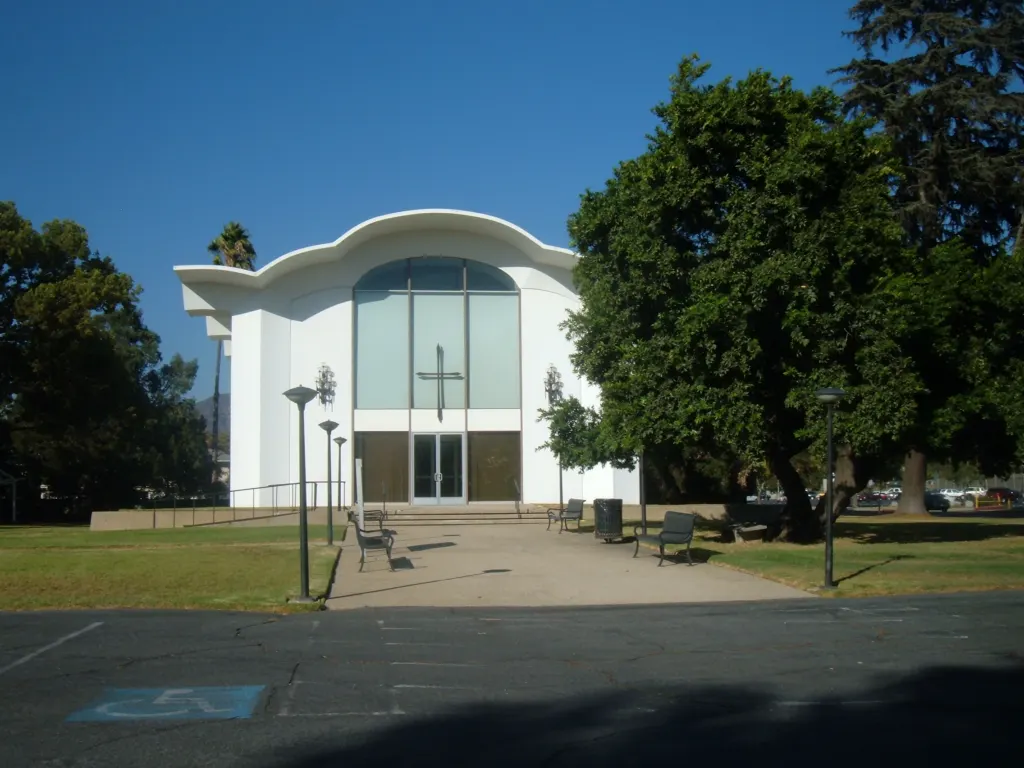
- The church: the wedding was shot at the United Methodist Church in La Verne, California, about 30 miles east of Los Angeles, not in Santa Barbara. Hoffman later said he was uneasy pounding on the glass because a church official watched the filming with obvious disapproval.
- The borrowed idea: the wedding chase was strongly shaped by the ending of Harold Lloyd’s 1924 silent comedy Girl Shy, and Lloyd himself advised on the scene.
- The running shot: cinematographer Robert Surtees filmed Hoffman racing toward the camera with a long telephoto lens, so that he seems to run hard and get nowhere.
- The music: Nichols built the soundtrack from existing Simon & Garfunkel recordings instead of an original score, an unusual choice at the time.
Why it still works
Put the four together and the design is clear: a silent-comedy rescue, staged in a real church, shot so the hero looks stuck, and closed on two faces that have stopped performing. The uncertainty on screen was real uncertainty, and that is a big reason the shot reads as honest instead of cynical.
The gamble paid off. The Graduate was the highest-grossing film of 1967 in North America, earned seven Academy Award nominations and won Nichols the Oscar for Best Director. It entered the US National Film Registry in 1996, and the wedding escape has been parodied in Wayne’s World 2, The Simpsons and The Office. Hoffman even restaged it for a 2004 car commercial, playing an older Benjamin who stops his own daughter’s wedding.
Hoffman has been revisiting his career lately; Badiyaa covered his visit to the Criterion Closet, where he picked two films by Hal Ashby. For another late-1960s film finding new viewers, see our story on Christopher Lee’s 1968 Dracula Has Risen from the Grave.
The film runs 106 minutes. Its last shot, the one Nichols refused to cut, lasts long enough for both smiles to disappear.
Further reading
Image: Christopher Eugene Lee, Public domain via Wikimedia Commons
This article was produced with AI assistance and reviewed by our Editorial Desk. How we work.