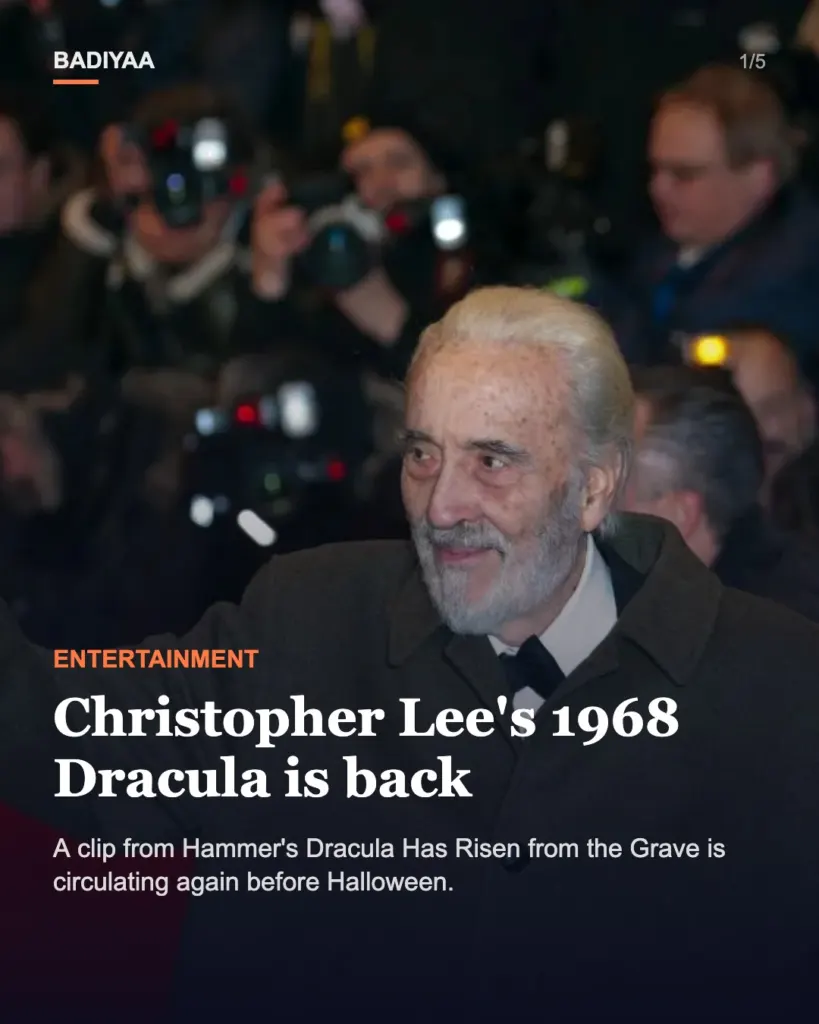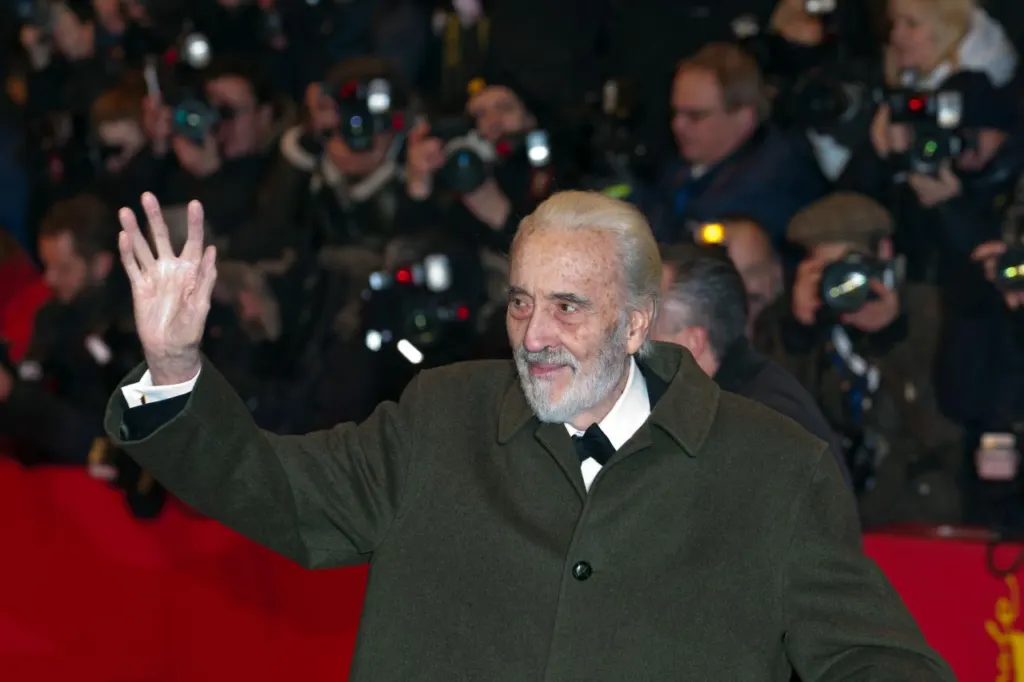
A scene from Dracula Has Risen from the Grave, the British horror film that opened in UK cinemas in November 1968, is circulating on YouTube again in the run-up to Halloween. The clip is a reminder of how long Christopher Lee wore the cape for Hammer Film Productions, and of how a 92-minute sequel made for £175,000 has outlasted its early reviews.
The film was the fourth entry in Hammer’s Dracula series and Lee’s third outing as the Count. Its rights now sit with Warner Bros., whose Warner Bros.-Seven Arts arm released it in the United States on February 6, 1969.
How Lee came back to the role
Lee first played Dracula for Hammer in 1958, in the film that made the studio’s name. He then sat out The Brides of Dracula (1960) while trying to avoid typecasting, and returned for Dracula: Prince of Darkness in 1966. By 1968 the part was his, and the studio kept bringing him back. His run as the Count, in release order:
- Dracula, May 7, 1958 (82 minutes)
- Dracula: Prince of Darkness, January 9, 1966 (90 minutes)
- Dracula Has Risen from the Grave, November 1968 (92 minutes)
- Taste the Blood of Dracula, May 7, 1970 (91 minutes in the US cut)
- Scars of Dracula, November 8, 1970 (91 minutes)
- Dracula A.D. 1972, September 28, 1972 (96 minutes)
- The Satanic Rites of Dracula, November 3, 1973 (87 minutes)
Add those running times together and Lee’s Hammer Dracula comes to 629 minutes (82 + 90 + 92 + 91 + 91 + 96 + 87), or about 10 and a half hours of screen time, spread over 15 and a half years. A Halloween marathon of all seven would run past midnight even with a 2 p.m. start.
What is on screen in the 1968 film
The setup is simple. A visiting monsignor, played by Rupert Davies, climbs to Castle Dracula to exorcise it and fixes a large cross to the gate. A frightened local priest falls, cuts his head, and his blood trickles through the ice of a frozen stream onto the Count’s lips. Dracula wakes, finds his home barred to him, and follows the monsignor to the town of Kleinenberg to go after his niece, Maria, played by Veronica Carlson.
Behind the camera, it was a change of hands. Terence Fisher, who had directed the first three Hammer Dracula films, was meant to direct but broke his leg in a car accident. Freddie Francis, a cinematographer by background, replaced him in what became his only Hammer Dracula. Francis brought his own colored filters, the same ones he had used shooting The Innocents in 1961, so the edges of the frame glow crimson, amber and yellow whenever the Count or his castle is in shot. The production also moved from Bray Studios, home of the earlier entries, to Pinewood Studios in Buckinghamshire. The screenplay is credited to John Elder, the pen name of Hammer producer Anthony Hinds, and James Bernard wrote the score.
The case for and against
American reviewers in 1968 and 1969 were unimpressed. One trade review called it “a tired episode,” and another critic dismissed it as “junky.” The verdict softened with time. Hammer’s authorized history, The Hammer Story (2007), called it “a minor triumph of style over content,” crediting Francis’s direction.
Both readings hold up. The plot leans on invented rules, such as the idea that a stake only stays in if the person driving it has faith, and Lee has little to do beyond looming and letting his eyes turn red. The pleasures are visual: angled rooftop sets that Maria crosses at night, fog-filled streets, and the bold opening image of a dead woman hidden inside a church bell. Barbara Ewing, as the jealous tavern girl Zena, was the performer British reviewers singled out at the time.
For viewers who want the whole film rather than a clip, Apple’s TV app lists it under Warner Bros. with a G rating and a 1 hour 32 minute run time, and it came out on Blu-ray on October 6, 2015. Halloween falls on Saturday, October 31.
Further reading
Image: Siebbi, CC BY 3.0 via Wikimedia Commons
This article was produced with AI assistance and reviewed by our Editorial Desk. How we work.
Spot an error? Help verify this story
The story in 5 slides