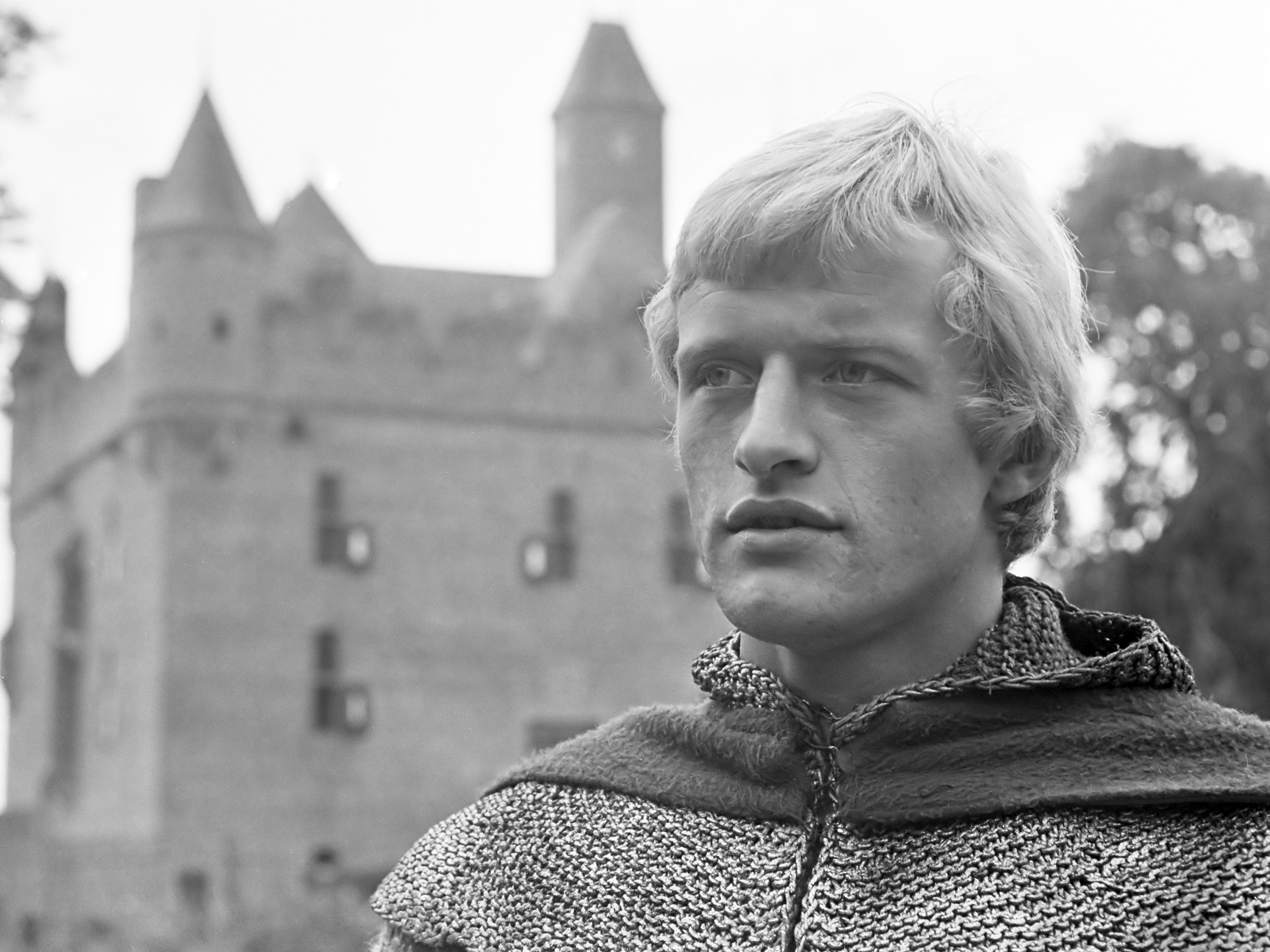
The most quoted death speech in science fiction was cut down by the actor who delivered it, the night before the cameras rolled. Rutger Hauer, playing the rogue replicant Roy Batty in Ridley Scott's 1982 Blade Runner, took a longer scripted speech, trimmed it hard and added the line that made it famous: "All those moments will be lost in time, like tears in rain."
The finished monologue runs just 42 words, Wikipedia's history of the speech notes, and Hauer did the edit without telling Scott.
The scene
It comes at the end of the film, on a rooftop in pouring rain. Harrison Ford's Rick Deckard has been sent to kill Batty, misses a jump and dangles from a ledge by his fingers. Batty, whose short engineered lifespan is running out, could let him fall. Instead he hauls Deckard up and, sitting in the rain with a white dove, speaks his last words:
"I've seen things you people wouldn't believe. Attack ships on fire off the shoulder of Orion. I watched C-beams glitter in the dark near the Tannhäuser Gate. All those moments will be lost in time, like tears in rain. Time to die."
What the script said first
Screenwriter David Peoples had written something wordier. An earlier draft had Batty describing riding test boats, the wind in his hair, and an attack fleet burning "like a match." The version on the page when filming began ended with the flat "they'll be gone." Hauer dismissed the scripted lines as "opera talk" and "hi-tech speech" that had no bearing on the rest of the film, and said he "put a knife in it." In his autobiography, he insisted he mainly cut lines, and that the tears-in-rain sentence was his only real addition.
The reaction on set was immediate. Crew members reportedly applauded, and some cried, after the take.
Why it still lands
Critic Mark Rowlands called it "perhaps the most moving death soliloquy in cinematic history," and it is widely seen as the defining moment of Hauer's career. Hauer's own biography on Wikipedia traces how the role opened doors to films such as Ladyhawke and The Hitcher; Badiyaa recently revisited Ladyhawke and its divisive synth score. He later titled his 2007 memoir All Those Moments, after the speech.
The "Tannhäuser Gate" is never explained in the film. It probably nods to Wagner's opera about the medieval knight Tannhäuser, and it has since turned up across science fiction. The speech's echoes reach far: The Weeknd closed his 2013 album Kiss Land with a song called "Tears in the Rain," and Google DeepMind chief Demis Hassabis picked the speech as his desert island recording, crediting the film with sparking his interest in artificial intelligence.
Back in the spotlight
The speech is getting fresh attention because the franchise is back. Prime Video's new series Blade Runner 2099 turns the original's premise upside down, with Michelle Yeoh as a replicant near the end of her life, as Badiyaa reported in its piece on Yeoh's character Olwen. The 1982 film itself, based on Philip K. Dick's 1968 novel Do Androids Dream of Electric Sheep?, cost $30 million and initially underperformed before becoming a cult classic.
Sources
- Tears in rain monologue, Wikipedia, 2026
- Rutger Hauer, Wikipedia, 2026
- Blade Runner, Wikipedia, 2026
Image: Eric Koch for Anefo, CC0 via Wikimedia Commons
This article was produced with AI assistance and reviewed by our Editorial Desk. How we work.