One single-walled Amazon box, a lining of dried leaves, 4 to 5 inches of soil and three dark red seed potatoes: that is the whole kit behind a gardening video that is doing the rounds again this week. A second, smaller box got two white seed potatoes. By harvest, the bigger box had produced several dozen potatoes of mixed sizes.
The gardener is James Prigioni, who runs The Gardening Channel With James Prigioni on YouTube. He posted the 17-minute video on August 24, 2024, after planting the boxes that spring, and it had passed 4 million views by October 20, 2026. That works out to roughly 155,000 views a month over about 26 months (4.04 million divided by 26), and a fresh write-up over the weekend has pushed it back into feeds.
The practical answer: yes, but not this month
A cardboard box will carry a potato crop through one season, and the method in the clip lines up with what university extension gardeners teach. The timing is what trips people up. Potatoes are a spring crop. The University of Minnesota Extension says to plant seed pieces as soon as the soil warms, and the UC Master Gardeners in Sonoma County, California, suggest planting between March and August, warning that later plantings may not mature. A box filled in late October in most of the US will not give you a harvest. Flatten the boxes, keep them dry and use them in spring.
If you already have a pile of cardboard now, it has a fall job: laying it over beds, as in our guide to cardboard sheet mulching.
The most common mistake
It is planting potatoes from the grocery store. Both extension programs advise against it. Store potatoes may be treated with a sprout inhibitor to keep them dormant, so they come up slowly, and they can carry diseases that linger in soil for years. Buy certified disease-free seed potatoes from a garden center instead; Minnesota’s extension notes that commercial seed tubers grow into stronger plants with a higher total yield per plant.
What the video gets right
Prigioni’s steps follow the textbook. The leaves at the bottom help the box hold moisture. Sprouts showed within two weeks, and ten days later both boxes were full of foliage. He then hilled the plants, piling more soil around the stems. The UC guide gives numbers for that: once stems are about 4 inches tall, add another 3 to 4 inches of soil or compost, because tubers form in that mound and sunlight turns exposed potatoes green, which is toxic.
He also waited for the right signals. Flowers told him tubers were forming, and he held off digging until the tops died back, which matches the extension advice to harvest the main crop once foliage yellows or dies, about 90 to 120 days after planting. His verdict on the cardboard was upbeat. “I am pleasantly surprised with how well the boxes held up,” he said, and added: “This thing was completely free to grow in, so you can’t beat that.”
What it does not prove
The clip is one gardener, one patio and one season, so read it as a demonstration rather than a trial. Nothing was weighed; “several dozen” tells you plenty about the mood and little about pounds per box. He filled the boxes with soil he makes himself and added fertilizer, which most first-timers will not match with a bag of cheap fill.
The cardboard is not permanent either. The small box stayed intact, but the larger one split at a corner by harvest. Watering is the other weak point: soil in containers dries out fast, and the UC guide says daily watering may be needed in summer, which a wet box has to survive. The red plants also picked up potato beetles, which he chose not to treat.
One more thing to know before you copy the shopping list: the video’s description links to a store selling seed potatoes and to his Amazon storefront. That does not change what the boxes produced, but it is worth noticing.
For a spring trial, the schedule is simple. Minnesota’s extension says new potatoes can be dug about seven to eight weeks after planting, so a box planted on March 31 would be ready for a first, small harvest between May 19 and May 26.
Further reading
- UC Master Gardeners of Sonoma County: Potatoes
- University of Minnesota Extension: Growing potatoes in home gardens
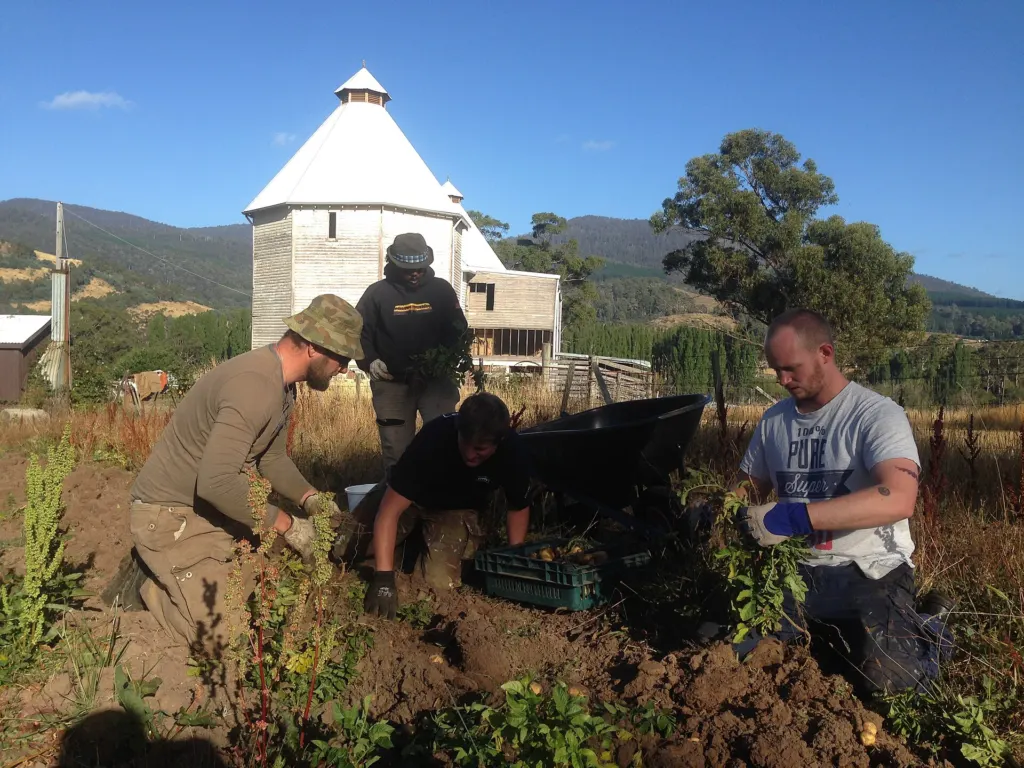
Image: David Edwards, CC BY-SA 4.0 via Wikimedia Commons
This article was produced with AI assistance and reviewed by our Editorial Desk. How we work.