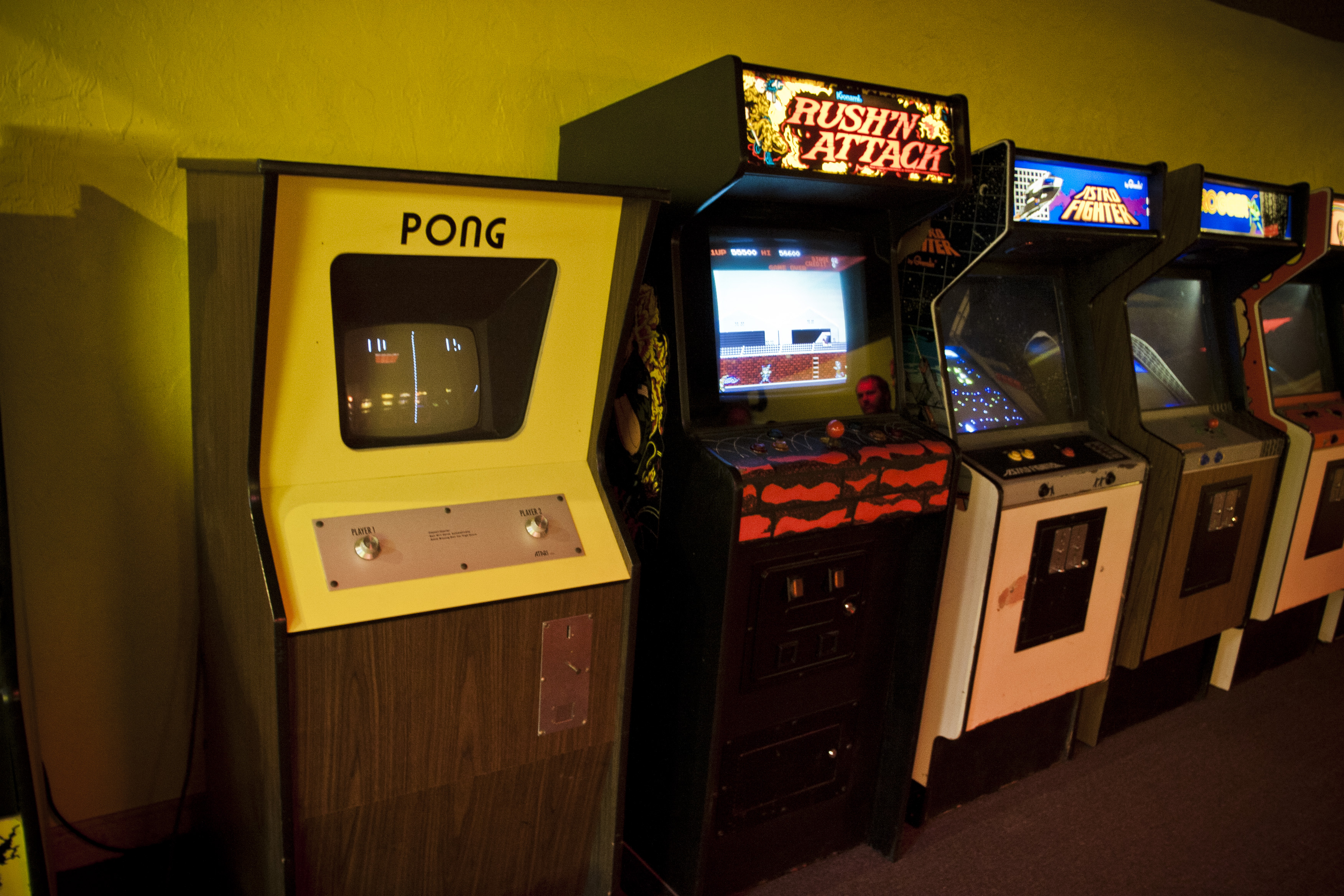
The first sign that Pong was a hit looked like a breakdown. A few days into its 1972 test run at Andy Capp's Tavern in Sunnyvale, California, the prototype stopped working, and when Atari engineer Allan Alcorn opened it up he found the coin box jammed full of quarters.
Atari announced the arcade game on November 29, 1972, which makes this Sunday Pong's 54th birthday. The Strong National Museum of Play's World Video Game Hall of Fame, which inducted Pong in 2015, says that by most measures of popular impact the game launched the video game industry.
A warm-up job that became Atari's first game
Pong began as a training exercise. Atari co-founder Nolan Bushnell handed Alcorn, who had never made a video game, a brief for something simple: one moving spot, two paddles and on-screen scores. According to Wikipedia's history of Pong, Bushnell told Alcorn the project was for a General Electric contract, when it was really a warm-up.
Alcorn went further than the brief. He split each paddle into eight segments so the ball bounced off at different angles depending on where it hit, and he made the ball speed up the longer a rally lasted. A faulty circuit kept the paddles from reaching the top of the screen; rather than fix it, Alcorn kept the flaw because it made the game harder and stopped expert players rallying forever.
The cabinet was homemade too. Alcorn bought a $75 Hitachi black-and-white TV from a local store and built it into a 4-foot wooden case. The sound effects came from tones he found in the game's sync generator after Bushnell asked for a roaring crowd that the hardware could never produce.
From one bar to thousands of cabinets
After the tavern test, Bushnell decided Atari would build the machines itself instead of licensing the game. Early production was slow, about ten cabinets a day, many of which failed quality checks. Once the line sped up, the numbers climbed fast:
- August 1972: the prototype goes into Andy Capp's Tavern.
- November 29, 1972: Atari announces Pong.
- 1973: Atari has filled 2,500 orders and starts shipping abroad.
- End of 1974: more than 8,000 units sold.
- Christmas 1975: Home Pong sells around 150,000 units through Sears at $98.95 each.
Bushnell estimated a cabinet took in $35 to $40 a day. At 25 cents a game, that is 140 to 160 games on a single machine every day, and roughly four times what other coin-operated machines were earning.
Why Pong still matters
The game was not the first electronic tennis. Bushnell had played the table tennis game on the Magnavox Odyssey home console in May 1972, and Magnavox later sued; Atari settled in June 1976 by agreeing to pay $1.5 million in eight installments for a license. The Strong's citation acknowledges the Odyssey but credits Pong as the first game to grab wide-scale public attention, and says Home Pong turned the TV set into an interactive toy.
Copycats arrived within months, and Atari answered with sequels such as Pong Doubles and Quadrapong, then Breakout in 1976. Readers who want the deep technical story can turn to Henry Lowood's 2009 paper on the complex history of Pong in an IEEE journal on the history of computing.
For more on gaming history, Badiyaa has covered original Xbox games coming to PC for the console's 25th anniversary and Sega's 35th anniversary short for Sonic the Hedgehog.
Pong's anniversary falls on Sunday, November 29, three days after Thanksgiving.
Sources
- Pong, Wikipedia, 2026
- Pong, World Video Game Hall of Fame, The Strong National Museum of Play, 2015
- Henry Lowood on the history of Pong, IEEE history of computing journal, 2009
Image: Rob Boudon, CC BY 2.0 via Wikimedia Commons
This article was produced with AI assistance and reviewed by our Editorial Desk. How we work.