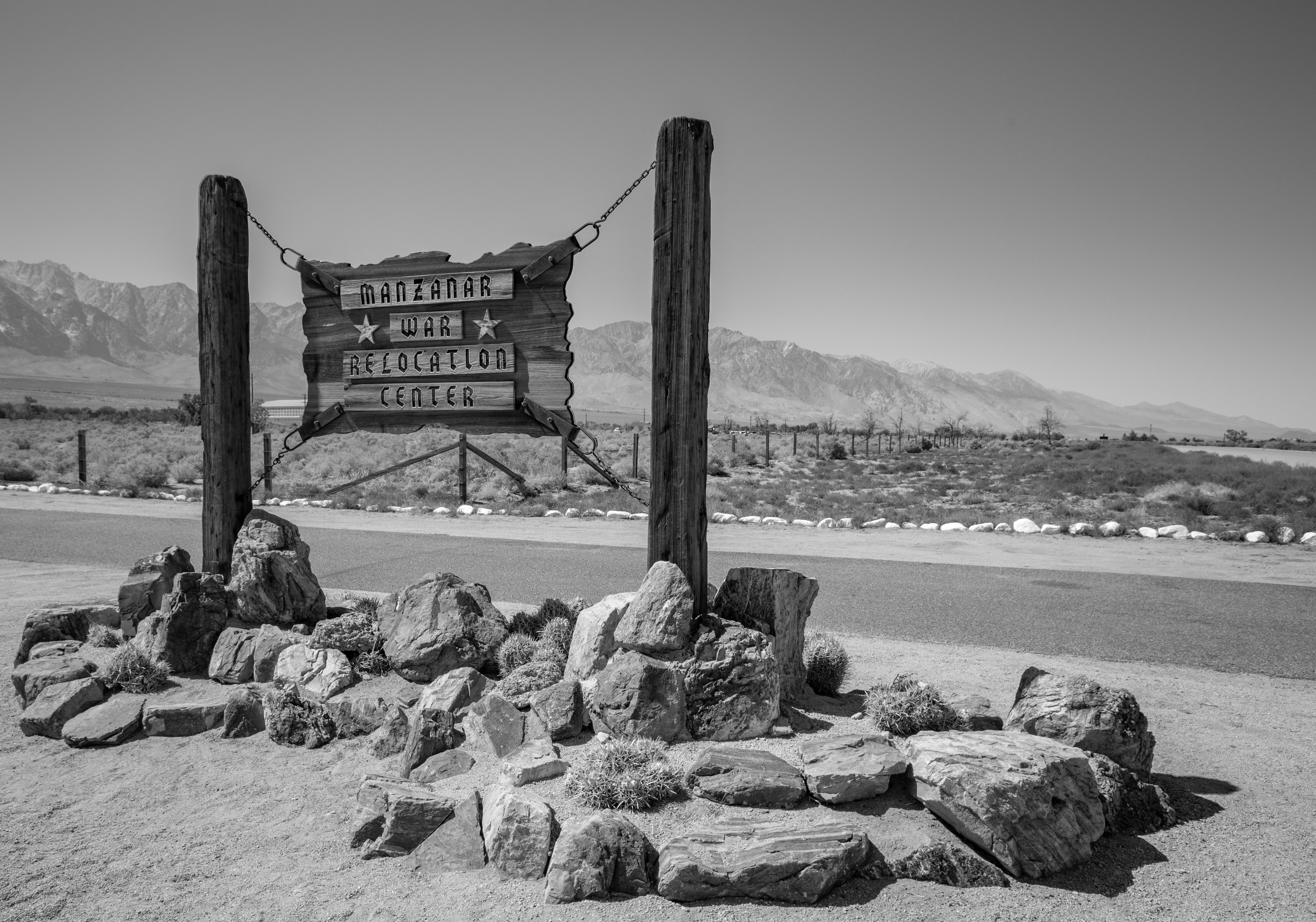
At 11 a.m. on November 21, 1945, the last incarcerated person walked out of Manzanar, and the War Relocation Authority closed the camp in California’s Owens Valley. Over three and a half years, 11,070 Japanese Americans had been held there behind barbed wire, most of them from the Los Angeles area.
The government that brought them to the desert did not take them home. Wikipedia’s history of Manzanar records that each departing person received $25, a one-way train or bus fare, and meals for those with less than $600. Some had nowhere to go after losing homes and businesses, refused to leave, and were removed from their barracks, sometimes by force.
How Manzanar began
The camp traces back to a single page signed in Washington. President Franklin D. Roosevelt signed Executive Order 9066 on February 19, 1942, letting military commanders exclude civilians from designated zones. The National Archives’ milestone page on the order notes that its wording named no ethnic group, yet the Army applied it to people of Japanese descent on the West Coast.
About 122,000 men, women and children were moved within six months, first to “assembly centers” and then to 10 inland camps. Nearly 70,000 were American citizens. The National Archives adds that the government brought no charges against them and they had no way to appeal.
The first Japanese Americans reached Manzanar in March 1942, a month after the order, to help build the camp. By mid-April up to 1,000 people a day were arriving, and the population peaked at 10,046. The site, about 230 miles north of Los Angeles, was ringed by eight watchtowers staffed by armed military police.
Life inside the fence
Most adults worked to keep the camp running: farming orchards, sewing clothing, making camouflage nets for the military, teaching, nursing and serving as firefighters. Two famous photographers, Ansel Adams and Dorothea Lange, were engaged by the agency running the camps to record them, and their pictures are now part of the record. The National Park Service’s Manzanar site keeps a photo gallery with work by Adams, Lange, Clem Albers and Francis Stewart.
Between 135 and 146 people died at Manzanar. In 1943 stonemason Ryozo Kado built a white obelisk at the cemetery, inscribed in Japanese with the words “Soul Consoling Tower.” It still stands.
From closed camp to national site
Within a couple of years of closing, almost every building was gone except the two sentry posts, the cemetery monument and the high school auditorium. On December 21, 1969, about 150 people traveled from Los Angeles for the first official Manzanar Pilgrimage, now held each year on the last Saturday of April.
The site was declared a National Historic Landmark in 1985 and a National Historic Site on March 3, 1992, and the Park Service calls it the best-preserved of the 10 camp sites. In 1988 Congress passed Public Law 100-383, which, as the National Archives explains, apologized for the incarceration and provided a $20,000 payment to each person who had been incarcerated.
A Badiyaa comparison puts the site’s role today in numbers: Manzanar drew 95,764 visitors in 2025, roughly 8.7 times the 11,070 people once confined there.
Adams’s camp photographs sit alongside his landscape work; Badiyaa has explained how Ansel Adams’s Zone System splits a photo into 11 tones and how the Moon dates his Moonrise, Hernandez photograph. More anniversaries are in Badiyaa History.
The next Manzanar Pilgrimage falls on Saturday, April 24, 2027.
Sources
- Manzanar, Wikipedia, 2026
- Executive Order 9066: Resulting in Japanese-American Incarceration (1942), U.S. National Archives, 2026
- Manzanar National Historic Site, U.S. National Park Service, 2023
Image: TheAlcoTourist, CC BY-SA 4.0 via Wikimedia Commons
This article was produced with AI assistance and reviewed by our Editorial Desk. How we work.