Speaking in Doha on Wednesday, October 21, French President Emmanuel Macron accused unnamed foreign leaders of passing on fabricated images of France’s weekend riots to score points in their own election campaigns. He said there had been no visible foreign hand in the violence itself, only in what came after it: “il n’y a pas d’ingérence étrangère visible dans les événements qui se sont passés. Par contre, il y a une manipulation étrangère de l’information” (there was no visible foreign interference in what happened, but there was foreign manipulation of information). That, he said, produced “commentaires inacceptables autant que stupides” (comments as unacceptable as they were stupid), including from heads of government.
Macron named nobody. His target audience was clear enough from his own description: “Quand je vois des dirigeants qui sont dans des situations de campagne dans la région ou de l’autre côté de l’Atlantique,” leaders campaigning “in the region or on the other side of the Atlantic” who repeat what artificial intelligence shows them, “ils font campagne sur notre dos” (they are campaigning on our backs).
What the protests are about
The unrest began as a national day of marches on Saturday, October 17, against the rising cost of living, higher fuel prices and conditions in schools. A labor union, student organizations and activists trying to revive the 2018 “yellow vest” movement called people out. Students had already been demonstrating for weeks.
Turnout depends on who counted. Authorities put it at about 550,000 people; organizers said 800,000. Most marchers were peaceful, but looting and clashes overtook the day in several cities. The interior ministry reported nearly 2,400 arrests on Saturday and almost 1,000 police officers and gendarmes injured, seven seriously. Paris police counted 855 arrests in the capital region alone.
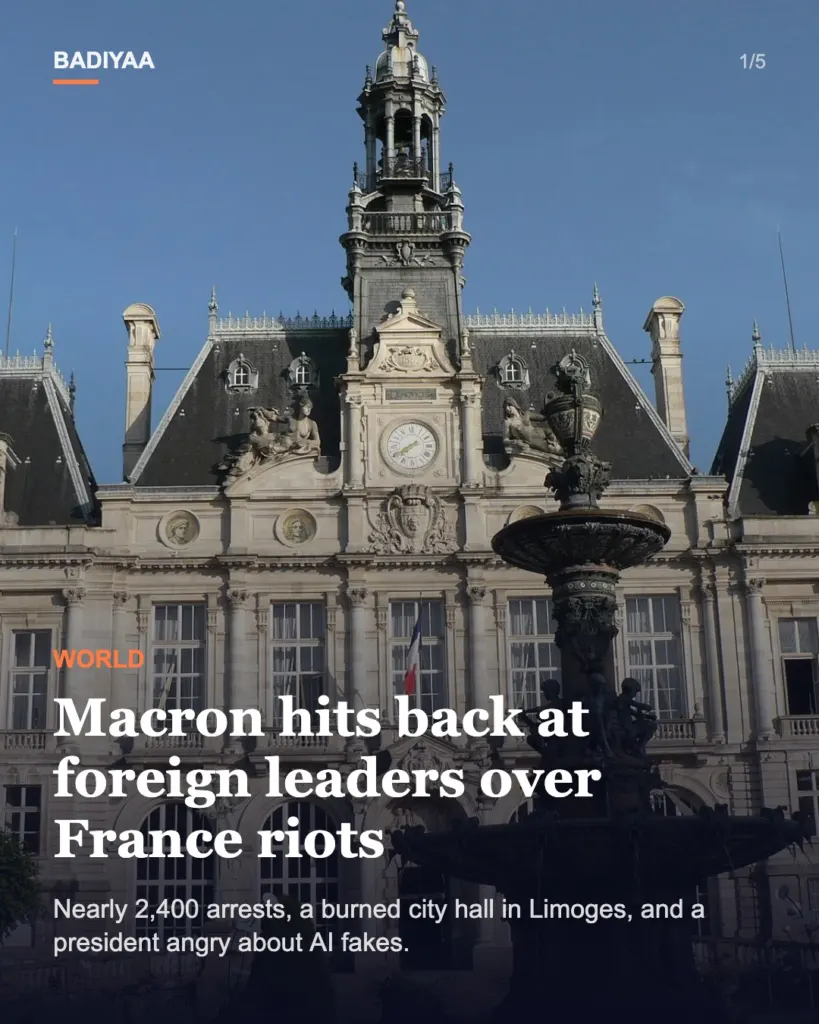
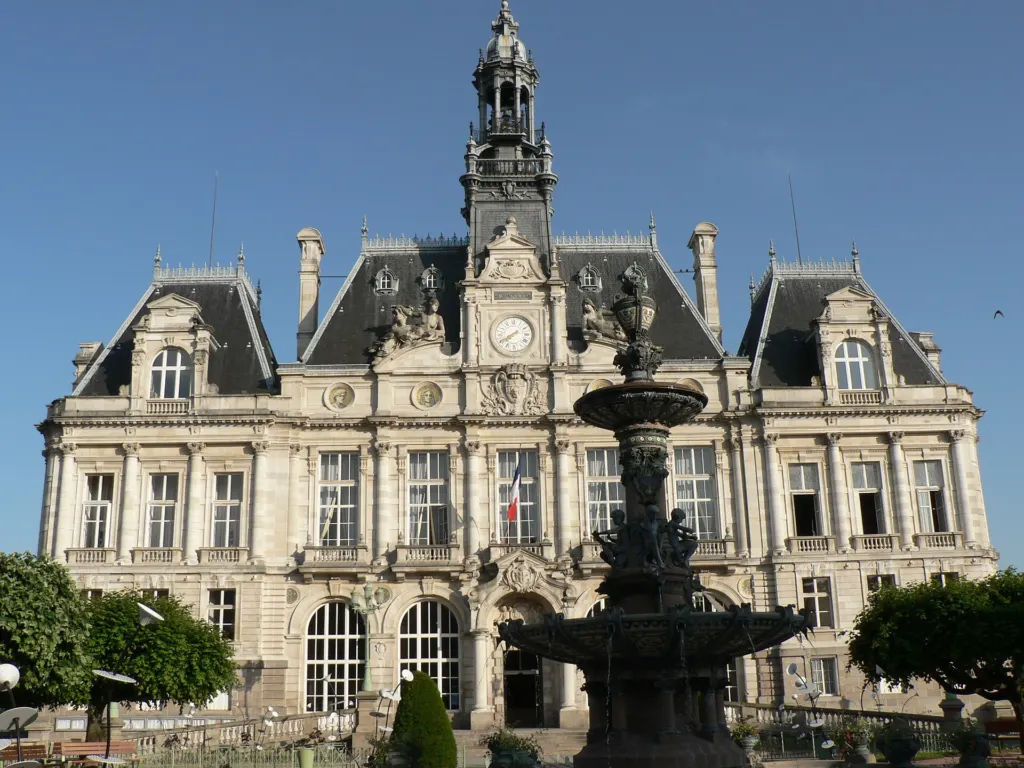
- Limoges: the 19th-century city hall burned and its roof collapsed; the regional prefect said intruders set it alight deliberately.
- Lyon: a tourist office in the city center was set on fire.
- Marseille: protesters pushed into the city hall lobby, and masked people damaged a police station.
- Bordeaux: Macron said the prefect’s residence was attacked.
- Injuries: prosecutors said a 17-year-old girl lost an eye in Mulhouse, and a teenage protester lost a hand in Saint-Étienne. Paris police said one person died of a heart attack; prosecutors opened an inquiry.
For scale, the Saturday arrest count was about a fifth higher than the nearly 2,000 recorded on the worst single day of the yellow vest protests in December 2018 (2,400 divided by 2,000 is 1.2). The organizers’ turnout figure is about 45% above the official one, a gap of 250,000 people.
Macron’s address to the nation
On Sunday evening, October 18, Macron spoke on television. The official transcript published by his office has him blaming “des factieux, issus de groupuscules d’ultra-gauche, rejoints par de nombreux délinquants” (seditious elements from small far-left groups, joined by many criminals). “Comment des Français peuvent faire cela à la France ?” he asked (How can French people do this to France?). And then: “Ceux qui ont détruit doivent payer. Ceux qui ont pillé doivent rembourser. Ceux qui ont cherché à faire tomber la République auront à en répondre.” (Those who destroyed must pay. Those who looted must pay it back. Those who tried to bring down the Republic will answer for it.)
He drew a line between rioters and the “plusieurs centaines de milliers” (several hundred thousand) people he said had marched with legitimate demands, and linked fuel prices to a conflict in the Persian Gulf in which, he said, France had taken no part. Prefects were told to work with mayors and, where needed, ban gatherings. He then flew to the Gulf to seek fuel supplies; on Tuesday he announced that the United Arab Emirates and Bahrain had pledged an extra 200,000 tonnes of diesel a month.
The foreign comments he was answering
US President Donald Trump, campaigning ahead of the November 3 midterm elections, posted “France is burning!” and wrote that “the immigration of people from an entirely different world, people with hatred in their hearts, has shattered that once great country.” He urged France to close its borders. Israeli Prime Minister Benjamin Netanyahu said in a television interview that France had given in to radical Islamism and that he had warned Macron after October 7, 2023, that the threat would reach Paris.
French authorities and police have not linked immigrants to the rioting. In Doha, Macron rejected claims that France had been overrun by “hordes de migrants et d’islamistes,” calling them “totalement faux” (totally false). “Tous les gens qui parlent mal de notre pays en ce moment, ce sont des gens qui n’aiment pas notre pays. Donc ces gens m’indisposent,” he said (Everyone running down our country right now does not love our country. So these people annoy me).
Critics at home
The pressure on Macron is not only from abroad. France votes for a new president next spring, and Macron cannot run again. Far-right leader Marine Le Pen called his government “exhausted, disoriented and seemingly incapable of doing anything other than commenting on its own powerlessness.” Far-left candidate Jean-Luc Mélenchon accused Prime Minister Sébastien Lecornu of “playing with fire,” while saying that people who share his cause “have no business in looting or destruction.” Some opposition politicians have called for Interior Minister Laurent Nuñez to be dismissed.
Local curfews have been renewed in cities including Paris, Lyon and Bordeaux. Macron called ministers and intelligence chiefs to an emergency meeting on Thursday, October 22, to get a full account of October 17, and the next national protest day is set for Saturday, October 24.
Further reading
Image: Aratar, CC BY-SA 3.0 via Wikimedia Commons
This article was produced with AI assistance and reviewed by our Editorial Desk. How we work.
Spot an error? Help verify this story
The story in 5 slides