Three psychedelics, one key, three very different rooms. LSD, psilocybin and 2C-B all switch on the same serotonin receptor in the brain, yet a Danish-led team watching rat brains burn sugar found that each drug lit up its own distinct pattern. A week later, two of them were still leaving a faint mark.
The study, published August 3, 2026, in Nature Communications by Frederik Gudmundsen, Mikael Palner and colleagues, scanned rats both during the drugs' acute effects and seven days after a single exposure. The team was based mainly at the University of Southern Denmark and Odense University Hospital, with co-authors at the University of Copenhagen and Stanford University School of Medicine.
Same receptor, different fingerprints
The shared target is the 5-HT2A receptor. Wikipedia's entry on the 5-HT2A receptor describes it as the main target of serotonergic psychedelics such as LSD and psilocybin mushrooms, and notes that its activation is needed for the effects of classic psychedelics. Beyond that one receptor, though, the drugs grab different extra targets, which is exactly what the Danish group set out to compare.
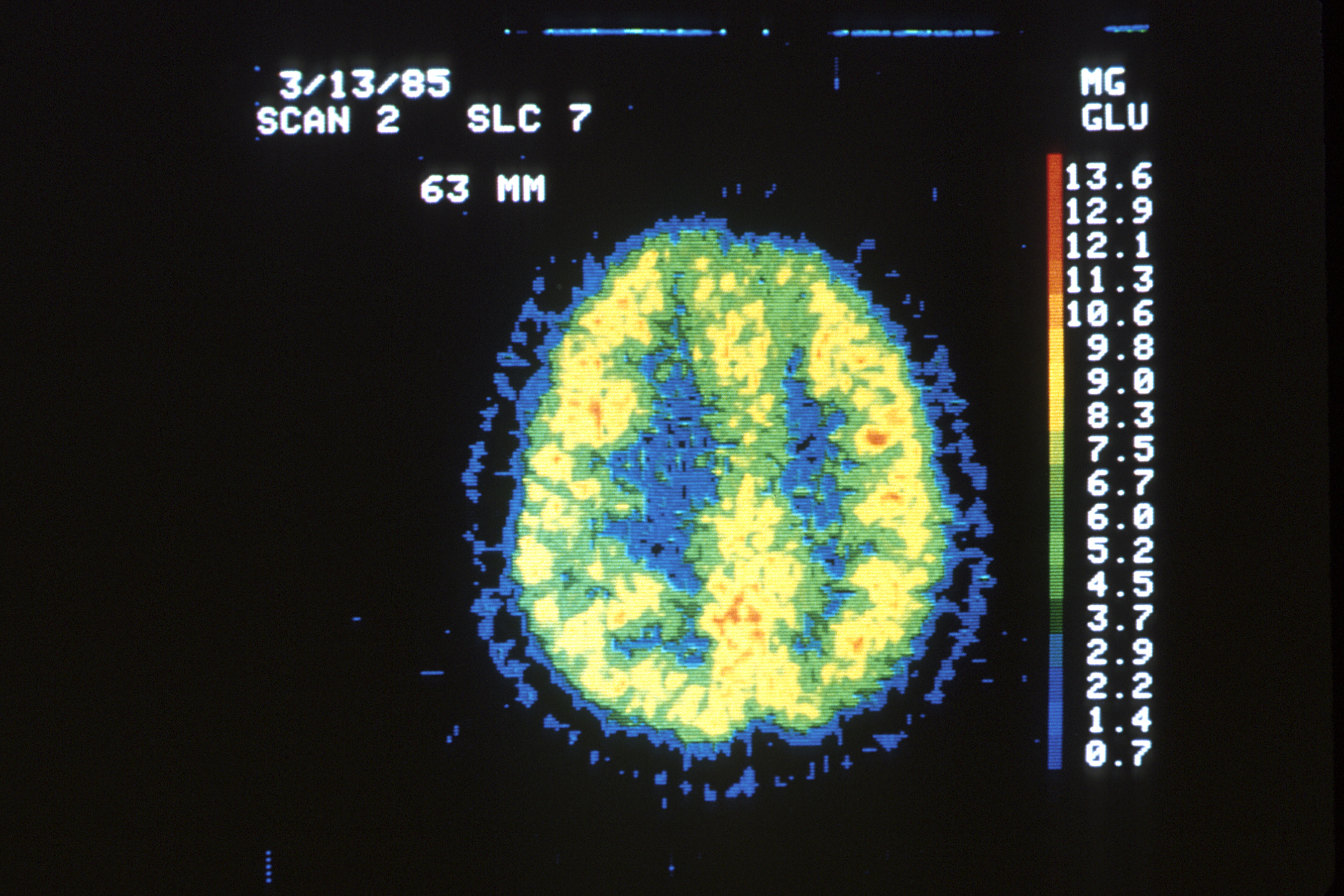
To see the differences, the researchers used radioactive sugar. Wikipedia's guide to the tracer fluorodeoxyglucose explains that brain cells soak it up like ordinary glucose but cannot break it down, so a PET scanner can map where the brain is burning the most fuel. The tracer has been shaping neuroscience since 1976, 50 years before this study.
The acute scans looked nothing alike. According to the paper, each drug changed activity in its own way across two big loops of brain wiring: one linking the cortex, striatum and thalamus, and one tying the cortex to the amygdala, hippocampus and hypothalamus. LSD alone produced pockets of lowered activity in the retrosplenial cortex and hippocampus, while 2C-B alone produced a hot spot of extra activity in the midbrain.
A memory hub goes quiet
That LSD signal sits in an intriguing place. Wikipedia's retrosplenial cortex article says the region is linked to navigation, episodic memory and imagining future events, and that in rats it is one of the largest cortical regions, stretching across more than half the cerebrum from top to bottom. In humans it covers only about 0.3% of the cortical surface.
The one-week echo
The longer-lasting result split the trio in two. Seven days after the single exposure, the rats given LSD or psilocybin still showed what the authors call modest hypometabolism, a slight drop in sugar use, spread across cortical, limbic and midbrain structures. The rats given 2C-B did not.
That makes 2C-B the odd one out, and it has an odd history to match. Wikipedia's 2C-B article records that chemist Alexander Shulgin first made it in 1974 and described it in 1975, 52 years before these scans. It belongs to the phenethylamine family, chemically a cousin of mescaline, and it is a Schedule I drug in the US and Class A in the UK.
What the scans do and do not show
This is animal research, done in male Sprague-Dawley rats, and it measures brain energy use rather than thoughts, feelings or behavior. The authors frame the result as a network-level map of where these compounds overlap and where they part ways. It says nothing about safety or effects in people.
The paper also took its time: it was received on January 2, 2025, and accepted on July 14, 2026, about 18 months of review.
Badiyaa has covered the strange chemistry behind psychedelics before, including Galerina indica, the mushroom that makes both psilocybin and deadly amatoxins. For another brain-scan surprise, see how music chills light up the brain's reward circuit.
Sources
- Paper on psychedelics and rat brain metabolic networks (Gudmundsen et al.), Nature Communications, University of Southern Denmark, 2026
- 5-HT2A receptor, Wikipedia, 2026
- Fluorodeoxyglucose (18F), Wikipedia, 2026
- Retrosplenial cortex, Wikipedia, 2026
- 2C-B, Wikipedia, 2026
Image: Unknown photographer (US government), Public domain via Wikimedia Commons
This article was produced with AI assistance and reviewed by our Editorial Desk. How we work.