Hogwarts Legacy on PC now repaints its own lighting with AI. From Thursday, November 5, an update to the wizarding open-world game adds Nvidia’s DLSS 5 “Neural Rendering” switch, and Nvidia’s official launch trailer for it has been pulling hundreds of thousands of views on the company’s GeForce YouTube channel within a day.
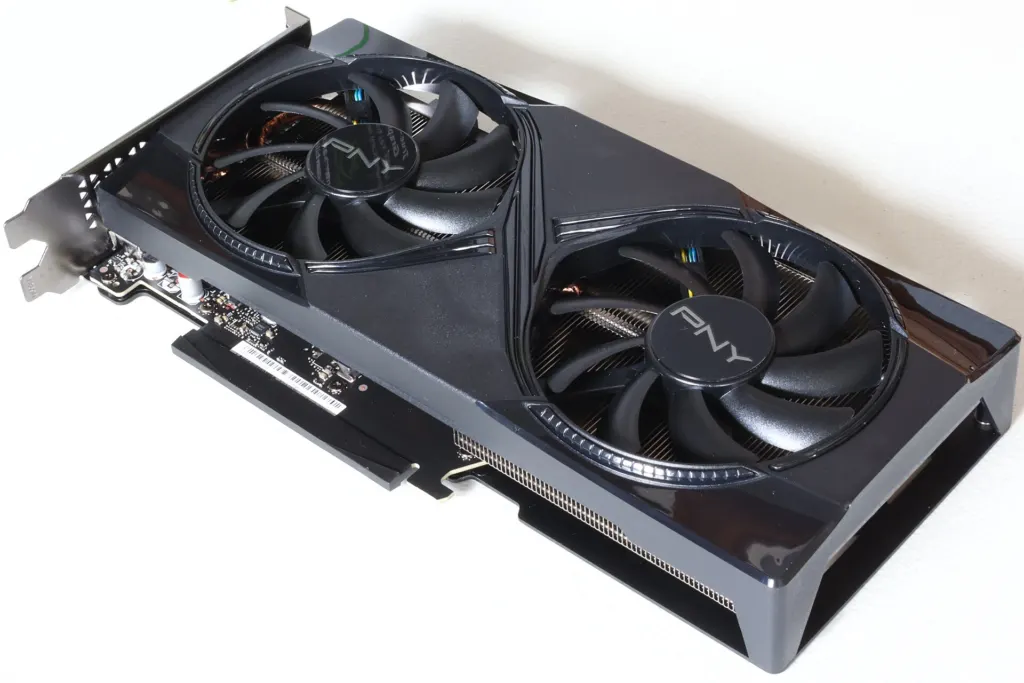
The catch: the feature runs only on GeForce RTX 50 Series desktop cards and laptops, RTX Spark PCs and the GeForce NOW Ultimate streaming tier. Everyone else keeps the game as it looked before.
What actually changes on screen
Nvidia says the setting, built with Warner Bros. Games and developer Avalanche Software, deepens environmental detail and shadows, sharpens texture detail on characters, refines shading and makes reflections more vibrant. Its own Hogsmeade comparison points to moss standing out on weathered roofs and flower boxes picking up small local shadows.
Avalanche says it tuned the effect by hand. “This allowed us to iterate and tune environments, tone and skin structural parameters in a manner that keeps the game true to the original vision,” said Jose Villeta, the studio’s Director of Software Engineering, in Nvidia’s announcement. Nvidia adds that the studio used DLSS 5’s controls to push the environmental uplift harder while preserving character identity.
Turning it on is simple: install the update, open the in-game options and enable “Neural Rendering”. Nvidia scheduled its matching Game Ready Driver for November 4 in the Nvidia app.
DLSS 5 versus every DLSS before it
For seven years, DLSS meant one thing: render fewer pixels, then let AI fill in the gaps so the frame rate climbs. DLSS 5 is the first version whose headline job is changing how a scene looks rather than how fast it runs. Here is how the generations stack up:
- DLSS 1 (2019): an AI upscaler that had to be trained separately for each game, and was widely criticized for soft images.
- DLSS 2 (2020): one general model that borrows detail from previous frames, no per-game training needed.
- DLSS 3 (2022): added Frame Generation, inserting one AI-made frame between rendered ones on RTX 40 Series cards.
- DLSS 3.5 (2023): Ray Reconstruction, a single AI denoiser for ray-traced lighting.
- DLSS 4 and 4.5 (2025-2026): transformer-based models and Multi Frame Generation, which on RTX 50 Series cards can now multiply frames up to six times.
- DLSS 5 (September 2026): “3D-Guided Neural Rendering”, which sits at the very end of the graphics pipeline and adds lighting and material detail on top of the frame the game engine has already drawn.
Nvidia’s pitch is that the engine frame stays in charge. DLSS 5 reads the frame’s color and motion vectors, and developers can choose between several models, dial “Structure Intensity” for fine details like ambient occlusion and reflections, and “Tone Intensity” for broader lighting and color. Semantic masking lets studios boost scenery while holding back on faces, which is exactly the lever Avalanche says it pulled. For players, it is a single on or off toggle.
The hardware you need, and the frame-rate fine print
DLSS 5 debuted on September 3 in NBA 2K27. Nvidia says the version shipping in Hogwarts Legacy uses its October 2026 model, about 118 million parameters, 24% smaller than before, with 20% less VRAM use at 4K and twice the speed of the previous release. The company also says DLSS 5 went from needing two GeForce RTX 5090 cards at its March reveal to running on one, a 10X gain in seven months. Nvidia has said RTX 40 Series support will follow at a later date, but gave no timing in its Hogwarts Legacy announcement.
Then there is the headline number. Nvidia says a GeForce RTX 5090 runs the game at max settings in 4K at up to 300 frames per second with Neural Rendering, ray tracing, Ray Reconstruction, Reflex and 6X Multi Frame Generation all on. Do the math on that last setting: 6X means up to five generated frames for every rendered one, so 300 displayed frames per second works out to roughly 300 / 6 = 50 frames per second actually drawn by the game engine. The display looks smooth, but the game’s responsiveness tracks that lower rendered rate.
Reading the trailer with a critical eye
The launch trailer is Nvidia’s own production, and the before-and-after scenes in its announcement were picked by Nvidia. They are a showcase, not a third-party test, and nobody outside the company has yet published side-by-side measurements of this specific update.
There is also history. When DLSS 5 was unveiled in March, gamers and developers pushed back hard on social media, arguing the AI layer could override a game’s art direction and distort faces. Nvidia itself has put the cost of neural rendering at roughly a 50 to 60% frame-rate hit. Avalanche’s choice to restrain character changes reads as a direct answer to that criticism, and the trailer leans on environments for the same reason.
The fair verdict on the clip: the lighting gains in stonework and foliage look real in Nvidia’s own captures, the speed claims depend on generated frames, and owners of anything older than an RTX 50 Series card will not see any of it yet. Next up, War Thunder gets DLSS 5 in mid-November, followed by Where Winds Meet on November 23.
Further reading
Image: FreeMediaKid!, CC BY-SA 4.0 via Wikimedia Commons
This article was produced with AI assistance and reviewed by our Editorial Desk. How we work.