Granite Janet, a 281-ton tunnel boring machine built in Germany, started mining on August 31, 2026 from a launch pit beside the Queen City Avenue Bridge in Manchester, New Hampshire. Her first job is the hardest one on the route: crawling beneath an active CSX rail line with only 10 to 12 feet of ground between the machine and the tracks.
She is the cutting edge of the Cemetery Brook Drain Tunnel, a 2.25-mile, 12-foot-diameter stormwater tunnel that the City of Manchester calls one of its largest infrastructure projects. The city’s project page puts the investment at more than $360 million.
Why Manchester is digging
Much of Manchester’s sewer network is combined, meaning rainwater and sewage share the same pipes. When heavy rain overloads them, the mix spills into the Merrimack River. According to the US Environmental Protection Agency’s settlement summary, about 45% of the city’s roughly 385 miles of sewer pipe is combined, and overflows release about 280 million gallons a year, around half of all combined-sewer discharge reaching the river from every community along it. The Merrimack supplies drinking water to more than 500,000 people.
Under a July 2020 settlement with the EPA and the State of New Hampshire, Manchester agreed to a 20.5-year program to cut that overflow volume by about 74%, to roughly 73 million gallons a year. Pulling Cemetery Brook, the largest of five brooks wired into the combined system, out of the sewers is one of the two biggest pieces of that plan. The new tunnel will carry the brook and street runoff from Mammoth Road to an outfall on the Merrimack.
Under the tracks, 15 minutes at a time
The machine arrived by oversized truck in June and was lowered into the pit in pieces, with a 450-ton crane handing them to a 700-ton crane for the descent. In mid-September only the tail of the machine was visible inside the tunnel mouth, about 15 feet below the surface in soft ground.
Ed Pietrasz, the resident engineer and construction manager for Parsons, the firm overseeing the work for the city, described the rail crossing as the riskiest stretch. “We get a 15-minute notification prior to the train coming and we stop mining, and we start again 15 minutes after it’s left,” he said in an interview published last month. Crews work around the clock and watch for a “frac-out”, when pressurized drilling fluid escapes into the ground or up to the surface.
The city’s latest status update lists mining up to the CSX corridor as underway, with support gantries still being installed. There are 16 of them, carrying water, slurry pumps and compressed air, and space at the launch site is tight enough that they go in one at a time.
The tunnel by the numbers
Granite Janet lines the tunnel as she goes. Six precast concrete segments, each weighing 5,000 pounds, lock into one ring, and a new ring is built every 5 feet. Project figures call for about 2,300 rings and 14,000 segments.
Our check on those numbers holds up. At 5 feet per ring, 2,300 rings make 11,500 feet, or about 2.18 miles, close to the city’s 2.25-mile length once shafts and connections are counted. Those 14,000 segments add up to 70 million pounds, or 35,000 tons of concrete, about 125 times the weight of the machine. Pietrasz said the target is about 50 feet a day once the machine is fully underground and in rock. At that rate the full 11,880 feet would take roughly 240 working days, which fits the project’s forecast of a drive lasting under a year.
The budget is moving fast too. Pietrasz said close to $130 million of work had been done since the notice to proceed on May 20, 2025, about a third of the total.
Where the name came from
Two seventh graders at Manchester’s Hillside Middle School won a city and school district contest to name the machine. They chose Janet Bonnema, who was hired as an engineering technician on Colorado’s Eisenhower Tunnel in 1970 and went on to be among the earliest women permitted to work inside a tunnel under construction. Naming boring machines after women is a mining tradition that goes back to Saint Barbara, the patron of miners.
What residents will notice
Most of the work is out of sight, but not all of it. Seven drop shafts are being built along the route, and the Riverwalk between Dunbar Street and Riverwalk Way is closed until fall 2028. Closer to now, the city expects the Cilley Road closure between South Beech Street and South Willow Street to lift on October 15, 2026, and the southbound lane of Brown Avenue south of Queen City Avenue to reopen on October 30.
Further reading
- City of Manchester: Cemetery Brook Drain Tunnel Project
- City of Manchester: CBDT Work Progress
- US EPA: City of Manchester, N.H. Clean Water Act Settlement Information Sheet
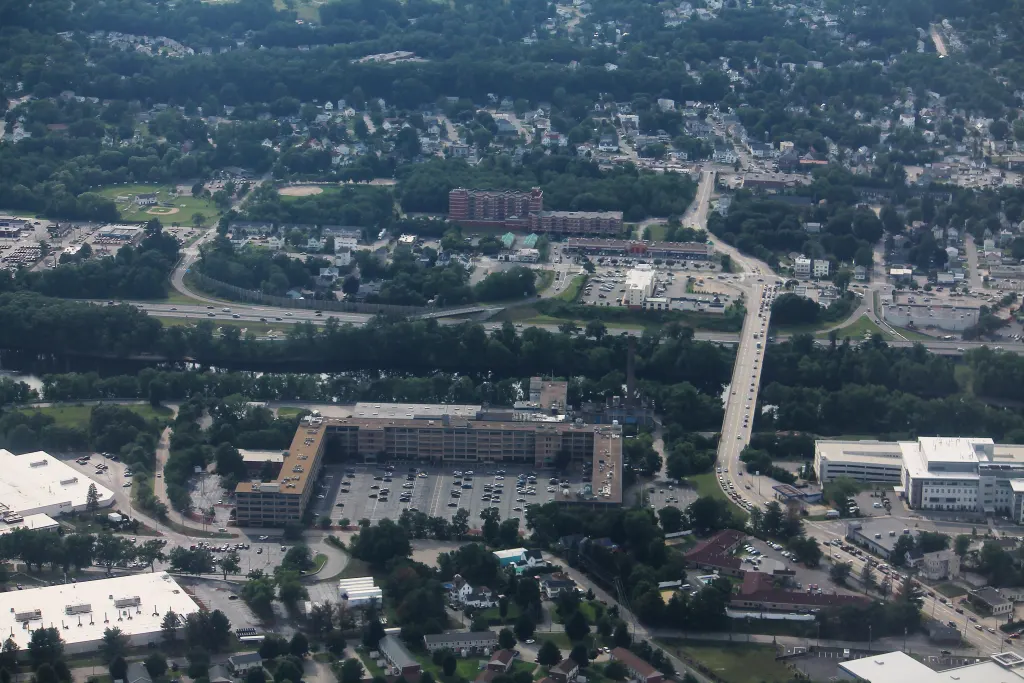
Image: formulanone, CC BY-SA 2.0 via Wikimedia Commons
This article was produced with AI assistance and reviewed by our Editorial Desk. How we work.