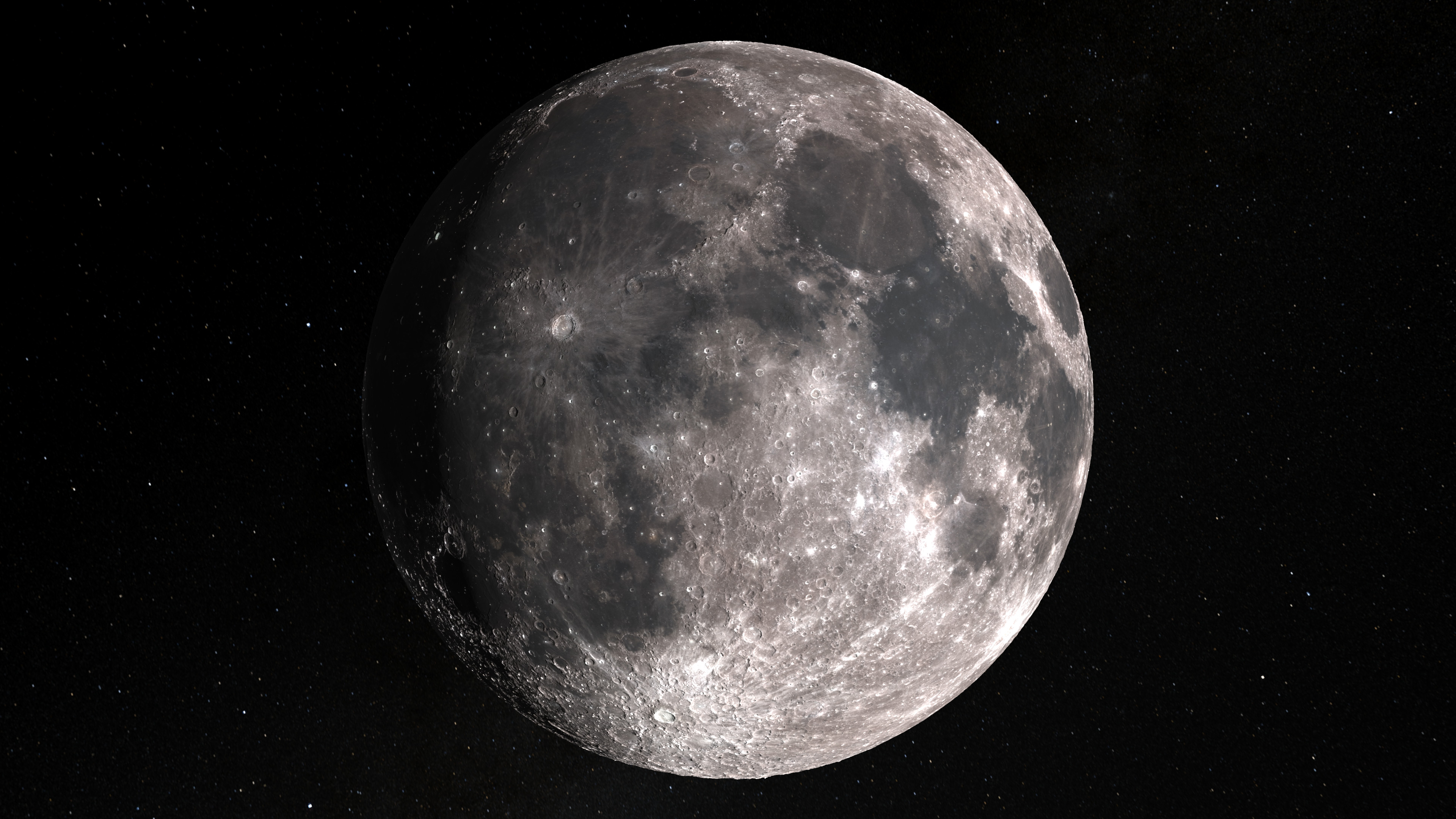
For half a century, a dramatic story has hung over the early Solar System: about 3.9 billion years ago, a sudden storm of asteroids and comets supposedly hammered the Moon, Earth and their neighbors all at once. The first rocks ever brought back from the Moon's far side say that storm may never have happened, at least not the way the textbooks told it.
Rocks from the side we never see
China's Chang'e 6 lander touched down on June 1, 2024, inside the Apollo basin, itself part of the South Pole-Aitken basin, a crater roughly 2,500 kilometers across that ranks among the largest known in the Solar System. It scooped and drilled 1,935.3 grams of material and sent it home, landing in Inner Mongolia on June 25, 2024, according to Wikipedia's account of the mission. Every earlier lunar sample had come from the side facing Earth.
28 tiny clocks
A team led by the Guangzhou Institute of Geochemistry of the Chinese Academy of Sciences dated fragments of impact melt, rock that was liquefied by an asteroid strike and then cooled. Using the argon-argon method, they obtained 28 separate ages, which they report in a July 2026 paper in Science Advances.
The ages span from about 4.33 billion to about 1.13 billion years ago, a window of roughly 3.2 billion years. Three fragments cluster near 4.16 billion years, matching recent dating of the Apollo basin. But just two ages fall between 4.0 and 3.7 billion years, the very window when the supposed cataclysm should have left its mark.
The authors conclude that bombardment on the far side "was not dominated by a cataclysmic spike but by a smooth long-term decline punctuated by later impacts."
Why the old story took hold
The idea of a Late Heavy Bombardment, also called the lunar cataclysm, grew out of the Apollo missions. Melt rocks from Apollo landing sites seemed to bunch up in age between about 4.1 and 3.8 billion years, suggesting a sudden barrage, as Wikipedia's article on the hypothesis explains. Critics argued all along that the bunching might be an illusion created by sampling debris from a single huge impact, the Imbrium basin, which sprayed material across the near side. The theory was once widely accepted and is now openly debated.
The far side offers a cleaner test. Curtin University geochronologist Fred Jourdan, a co-author, said in Curtin University's release on the study: "The far side preserves a cleaner record of those earliest impacts because it was much less affected by later geological events than the side facing Earth."
He added: "These samples are helping us rewrite parts of the Moon's history and suggest the early Solar System experienced a long decline in asteroid impacts rather than a single catastrophic bombardment."
What it means for Earth
Earth has lost nearly all of its own record of those early hits to erosion, volcanoes and drifting tectonic plates. The Moon kept its scars. "The Moon is like a time capsule," Jourdan said, adding that because the two worlds formed together, every major impact on the Moon says something about conditions on the young Earth, including the environment in which life emerged.
A slow, tapering bombardment would mean the young Earth was not wiped clean in one violent episode about 3.9 billion years ago. The debate is not over: 28 fragments from one landing site are a small sample, and the near-side Apollo rocks still need explaining. But for the first time, scientists can compare both faces of the Moon directly.
To see why we only ever glimpse one side, read Badiyaa's explainer on how tidal locking keeps the Moon's far side hidden, and our guide to the gunpowder-scented lunar dust that covers both.
Sources
- “The bombardment history on the lunar farside”, Science Advances (Guangzhou Institute of Geochemistry, Curtin University), 2026
- “Rocks from unexplored far side of the moon (media release)”, Curtin University, 2026
- “Late Heavy Bombardment”, Wikipedia, 2026
- “Chang'e 6”, Wikipedia, 2026
- “South Pole-Aitken basin”, Wikipedia, 2026
Image: NASA's Scientific Visualization Studio - eMITS/Dan Gallagher, USRA/Ernie Wright, Tuomas Kankola, Public domain via Wikimedia Commons
This article was produced with AI assistance and reviewed by our Editorial Desk. How we work.