More than a mile below the surface of the Red Sea's northern arm, there is a lake inside the ocean, and it kills almost anything that swims into it. Eels have learned to work the edge anyway.
The lake is one of the NEOM Brine Pools, found at a depth of 1,770 meters (about 1.1 miles) in the Gulf of Aqaba during a 2020 research cruise of the ship OceanXplorer. A team led by Sam Purkis of the University of Miami described them in a 2022 paper in Communications Earth and Environment, the first brine pools ever found in the Gulf.
A lake with a shoreline, on the seabed
A brine pool is a pocket of extremely salty water that settles into a dip in the seafloor. Because it is so dense, it barely mixes with the seawater above, so it behaves like a lake with a visible surface and even a shoreline. Wikipedia's overview of brine pools notes they are typically three to eight times saltier than the surrounding ocean.
The NEOM numbers fit that picture. The seawater just above the main pool measured 40 on the practical salinity scale; lab tests put the brine itself at 160, four times as salty. Dissolved oxygen dropped by more than 75% right at the boundary and fell to almost nothing half a meter in. The main pool covers about 10,000 square meters, roughly the size of two American football fields, with three tiny satellite pools of less than 10 square meters each.
The hunters on the rim
This is where it gets grimly clever. Fish and crustaceans that blunder into the brine are stunned or killed by the lack of oxygen. The researchers watched eels, bigeye houndsharks and flatfish cruise the brine's surface, and one eel repeatedly dipped into it, apparently to grab animals the pool had knocked out. Shrimp were seen scavenging the casualties too. Call it a deep-sea buffet with a very strict door policy.
The bodies do not necessarily rot. The brine pool entry explains that the oxygen-free water can preserve dead animals for years without decay.
A 1,200-year diary of floods and tsunamis
The same lack of oxygen keeps burrowing animals out of the mud, so the layers on the pool floor pile up undisturbed. Cores from the main pool hold a record spanning at least 1,200 years, including sediment the team links to flash floods, earthquakes and tsunamis, according to the Purkis team's study.
Location is what makes that archive special. The NEOM pools sit only 2 kilometers from the coast, far closer than the next nearest Red Sea example, the Thuwal Seeps, about 25 kilometers offshore. That puts them right where sediment washed off the land ends up.
Why scientists care beyond the Red Sea
Brine pools are rare. Only a few tens have been found worldwide, in the Gulf of Mexico, the Mediterranean and the Red Sea. The authors write that their extreme mix of no oxygen, low pH and crushing saltiness makes them one of the harshest habitable places on Earth, "perhaps offering clues to first life on our planet, and guiding the search for life beyond it."
Brine also turns up in the search for water on Mars, and microbes from Red Sea pools have been studied as sources of new medicines, the Wikipedia overview adds.
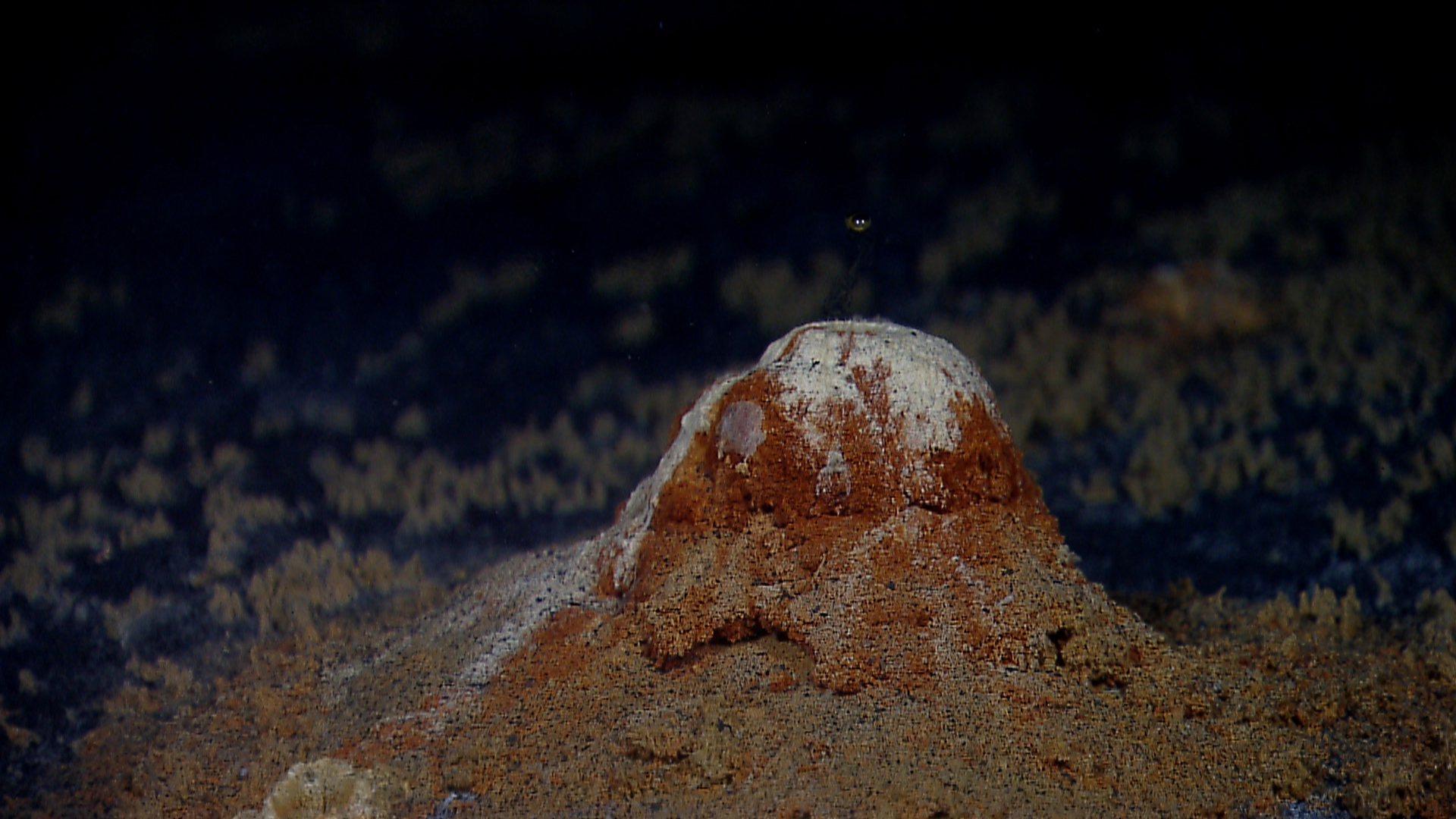
The lead image here is illustrative: it shows a small gas-venting mound beside a different brine pool in the Gulf of Mexico, photographed by NOAA's Okeanos Explorer program in 2012. For more strange salt-water science, read Badiyaa's explainer on why the ocean is salty in the first place and our story on Australia's bubble gum pink Lake Hillier and its salt-loving microbes.
Sources
- "Discovery of the deep-sea NEOM Brine Pools in the Gulf of Aqaba, Red Sea (Purkis et al., Communications Earth and Environment)", University of Miami and partners, 2022
- "Brine pool", Wikipedia, 2026
- "Expl8355: brine pool vent, Gulf of Mexico", NOAA Photo Library via Wikimedia Commons, 2012
Image: NOAA Okeanos Explorer Program, Public domain via Wikimedia Commons
This article was produced with AI assistance and reviewed by our Editorial Desk. How we work.