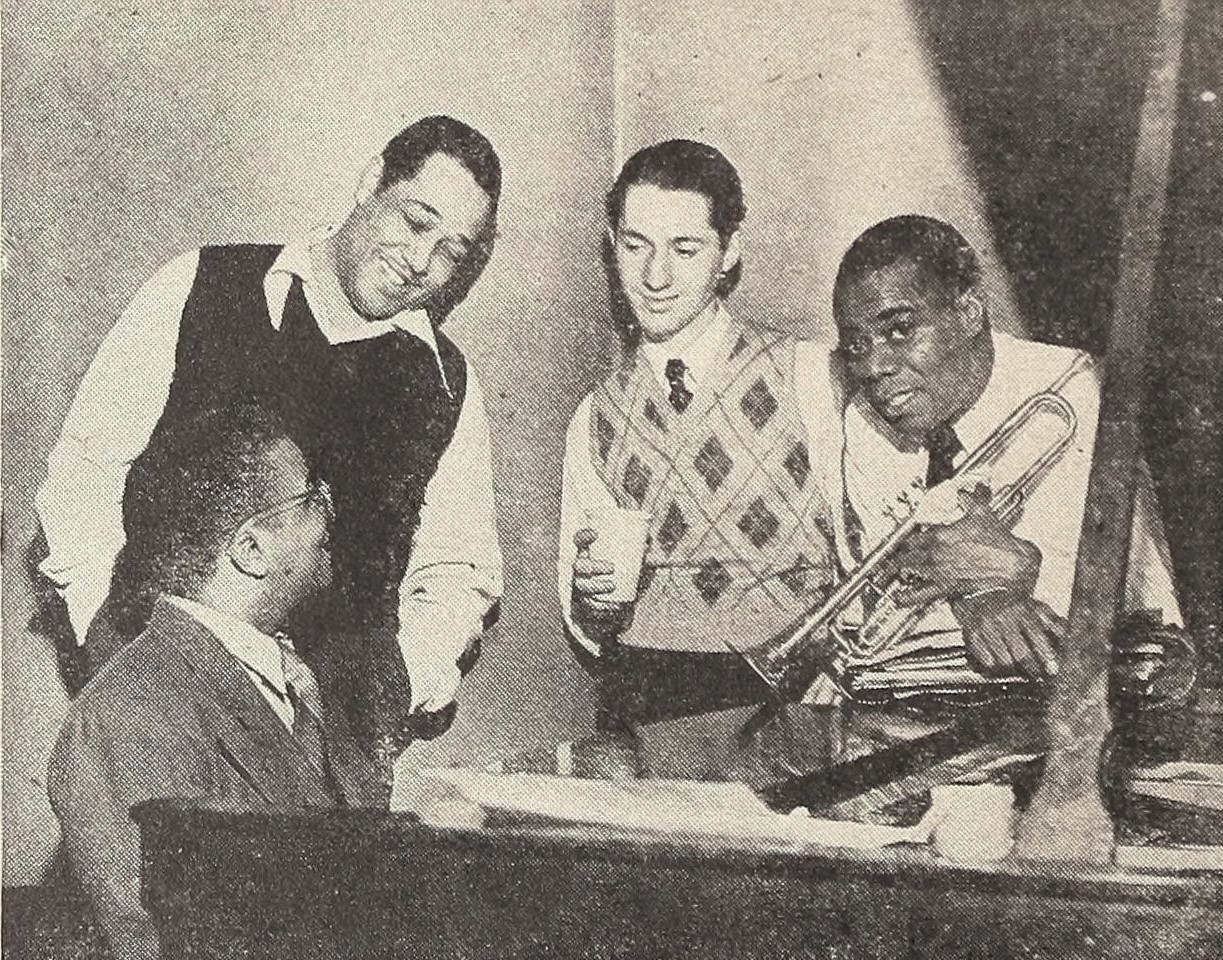
Duke Ellington's most famous theme song was nearly thrown away. Billy Strayhorn, the shy young pianist who wrote "Take the 'A' Train," dropped a draft of it in the trash because he thought it sounded too much like someone else. Ellington's son Mercer fished it out, and it became the band's signature tune.
Strayhorn was born on November 29, 1915, in Dayton, Ohio, 111 years ago this Sunday. He spent almost three decades as Ellington's secret weapon, and Ellington put it plainly: "Billy Strayhorn was my right arm, my left arm, all the eyes in the back of my head, my brain waves in his head, and his in mine." That line comes from Strayhorn's Wikipedia biography.
The audition in Pittsburgh
Strayhorn grew up partly in Pittsburgh and partly with his grandparents in Hillsborough, North Carolina, where he learned hymns on his grandmother's piano. He wanted to be a classical composer, but in the 1930s that world was almost entirely closed to a Black musician, so he turned to jazz.
In December 1938 he got backstage after an Ellington show in Pittsburgh and did something bold. He explained how he would rework one of the great man's own tunes, then sat at the piano and showed him. Among the songs he showed off was one he had written as a teenager, first called "Life Is Lonely" and later retitled "Lush Life." Ellington invited him to New York.
Directions that became a standard
The trip itself produced the hit. Ellington gave Strayhorn money to travel and wrote out subway directions to his home, starting with the words "Take the A Train." According to the song's Wikipedia entry, the tune was written in 1939, first recorded for radio on January 15, 1941, and cut commercially on February 15, 1941.
It also arrived at exactly the right moment. A 1940 licensing fight with ASCAP kept Ellington's own compositions off the radio, while Strayhorn and Mercer were registered with the rival BMI. So the new kid's songs filled the gap, and "A" Train replaced "Sepia Panorama" as the band's theme. In 1976 Ellington's 1941 Victor recording entered the Grammy Hall of Fame.
The man behind the bows
Strayhorn wrote or co-wrote "Chelsea Bridge," "Day Dream," "A Flower Is a Lovesome Thing" and much more, but he often went uncredited. Ellington joked on stage that Strayhorn did a lot of the work while he took the bows. Friends said the lack of recognition hurt.
He also helped write one of Hollywood's landmark jazz scores. The Anatomy of a Murder record on Wikipedia credits the 1959 score to Ellington and Strayhorn; it won three Grammy Awards, and the film later joined the Library of Congress's National Film Registry.
Lena Horne's great love
Strayhorn was openly gay to his friends and the band at a time when that took real courage. His first partner was the musician Aaron Bridgers. He was also the closest companion of Lena Horne, who had learned music from him in Pittsburgh. Horne's Wikipedia biography says she would have married him had he been straight, and he coached her singing for years. For more on her own battles with Hollywood censors, read how Lena Horne's bubble-bath song was cut from Cabin in the Sky in 1943.
Strayhorn at a glance
- Born: November 29, 1915, Dayton, Ohio.
- Met Ellington: December 1938, Pittsburgh.
- Biggest hit: "Take the 'A' Train," recorded 1941.
- Height: 5 feet 3 inches, nearly a foot shorter than the 6-foot-1 Ellington.
- Last piece: "Blood Count," sent to Ellington from the hospital in 1967.
You can see the man himself in William P. Gottlieb's 1940s portrait, held by the Library of Congress: round glasses, a gentle face, nothing like a star. For another Black composer who broke into a closed world, read how Florence Price reached the Chicago Symphony's 1933 program.
Sources
- Billy Strayhorn, Wikipedia, 2026
- Take the "A" Train, Wikipedia, 2026
- Anatomy of a Murder, Wikipedia, 2026
- Lena Horne, Wikipedia, 2026
- Billy Strayhorn, New York, N.Y., between 1946 and 1948, William P. Gottlieb Collection, Library of Congress via Wikimedia Commons, 2016
Image: Photographer not credited, Public domain via Wikimedia Commons
This article was produced with AI assistance and reviewed by our Editorial Desk. How we work.