Whitney Houston's The Bodyguard soundtrack turned 34 on November 17, and its first week on the US albums chart is the least famous number it ever posted. The album opened at No. 2 on the chart dated December 5, 1992, with 144,500 copies, stuck behind Ice Cube's The Predator, as the soundtrack's Wikipedia entry records.
Within five weeks it had blown past every sales record of the era. In its sixth week it sold about 1,061,000 copies, making Houston the first artist since computerized sales tracking began in May 1991 to sell more than a million copies of one album in a single week.
From 144,500 to a million, week by week
- Week 1 (chart dated December 5, 1992): No. 2, 144,500 copies, behind The Predator.
- Week 2 (December 12): No. 1 with 292,000 copies.
- Week 5: 831,000 copies, beating the single-week record held by Guns N' Roses' Use Your Illusion II.
- Week 6: about 1,061,000 copies, breaking its own record.
Our math: the sixth-week total is roughly 7.3 times the opening week, and the jump from week five to week six alone, about 230,000 copies, is bigger than the whole first week.
The song that almost was a Motown cover
The centerpiece nearly ended up being a different song. Co-star Kevin Costner first pushed for the Motown standard What Becomes of the Brokenhearted, with an a cappella first verse. Music supervisor Maureen Crowe instead suggested I Will Always Love You, the Dolly Parton country ballad, after hearing a version by Linda Ronstadt. Costner's a cappella idea survived: Houston opens the song alone for 45 seconds before David Foster's strings and keyboards come in.
Parton herself helped shape it. When Foster called her, she suggested Houston sing the third verse from her original recording, since the Ronstadt-style version's third verse had been spoken. The studio take was cut at Ocean Way Recording on April 22, 1992.
A record-label letter that changed the film
Arista boss Clive Davis was not sold on the early script. He wrote to Costner and director Mick Jackson that it "is nowhere near fulfilling the potential of what Whitney could contribute to the role," according to the soundtrack's recording history. The result was a deal in which Houston agreed to record at least six songs, five of them used in the film, and took executive producer credit and creative control. She picked her own producers for the first time, calling in Babyface, L.A. Reid, BeBe Winans, Narada Michael Walden and, for the first time, David Foster.
The totals
The Bodyguard spent 20 weeks at No. 1 in the US, the first album by a woman to log that many, and topped charts in 21 countries. It went diamond on November 3, 1993, sold 19 million US copies and passed 50 million worldwide, making it the best-selling soundtrack ever, per the album's chart and sales record. It also won the Grammy for Album of the Year.
Badiyaa has covered both ends of this story: the album that briefly beat it, in our piece on Ice Cube's The Predator and its 193,000-copy first week, and the song's first life, in Dolly Parton's two country No. 1 runs with I Will Always Love You.
The clips keep pulling viewers, too: by 2026 two of its music videos, I Will Always Love You and I Have Nothing, had each topped one billion views on YouTube, a first for any album from the 1990s.
Sources
- The Bodyguard (soundtrack), Wikipedia, 2026
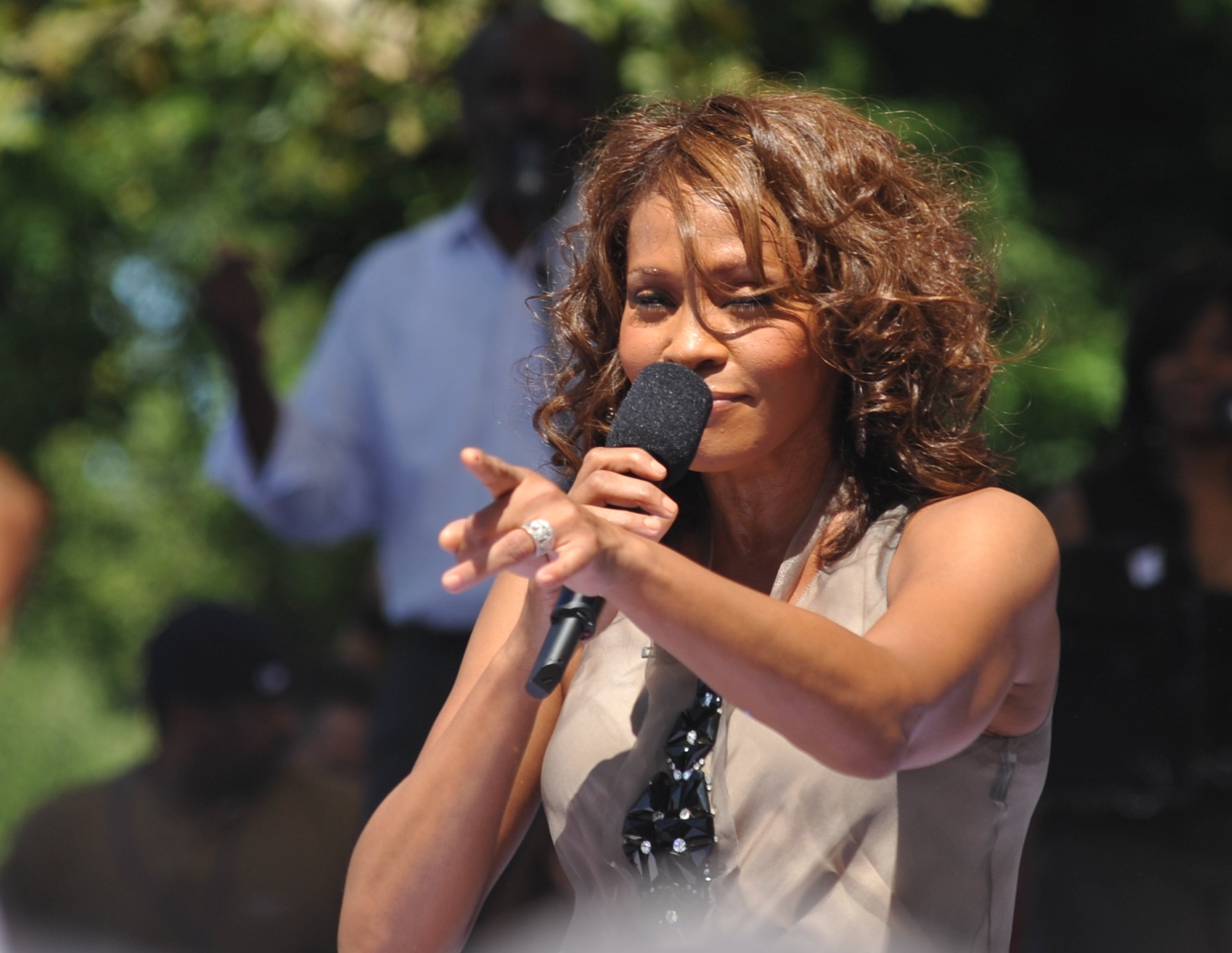
Image: Asterio Tecson, CC BY-SA 2.0 via Wikimedia Commons
This article was produced with AI assistance and reviewed by our Editorial Desk. How we work.