Walmart has put it in writing: the small digital screens replacing paper price tags in its US stores “do not identify customers,” and the company says it “does not and will not use digital shelf labels for individual or dynamic pricing.” The pledge landed in an October 5 open letter from Dan Bartlett, Walmart’s executive vice president of corporate affairs, four days after the first US state law against grocery “surveillance pricing” switched on in Maryland.
That pairing is the real change behind this week’s wave of headlines about Walmart, Target, Kroger and Wegmans “changing how they price groceries.” The price on the shelf is going digital, and lawmakers are now writing rules about what those screens may and may not be used for.
What is actually on the shelf
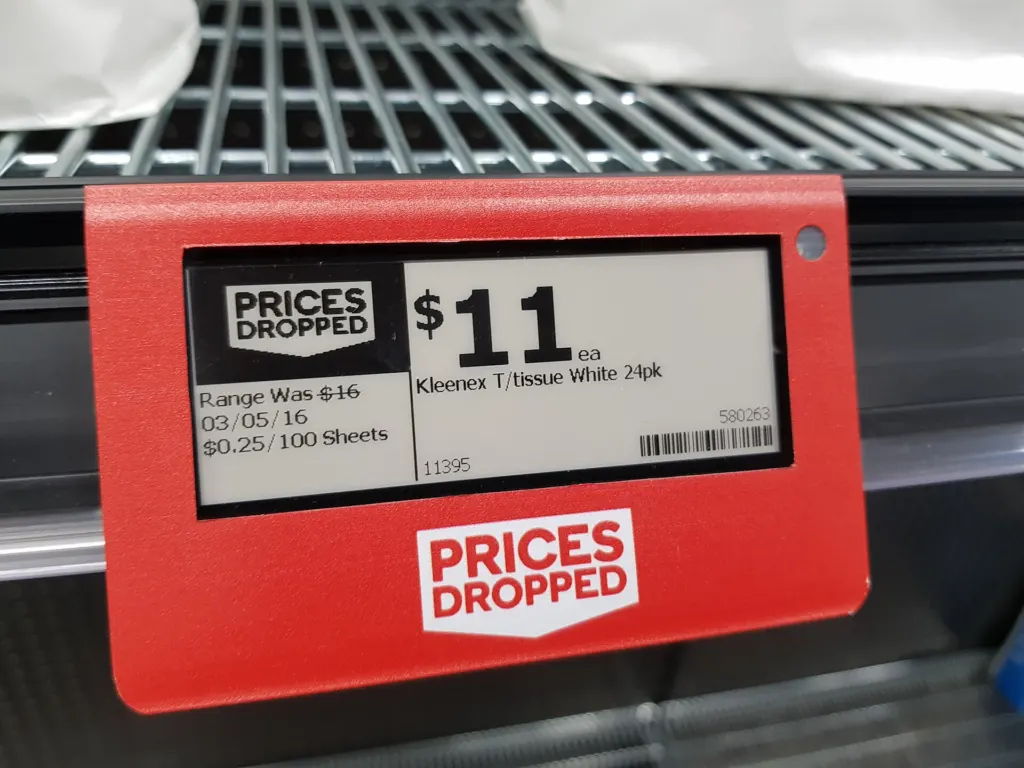
Electronic shelf labels, which Walmart calls digital shelf labels, are battery-powered displays clipped to the shelf edge. Walmart compares them to the price boards customers already know from gas stations and drive-thrus. According to the company, prices are still set centrally under its Every Day Low Price strategy, an associate reviews approved changes, and the labels only display the result.
Walmart lists three specific promises on its own explainer page:
- Every customer in a store sees the same price, “no matter the weather, the time of day, or who’s standing in front of the shelf.”
- The labels are closed-system displays with no cameras, microphones or facial recognition, and they do not collect personal data.
- Updates that once took hours or days across tens of thousands of items now take minutes.
The October letter goes further than the explainer. It rules out “dynamic pricing,” which Walmart illustrates with prices that climb on a hot day or before a snowstorm, and says the company will not use “an individual customer’s personal information, income, shopping history, urgency or willingness to pay to set an individualized price.”
Kroger is also swapping paper tags for electronic labels and has reportedly said it has never engaged in surge pricing. It did not answer repeated requests for comment on the issue from one food-policy newsroom this spring.
Three terms that get mixed up
Much of the confusion comes from treating three different things as one:
Electronic shelf labels are hardware. They make price changes faster and cheaper to roll out, in either direction.
Dynamic pricing means changing prices often in response to demand, stock or time. Online it is routine. A data firm called Decodo counted price changes across 120 large e-commerce sites and reported in March that Walmart’s online prices moved 68,926 times, Kroger’s 55,601, Target’s 39,386 and Wegmans’ 12,912 in its sample, with about half of all moves being cuts.
Surveillance pricing, sometimes called personalized pricing, is the one the new laws target: using what a retailer knows about you, such as location, purchase history or demographics, to show you a different price than the next shopper.
What Maryland’s law requires
Maryland’s House Bill 895, the Protection From Predatory Pricing Act, was signed by Governor Wes Moore on April 28 and took effect October 1, 2026, as Chapter 154 of the state’s laws. The state’s official synopsis says it bars food retailers and third-party delivery services from dynamic pricing and from using consumer personal data to set a price.
It covers food retailers with stores of at least 15,000 square feet, plus delivery apps that bring groceries to the door. The state attorney general’s Consumer Protection Division enforces it, and shoppers cannot sue under it directly. Fines run up to $10,000 per violation, rising to $25,000 per violation for repeat offenders.
Loyalty programs survive. The law carves out promotional prices, member discounts that anyone can join, price differences tied to objective costs such as shipping or taxes, and deals where a shopper knowingly trades personal data for a price.
Where the fight moves next
Maryland went after the pricing practice, not the screens, which the grocery workers’ union says leaves its concerns about the labels and jobs unresolved. Other states are trying different tools. A Minnesota bill, HF 3408, would allow electronic labels only if prices change once a day at a set time. A Georgia proposal would ban individualized prices built from customer data. New York already requires a disclosure reading “THIS PRICE WAS SET BY AN ALGORITHM USING YOUR PERSONAL DATA” wherever retailers price that way, and bills there and in New Jersey and Pennsylvania aim to ban the practice at grocery and drug stores.
In Congress, three bills would regulate surveillance pricing, including the One Fair Price Act of 2025 from Senators Ruben Gallego, Kirsten Gillibrand, Cory Booker and Angela Alsobrooks. All three were still in committee when Maryland’s law took effect.
For now, the most concrete commitment from a retailer is Walmart’s. Its letter closes with a line shoppers can hold it to: “We price products, not people.”
Further reading
Image: Maksym Kozlenko, CC BY-SA 4.0 via Wikimedia Commons
This article was produced with AI assistance and reviewed by our Editorial Desk. How we work.