The record that carried rap out of Bronx rec rooms and onto pop radio was cut in a single take by three New Jersey men who had never made a record before. The Sugarhill Gang's "Rapper's Delight," released on September 16, 1979, became the first rap single to break into the US top 40, peaking at No. 36 on January 12, 1980, according to the group's Wikipedia history.
At home it was a modest chart hit. Abroad it was a monster. It went to No. 1 in Canada and the Netherlands, No. 3 in the UK and No. 2 across much of mainland Europe.
A crew assembled by a label boss
The trio did not come up through the park-jam circuit. Producer Sylvia Robinson, who ran Sugar Hill Records with her husband Joe, put Henry "Big Bank Hank" Jackson, Michael "Wonder Mike" Wright and Guy "Master Gee" O'Brien together in Englewood, New Jersey. The label and the group took their name from Sugar Hill, the Harlem neighborhood.
Robinson had struggled to find anyone willing to put rap on tape, since many club MCs saw it as live-only art. The story attached to the song's origin has Robinson and her son Joey hearing Hank at a pizza parlor; Master Gee has said Hank auditioned outside that shop while Gee himself tried out in Robinson's car.
The bass line that started a legal fight
The groove underneath is a live band replaying Chic's "Good Times," not a sample. Bassist Chip Shearin, then 17, said in a 2010 interview that his job was to hold that line for 15 minutes straight without a mistake, for $70. He described the session this way, as quoted in the song's Wikipedia entry: "Sylvia said, 'I've got these kids who are going to talk real fast over it; that's the best way I can describe it.'"
Nile Rodgers heard the result on a New York dance floor weeks later and, with bandmate Bernard Edwards, threatened to sue. The settlement made them co-writers. Rodgers later came around completely, calling it one of his favorite songs and saying: "As innovative and important as 'Good Times' was, 'Rapper's Delight' was just as much, if not more so."
The lyrics carried their own debt. Much of Big Bank Hank's opening section came from a rhyme book lent to him by Grandmaster Caz, which is why Hank's verse namechecks "Casanova Fly," Caz's full stage name. Wonder Mike said he picked up the phrase "hip-hop" from a cousin, which became the famous opening line.
By the numbers
Here is how the single stacks up, from the same records:
- 14 minutes 37 seconds: the full 12-inch version, nearly four times the length of the 3:55 single edit.
- Five: the number of mixes of the song in circulation.
- About 1.3 million: estimated US sales, out of roughly 5 million worldwide.
- 2011: the year the Library of Congress added it to the National Recording Registry.
Put another way, roughly three of every four copies sold outside the US, a split that matches the chart story: a mid-table hit at home and a chart-topper overseas.
The song's DNA runs straight through the next decade of New York rap, from Run-DMC's holiday single Christmas in Hollis to the 1993 day when Wu-Tang Clan and A Tribe Called Quest released classics on the same date.
The Sugarhill Gang never landed another US top 40 hit. The group split in 1985, re-formed in 1994 and ran a 40th-anniversary world tour in 2019, from May 24 to July 26.
Sources
- Rapper's Delight, Wikipedia, 2026
- The Sugarhill Gang, Wikipedia, 2026
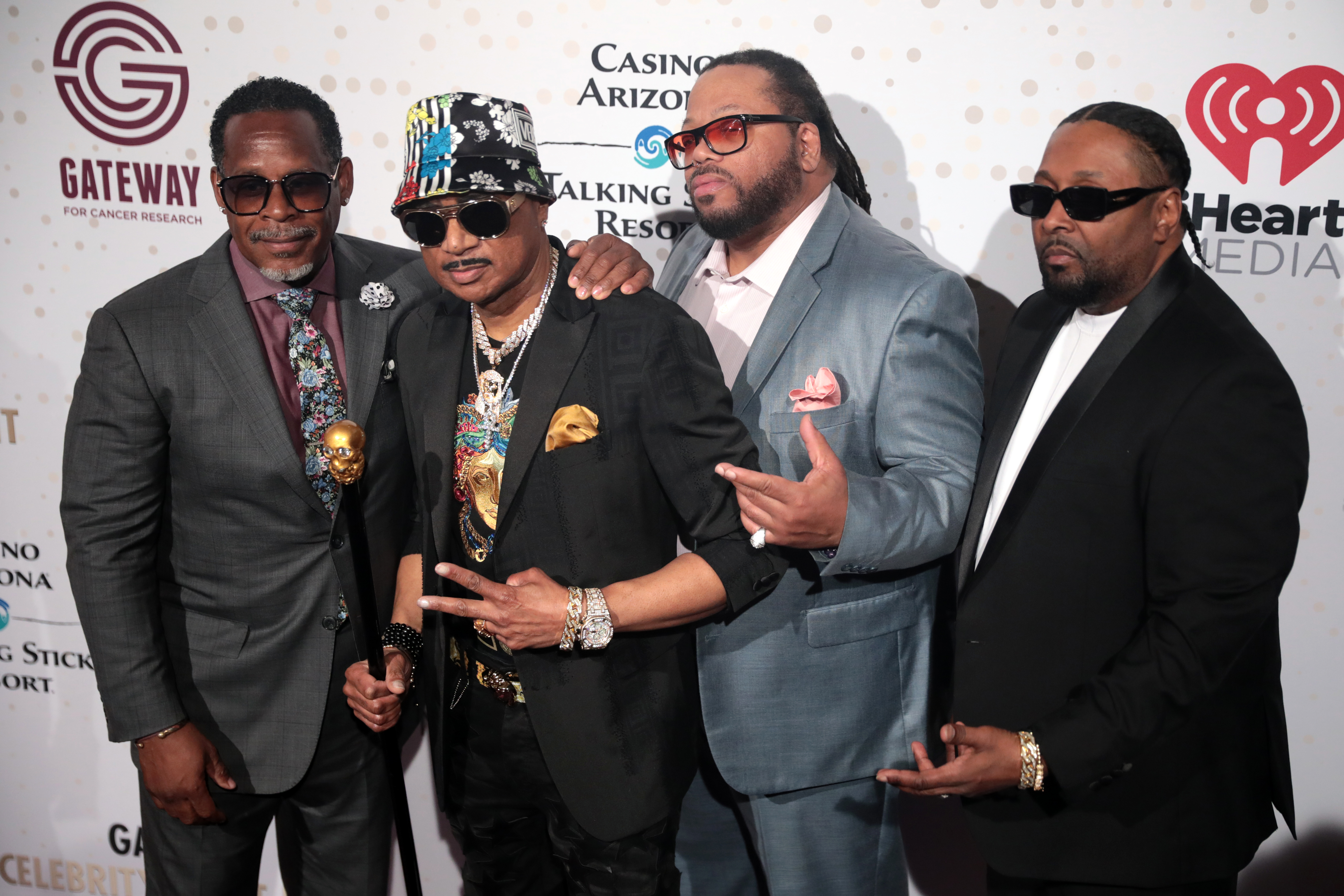
Image: Gage Skidmore, CC BY-SA 2.0 via Wikimedia Commons
This article was produced with AI assistance and reviewed by our Editorial Desk. How we work.