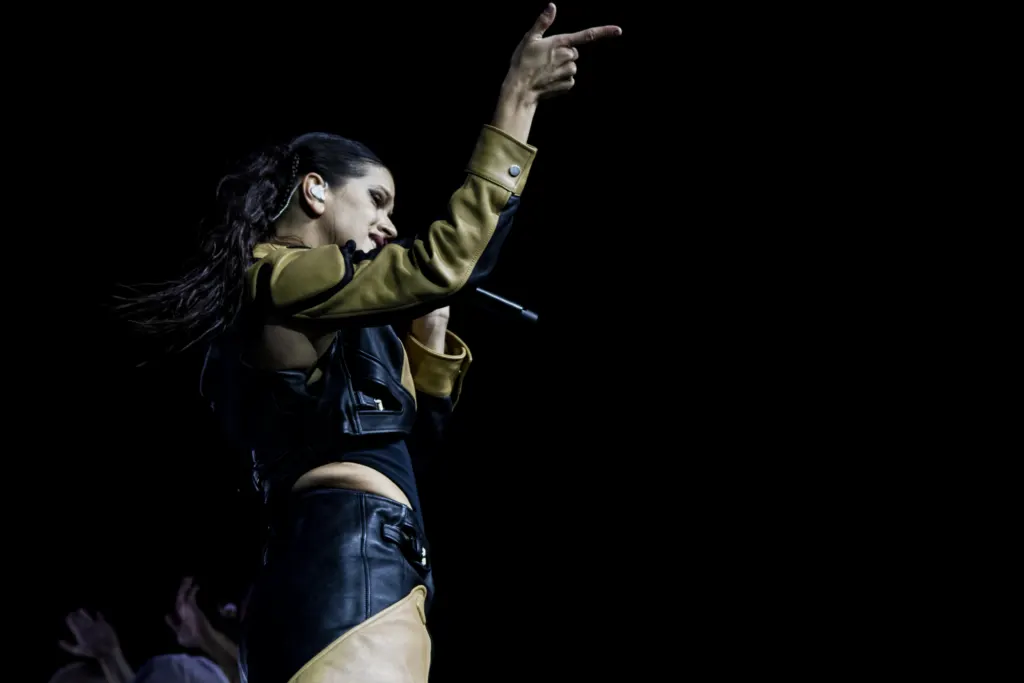
Rosalía walked out of the MGM Grand Garden Arena in Las Vegas on Thursday night, November 12, with Album of the Year at the 2026 Latin Grammy Awards for LUX (Complete Works). She opened the broadcast, then kept coming back to the stage.
The Latin Recording Academy’s official winners list shows the Spanish singer also took Song of the Year and Best Pop Song for “La Perla,” her collaboration with the Mexican-American group Yahritza y Su Esencia, plus Best Alternative Music Album for LUX. The ceremony’s public record puts her final count at five, the highest total of the night.
Rosalía opened the show, then swept the top categories
The Academy described her set as a “majestic opening performance.” According to the published running order, she sang three songs in a row: “La Rumba del Perdón,” “La Perla” and “Dios es un Stalker.” Few acts open an awards night and then collect its biggest prize, which is part of why her evening is the one fans are replaying today.
Her album faced a crowded field. Anitta, Karol G, Jorge Drexler, Silvana Estrada, Mon Laferte, Carín León, Milo J, Rawayana and the Argentine duo CA7RIEL & Paco Amoroso were all nominated against LUX for the evening’s top album prize.
The other headline award went elsewhere. Record of the Year belonged to the Argentine artist Milo J for “Niño,” and Aria Vega won Best New Artist.
Daddy Yankee’s career medley and a win with Bizarrap
Daddy Yankee arrived as the Latin Recording Academy’s 2026 Person of the Year, an honor Janet Jackson presented on stage. The Academy called his segment “a career retrospective,” and the guest list was enormous: Bizarrap, French Montana, Bad Gyal, Feid, Diljit Dosanjh, Jay Wheeler and LL Cool J all joined him.
The setlist moved through “Con Calma,” “Dura,” “Despacito,” “Lo Que Pasó, Pasó,” “Sonríele,” “Pokito” and LL Cool J’s “Mama Said Knock You Out” before landing on “Gasolina,” the 2004 single that introduced reggaeton to much of the world.
He did not leave empty-handed in the competitive categories either. “Daddy Yankee: Bzrp Music Sessions, Vol. 0/66,” his session with the Argentine producer Bizarrap, won Best Urban Song, a songwriting award shared by Santiago Alvarado, Bizarrap and Daddy Yankee.
Bobby Pulido wins Best Tejano Album
Further down the list, the Texas singer Bobby Pulido won Best Tejano Album for the live record “Bobby Pulido & Friends Una Tuya y Una Mía (Vol.2/En Vivo)”. He beat Kevin Aguilar, Destiny Navaira, Jay Pérez and Vilax. Tejano, the Texas-Mexican style built on accordion, bajo sexto and cumbia rhythms, has its own Latin Grammy category, and Pulido’s live collaborations project took it this year.
How the 2026 Latin Grammys night stacked up
For readers outside Latin music, a short guide to who won what in the categories people search for most:
- Album of the Year: LUX (Complete Works), Rosalía
- Record of the Year: “Niño,” Milo J
- Song of the Year: “La Perla,” Rosalía featuring Yahritza y Su Esencia
- Best New Artist: Aria Vega
- Best Urban Music Album: Tropicoqueta, Karol G
- Best Urban Song: Bizarrap and Daddy Yankee’s Bzrp session
- Best Tejano Album: Bobby Pulido
The voting window matters when reading this list. Only music released between June 1, 2025, and May 31, 2026, was eligible, so anything Rosalía or Daddy Yankee has put out since June will compete in 2027 instead. Members of the Latin Recording Academy, who are working artists, producers, songwriters and engineers, chose winners in 60 categories.
Puerto Rican actress Roselyn Sánchez hosted, her tenth time in the role. Univision carried the broadcast in the US, with streaming on Vix and HBO Max. For more awards-season music coverage, see our Entertainment section, including our look back at Silk Sonic’s Grammy-sweeping soul album An Evening With Silk Sonic.
The next stop on the calendar is the main Grammy Awards, where Latin categories sit alongside pop, rap and rock. Rosalía’s LUX has now won the Latin Recording Academy’s top prize and Best Alternative Music Album in the same night.
Further reading
Image: Andrés Ibarra, CC BY-SA 4.0 via Wikimedia Commons
This article was produced with AI assistance and reviewed by our Editorial Desk. How we work.