Ringo Starr did not drum on the version of “Love Me Do” that most of the world owns. On the Beatles’ debut album, Please Please Me, the drummer is a session player named Andy White, and Starr can be heard only as a tambourine rattling in the background.
The swap happened at EMI Studios on Abbey Road in London on September 11, 1962, when the band had been with its new drummer for barely three weeks. Starr later called the day devastating. Paul McCartney put it more bluntly: “George got his way and Ringo didn’t drum on the first single. He only played tambourine. I don’t think Ringo ever got over that.”
Three sessions, three drummers
The recording history of “Love Me Do” is unusual: the Beatles cut the song on three separate dates, and a different man sat behind the kit each time.
- June 6, 1962: Pete Best drums at the band’s first EMI session. Producer George Martin and his assistant Ron Richards judged his playing unfit for records. This take stayed in the vault until Anthology 1 in 1995.
- September 4, 1962: Starr, hired in August, drums on his first proper session. This take became the first pressing of the UK single, issued on October 5, 1962, on a red Parlophone label.
- September 11, 1962: Richards books Andy White, an experienced session drummer. Starr is handed a tambourine. White’s take, recorded on take 18, is the one used on the album, on later pressings and on the 1964 US single.
Starr had joined the group roughly two weeks before the September 4 date, so the September 11 remake came about 21 days into his time as a Beatle. Engineers and band members recalled that his timing sounded underrehearsed to Martin and McCartney, and producers of that era liked the bass drum to lock tightly with the bass guitar.
What Ringo said about it
Starr’s own account, given for the band’s Anthology project, recalled walking in expecting to play: “I came down ready to roll and heard, ‘We’ve got a professional drummer.'” Then: “I was devastated that George Martin had his doubts about me.”
He added that Martin “has apologised several times since,” before landing the line fans still repeat: “I hated the bugger for years; I still don’t let him off the hook!”
Richards remembered a quieter scene. “He just sat there quietly in the control box next to me,” he said, adding that he asked Starr to play maracas on the B-side, “P.S. I Love You.”
Martin’s memory differs. He has said he did not oversee any Beatles session on September 11, and his own telling places the session drummer at the earlier date. The account from Beatles historian Mark Lewisohn, backed by engineer Geoff Emerick and by White himself, puts White on September 11 with Richards in charge.
How to tell the two versions apart
The quickest test is your ears. If you hear a tambourine, you are listening to Andy White on drums. If there is no tambourine, Starr is drumming. That rule works because nobody played tambourine at the September 4 session.
The Starr take is on Past Masters, Mono Masters, the US Rarities album and the first red-label Parlophone singles. The White take is on Please Please Me, the 1964 Tollie single in America, and most compilations, including the original 1962-1966 and 1.
Even the session drummer did not fully fix the sound. Engineer Norman Smith later complained that “when you listen to the record now you can hardly hear the drums at all.”
A late win for the Starr take
The mix-ups never quite stopped. In October 2012, a 50th anniversary replica single meant to carry Starr’s drumming was pressed with White’s take by mistake, recalled, and reissued on October 22 with the correct version.
Then, on November 2, 2023, a new stereo mix of the Starr take appeared as the flip side of the “Now and Then” double A-side, and that single reached number one in the UK. That is 61 years after the September 1962 session where he first lost his place on the song, and the drummer who was benched finally topped the chart with his own take.
For more Beatles-era stories, read how PETA asked for the Liverpool house where Paul McCartney learned guitar to become a museum, and how a Monkees songwriter’s Different Drum became Linda Ronstadt’s first hit.
Further reading
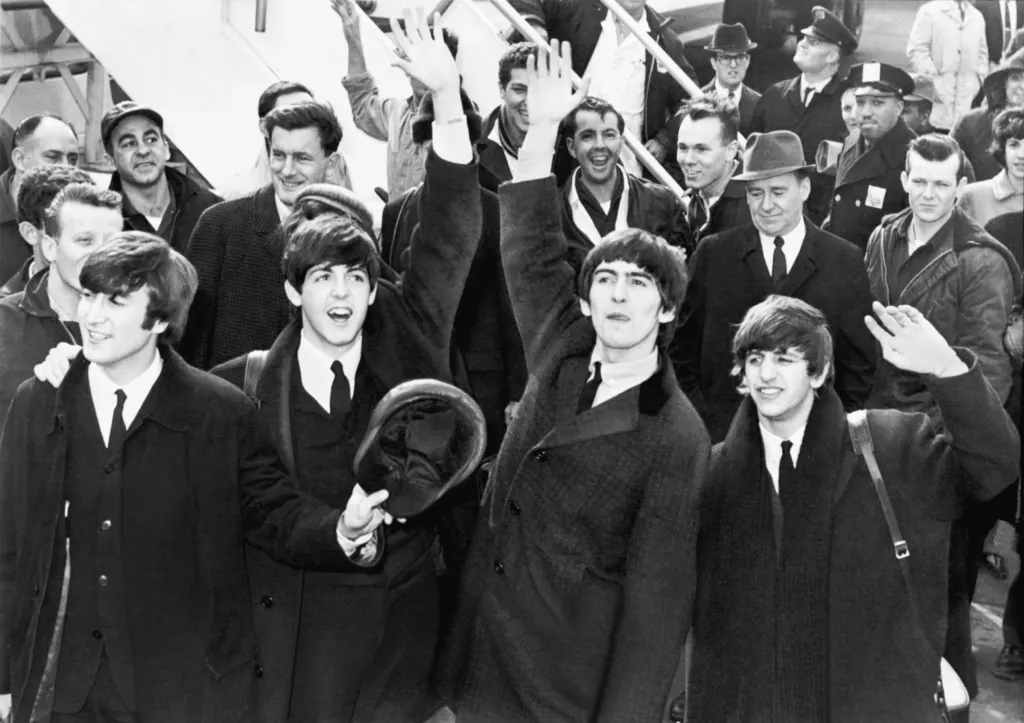
Image: United Press International, photographer unknown, Public domain via Wikimedia Commons
This article was produced with AI assistance and reviewed by our Editorial Desk. How we work.