In 1963 a Tanzanian schoolboy named Erasto Mpemba put a hot ice cream mix into a freezer during a cookery class and watched it set before a cooler batch did. More than 60 years later, physicists still argue over whether hot water can really freeze faster than cold, and why. The puzzle carries his name: the Mpemba effect.
The question that started it
Mpemba was a Form 3 student at Magamba Secondary School in what was then Tanganyika. Later, at Mkwawa Secondary School in Iringa, he got a chance to ask a visiting physicist, Denis Osborne of University College in Dar es Salaam, about it. His question, as recorded: “If you take two similar containers with equal volumes of water, one at 35 °C (95 °F) and the other at 100 °C (212 °F), and put them into a freezer, the one that started at 100 °C (212 °F) freezes first. Why?”
Osborne assumed the student had it wrong. Back at his lab, he tried it and found he could reproduce the result. The two published a joint paper in 1969.
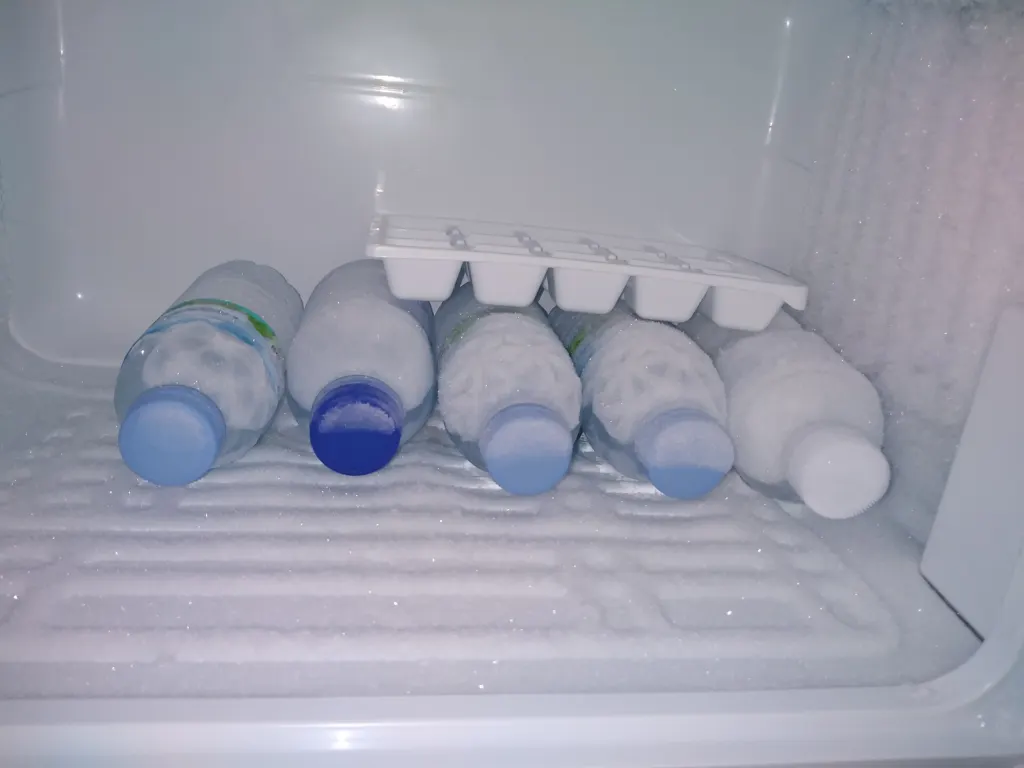
Their setup was simple: 70 milliliters of water in 100-milliliter beakers, set on polystyrene foam in the icebox of a home refrigerator. Freezing took longest to begin when the water started at 25 °C (77 °F) and much less time from about 90 °C (194 °F). They ruled out evaporation and dissolved air as major factors, and found that most heat escaped through the water’s surface.
An old idea with a new name
Mpemba was not the first to notice. Aristotle wrote that warmed water cools sooner, and that people who wanted cold water would first leave it out in sunlight. Francis Bacon and René Descartes made similar remarks. In 1775 the Scottish chemist Joseph Black found that previously boiled water froze faster than unboiled water, even with evaporation controlled, and that stirring changed the outcome.
Five explanations on the table
No single cause has won. Here is how the main candidates compare:
- Supercooling: water that starts cool tends to drop further below 0 °C before ice forms, which can delay freezing.
- Dissolved gas and minerals: boiling drives off gas and can drop out salts such as calcium carbonate, changing how the water behaves.
- Convection: warm water churns more, moving heat to the surface faster, until density effects below 4 °C slow that mixing.
- Frost: a hot container can melt the insulating frost under it and sit in better contact with the cold shelf.
- Hydrogen bonds: simulations suggest warm water holds small, strongly bonded clusters that may help ice crystals start.
Why many physicists stay skeptical
Results swing with the details. A 1995 study by David Auerbach found that hotter water sometimes began freezing first, but with large random variation. James Brownridge found the container itself mattered. In 2016 the researchers Burridge and Linden, timing how long samples took to reach 0 °C, concluded that “there is no evidence to support meaningful observations of the Mpemba effect.”
Others push back. A 2024 study of small droplets on a cooling plate, filmed with a thermal camera, found hot drops consistently froze faster, especially larger ones.
Beyond the freezer
The idea has outgrown the kitchen. Physicists now use a broader definition: a hotter system settling down faster than a colder one when both are plunged into the same chill. A “strong” version was shown in 2020 with a single colloidal particle, and in 2025 teams reported the effect in a single trapped ion and in cooling nuclear spins.
For a real-world look at extreme cold, read about Oymyakon, the coldest permanently inhabited village on Earth, or explore more physics explainers in the Badiyaa science section.
Further reading
Illustrative image. Image: Philsacor, CC0 via Wikimedia Commons
This article was produced with AI assistance and reviewed by our Editorial Desk. How we work.