The slow jam that rescued Marvin Gaye's career was born in a seaside apartment in Ostend, Belgium, on a drum machine most of the music business had already written off. "Sexual Healing," released on October 9, 1982, became the first US hit single to feature the Roland TR-808, and it gave Gaye the biggest record of his life.
Gaye needed it badly. He had walked away from Motown after 20 years, furious over how the label had released his album In Our Lifetime, and had moved to the Belgian coast in early 1981 to get his life back on track. He boxed at a local gym, went to church and plotted a comeback. In his own words, quoted in the Wikipedia history of the Midnight Love album: "I need a hit."
A cheap box with a big heartbeat
Columbia, which signed Gaye in March 1982, shipped instruments to Belgium, including the 808 and a Jupiter-8 synthesizer. Guitarist Gordon Banks figured out how to make the gear work, and Gaye took to it fast. The Roland TR-808's Wikipedia entry notes that he liked the machine because he could build music on his own, with no other players or producers in the room.
That choice looks inspired in hindsight. Roland sold fewer than 12,000 units before discontinuing the 808 in 1983, yet its booming kick drum went on to power more hit records than any other drum machine. On "Sexual Healing" the deep bass drum lands first, followed by crisp handclaps and hi-hats, all at a relaxed 94 beats per minute in E-flat major. Gaye's old mentor Harvey Fuqua whispers the opening chant, and the whole thing simmers rather than boils.
The title came from writer David Ritz, who was working with Gaye on a planned autobiography and told him he needed some "sexual healing." Ritz shares the songwriting credit with Gaye and keyboardist Odell Brown. The track was recorded at Studio Katy in Ohain, south of Brussels.
Ten weeks on top
The numbers were steamy too. According to the song's Wikipedia page, it debuted at No. 25 on the Black Singles chart on October 16, 1982, hit No. 1 just four weeks later, and stayed there for ten straight weeks, tying the record for the longest-running R&B No. 1 at the time. On the US Hot 100 it climbed to No. 3 on January 29, 1983, stuck behind "Down Under" and "Africa." It topped the charts in Canada and New Zealand and reached No. 4 in the UK.
The payoff:
- Two Grammy Awards in 1983, the only Grammys Gaye won in his lifetime.
- More than four million copies sold worldwide, his most successful single.
- Platinum for the 45 in the US, and a triple-platinum certification for the Midnight Love album.
The sound spread fast. The Isley Brothers borrowed the mellow-funk approach for Between the Sheets in 1983, and the song has since been covered by Soul Asylum, Max-A-Million and Sarah Connor, and reworked by Kygo into a 2015 tropical-house remix. Another Midnight Love session tape, the demo of "Turn On Some Music," later anchored Badiyaa's story on Erick Sermon's 2001 hit built on an unreleased Gaye vocal.
For more on the drum machine that started it all, read our look at Kanye West's 808s and Heartbreak and the Roland machine in its title, or how another Gaye duet became Method Man and Mary J. Blige's Grammy-winning hit.
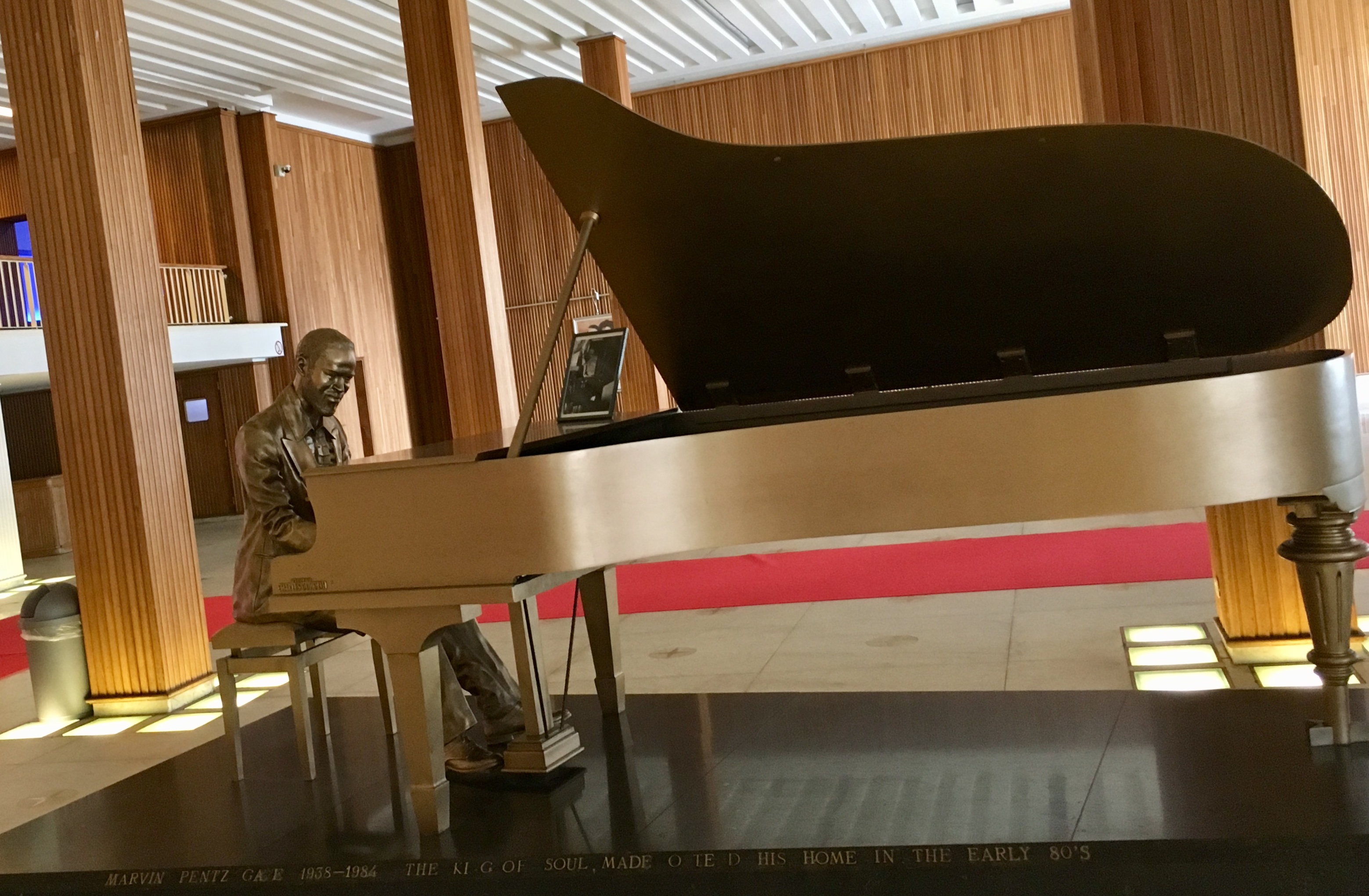
Ostend has not forgotten. A Wikimedia Commons photo of the Ostend statue shows his likeness standing inside the Casino Kursaal, the seafront hall where he played two shows in July 1981, months before he cut the record that put him back on top.
Sources
- Sexual Healing, Wikipedia, 2026
- Midnight Love, Wikipedia, 2026
- Roland TR-808, Wikipedia, 2026
- Marvin Gaye Oostende 01 (statue, Casino Kursaal), Wikimedia Commons, 2018
Image: Manuelarosi, CC BY-SA 4.0 via Wikimedia Commons
This article was produced with AI assistance and reviewed by our Editorial Desk. How we work.