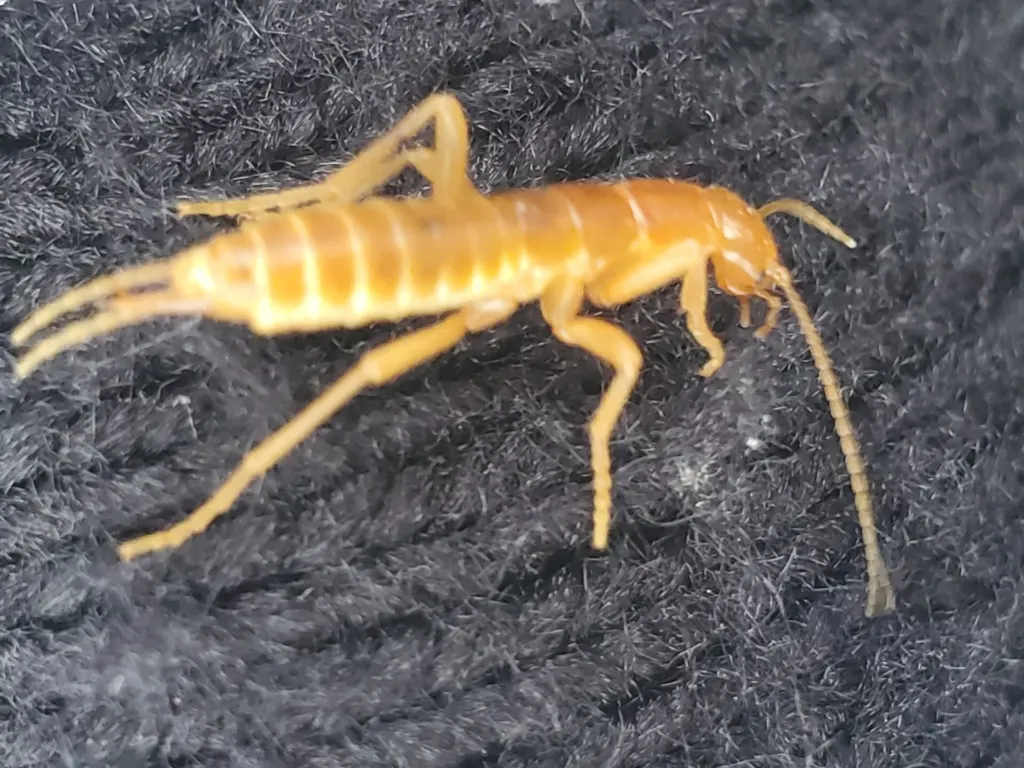
A University of Wyoming undergraduate found three ice crawlers, wingless insects from an order with only 35 described species, on rock glaciers in Yellowstone National Park this summer, after an entire 2025 field season of turning over rocks produced none. The finder, biology junior Will Anderson from Casper, Wyoming, collected two near Antler Peak in the park’s northwest corner in late June and a third near Grey Peak in July.
Three insects is a small number, but for this group it is a meaningful one. According to the taxonomic summary for the family Grylloblattidae, several North American ice crawler species are known from a single site, and the whole order lives only in scattered cold pockets of western North America, Siberia, Central Asia, Korea and Japan.
How two students searched 170 miles of rock glacier
Anderson worked alongside Audrey Lindsteadt, a third-year doctoral student who studies Yellowstone’s rock glaciers, meaning slow-moving tongues of ice buried under rock debris. The university says the pair covered about 170 miles (274 kilometers) on foot during this year’s surveys, lifting stones on top of the glaciers where the insects shelter by day.
The third find came by accident. Lindsteadt told the university that a mother grizzly and her two-year-old cub bluff-charged the pair, so they abandoned their planned route and climbed Grey Peak instead, sliding down to its two rock glaciers. A follow-up search of several glaciers in neighboring Grand Teton National Park in August found nothing, which itself says something about how patchy these populations are.
Anderson has provisionally identified the Yellowstone specimens as Grylloblatta campodeiformis, the most widespread ice crawler in North America, with known populations in Montana, British Columbia and Alberta. It was also the first species of the group ever named, described in 1914 from Sulphur Mountain in Alberta by the entomologist E. M. Walker.
Why a 1,500-meter elevation spread matters for an insect that dies when it freezes
The best physiological data on these insects comes from a 2015 study in the Journal of Insect Physiology led by Sean Schoville. His team measured cold and heat tolerance in five Grylloblatta populations separated by more than 310 miles (500 km) and spread across about 4,900 feet (1,500 m) of elevation. Despite being genetically distinct, all five had nearly identical, unusually narrow temperature limits, with little ability to toughen up through acclimation.
Two results stand out. The insects keep walking normally right up to the moment they freeze, and freezing kills them; summaries of the work put their supercooling point, the temperature at which body fluids turn to ice, at around 25 degrees Fahrenheit (-4 °C). That means they survive winter not by enduring extreme cold but by hiding under snow, which keeps the ground near freezing and steady. The authors concluded that a shrinking snowpack exposes ice crawlers to swings they cannot tolerate.
That is why a new record from Yellowstone’s high country is useful beyond the thrill of the find. A confirmed population gives researchers a fixed point to revisit as snow cover in the northern Rockies changes. Anderson made the same argument, saying ice crawlers can help scientists understand how these ecosystems work “and be more effective managers of them.”
What three specimens cannot tell us yet
The evidence so far is thin, and the student is open about it. The species identification is described as preliminary (“so far identified”), and nothing has gone through peer review. Three animals from two sites cannot show how many ice crawlers live in the park, whether the population is growing or shrinking, or whether it is isolated from colonies in Montana.
Basic biology is also missing. Ice crawlers are thought to be mostly scavengers of dead insects that fall back on plant material when carcasses are scarce, but Anderson kept two specimens alive briefly and could not tell whether they ate the dead insects and plants he offered. “Little is known of their diet when they are more permanently under the snow,” he said in the university’s account.
The next step is public. Anderson is due to present the findings at the Entomological Society of America’s 74th annual meeting in Columbus, Ohio, in November, and he is preparing a paper for a scientific journal. Hikers who turn over rocks on high snowfields should leave any pale, wingless insect where it is: the 2015 study found these animals cannot survive warming much above their cold microhabitat.
Further reading
Image: Shane Johnson, CC0 via Wikimedia Commons
This article was produced with AI assistance and reviewed by our Editorial Desk. How we work.