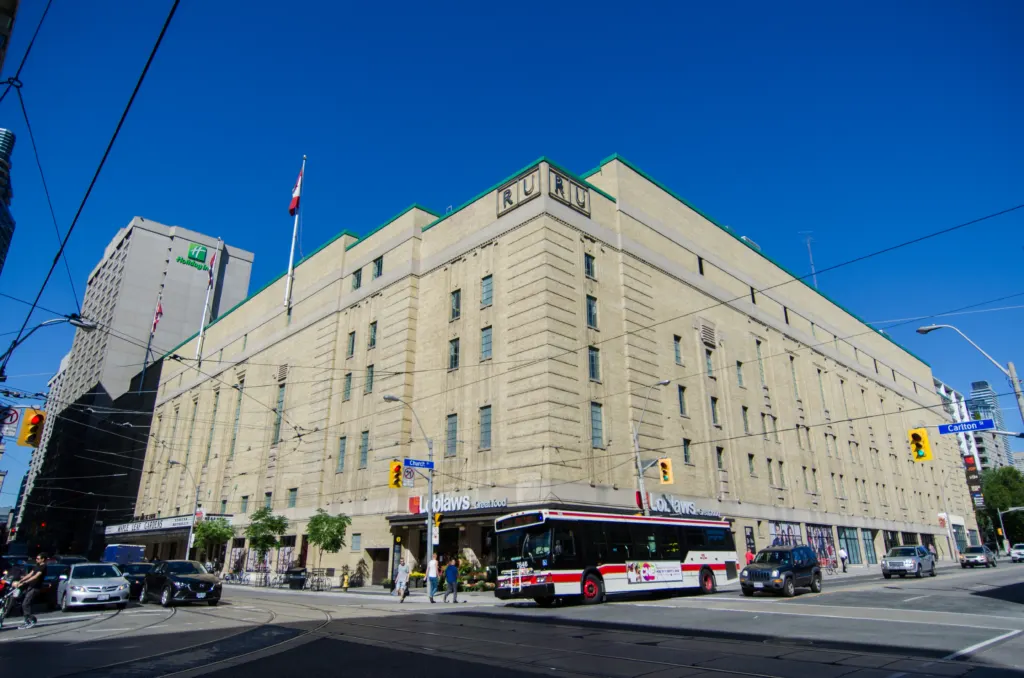
When the NHL ordered every team to put players’ surnames on the backs of their sweaters in 1977, Toronto Maple Leafs owner Harold Ballard found a loophole. He sewed the names on in blue letters on the blue road jerseys and in white letters on the white home jerseys, so nobody in the stands could read them.
His reason, as recorded in his published biography, was money: Ballard argued that names on jerseys would hurt sales of game programs.
Why programs mattered
Before names went on sweaters, a fan at Maple Leaf Gardens who wanted to know who wore No. 27 needed the printed roster. Readable names would make that purchase less necessary. The league had its own reason for the rule. It was competing with the rival World Hockey Association for fans and wanted players easier to identify.
Ballard’s matching-color trick technically put the names on the jerseys. It did not survive long. The league threatened a large fine, then fined him, and he finally switched to contrasting colors.
An owner who loved a stunt
The jersey episode fits a long pattern. Ballard joined the Leafs organization in 1940, became part-owner in 1961 and held majority control from February 1972 until his death in 1990. He shares in four Stanley Cups from the 1960s, and the Hockey Hall of Fame inducted him in 1977, the same year as the jersey fight.
A few other Ballard moments from the same era:
- In 1979 he fired coach Roger Neilson, then asked him back two days later on the condition that he wear a paper bag over his head behind the bench. Neilson returned without the bag.
- That August he had Foster Hewitt’s historic broadcast gondola thrown into an incinerator to make space for private boxes, even though the Hockey Hall of Fame wanted it.
- He had his own hand and footprints set in a concrete slab at center ice, which worsened the ice surface.
- While he owned the Hamilton Tiger-Cats football club, he briefly had their logo painted at center ice in place of the blue maple leaf.
Sold out, but losing
The finances explain the program fight. The Leafs sold out every home game from 1946 to 1999, according to the history of Maple Leaf Gardens, and frustrated fans of the Ballard years called the arena the Carlton Street Cash Box. That run held even as the team went 13 straight seasons without a winning record. With seats full regardless of results, he guarded side income such as programs, advertising and concession sales closely.
By the count in his biography, the Leafs managed only six winning seasons across his 18-plus years as majority owner. His Tiger-Cats did better, winning the Grey Cup in 1986, which makes Ballard one of seven people whose names appear on both the Stanley Cup and the Grey Cup.
Timeline
1961: Ballard joins Stafford Smythe and John Bassett in buying control of Maple Leaf Gardens from Conn Smythe. 1972: he becomes majority owner. 1977: the NHL’s name rule arrives, and the blue-on-blue protest follows. 1979: the Neilson paper-bag episode and the gondola. 1986: Grey Cup win with Hamilton. 1990: Ballard dies at 86.
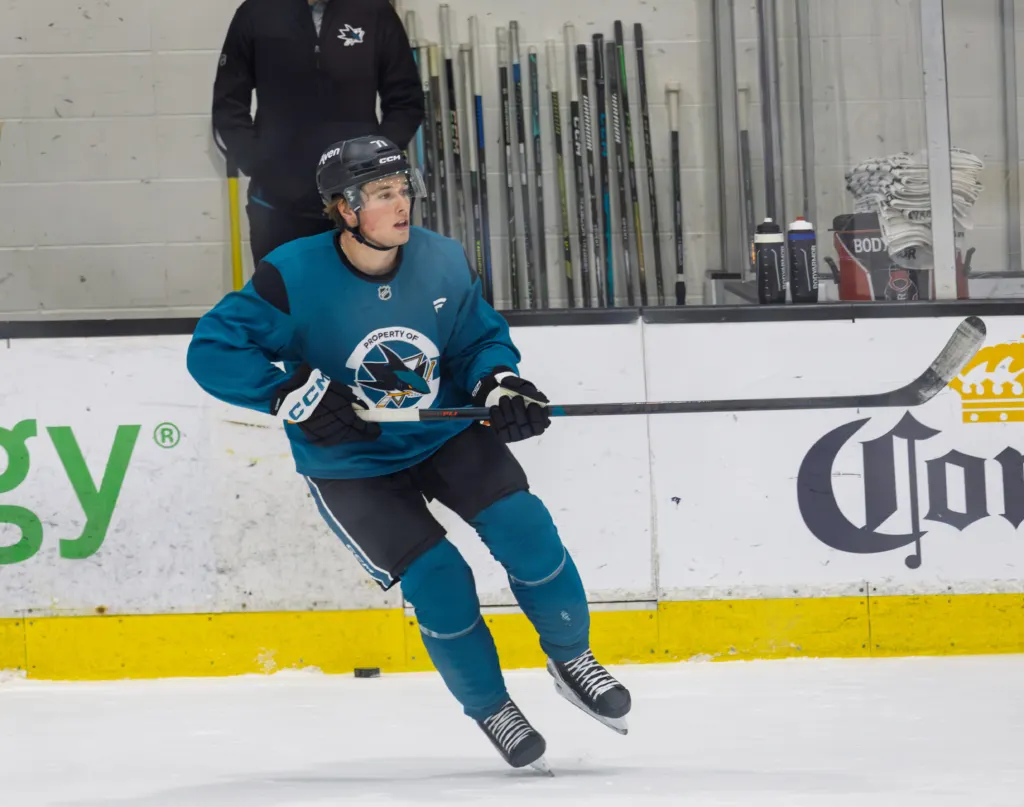
Today names on NHL sweaters are standard. The Gardens itself now houses a Loblaws supermarket and a university rink, and was named a National Historic Site of Canada in 2007. For a current NHL story, see our piece on San Jose Sharks captain Macklin Celebrini nearing 200 NHL points, and find more on our Sports page.
The fine he paid in 1977 bought the league what it wanted: names fans could read, in the opposite colors, from the next game on.
Further reading
Image: Jeff Hitchcock, CC BY 2.0 via Wikimedia Commons
This article was produced with AI assistance and reviewed by our Editorial Desk. How we work.