Google’s first Gemini glasses went on pre-order on November 12, and the company spent as much time on what the frames will not do as on what they will. If the outward-facing recording light is covered or tampered with, Google says sensors are designed to spot it and block photos and videos from being taken at all.
The Intelligent Eyewear collections were built with Warby Parker, Gentle Monster and Samsung. Warby Parker’s three styles, Alden, Reid and Wren, start at $395 in optical or sun versions. Gentle Monster’s six bolder designs start at $449. Pre-orders are open online and in stores, and Google says the glasses go on general sale in stores and online on December 10.
The privacy pitch, point by point
Shahram Izadi, Google’s vice president and general manager for XR, wrote that the company interviewed wearers, bystanders and privacy experts during years of glasses research. Bystanders, he said, worried most about being filmed without knowing it. His summary of the result: “privacy protections on glasses must cover both the person behind the lenses and those in front of them.”
The safeguards Google lists include:
- An outward-facing LED that lights up whenever a photo or video is saved to the gallery, with sensors meant to stop capture if the light is blocked.
- Automatic blurring of bystanders’ faces in camera frames before Gemini processes them.
- Camera visuals used by Gemini are not stored in Gemini History and, per Google, are not used to train AI models or target ads.
- Encryption on the glasses and in transit, per-app camera and microphone permissions, and a physical switch that turns the frames into ordinary glasses.
- Directional microphones so Gemini listens to the wearer’s voice rather than nearby conversations.
Google is also leaning on its own platforms. Before first use, wearers must promise to ask before filming others, to stay away from recording in sensitive locations and to leave the light uncovered, and Google says breaking those terms can get the glasses disabled. Google Play will not allow apps that identify faces in real time or live-stream the camera feed to social platforms, and Google’s shopping and ad policies ban products sold to hide recording lights.
What the glasses actually do
These are audio glasses with no display. Owners say “Hey Gemini” or tap the frame to ask about what they are looking at, get turn-by-turn walking directions in their ear from Google Maps, or hear speech translated across more than 70 languages. A 12-megapixel ultra-wide camera handles photos and video. Google puts the frames at around 41 grams, with battery life of up to nine hours and a case that can recharge them up to seven times.
A feature called Guided Vision gives spoken descriptions for people who are blind or have low vision, and a tie-up with Aira lets users stream the camera feed to a trained human interpreter. Both work only with Android phones at launch. The glasses pair with Pixel 7 and later, recent Galaxy S and Z models, and the iPhone 13 Pro and later.
Why Google is selling privacy first
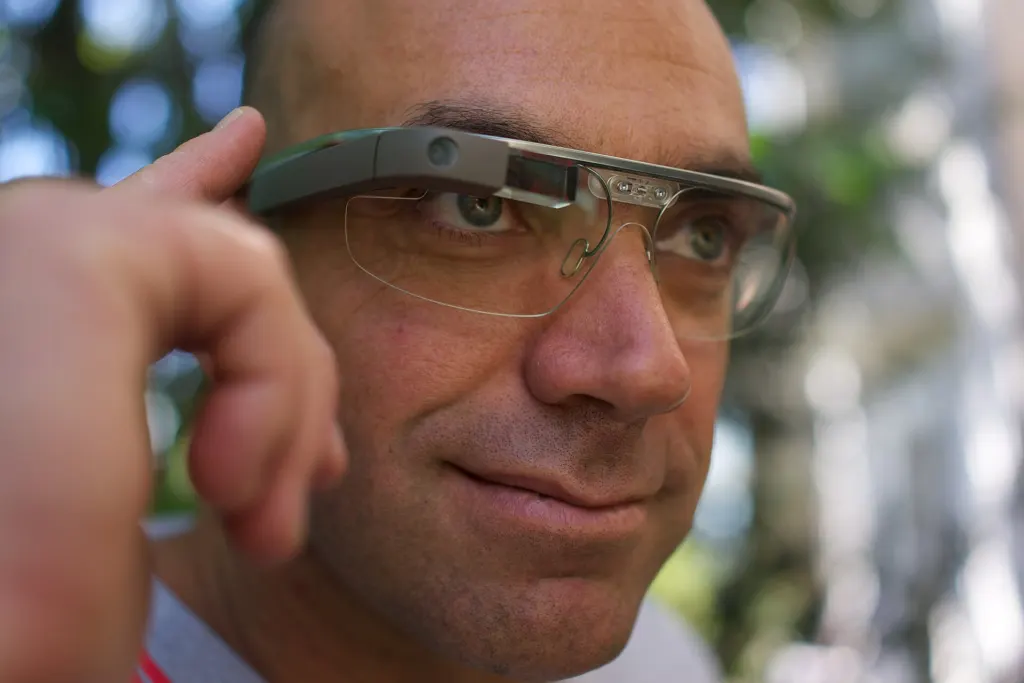
Google has been here before. Its Google Glass headset reached early buyers in 2013 and quickly became a byword for discomfort about hidden cameras in bars, cinemas and offices. Thirteen years later the camera is smaller and the assistant is far more capable, which makes the bystander question sharper, not softer. Leading the launch with an anti-tamper light and face redaction reads as a direct answer to that history.
There are limits worth knowing. The glasses work only with Google accounts from the United States and South Korea, and every account must belong to someone 18 or older. Face redaction applies to frames sent to Gemini; photos and videos a wearer chooses to save still land in their own gallery, with the light as the main signal to people nearby.
For more on how Google is building its Gemini models, see our story on Sergey Brin’s comments about Gemini helping build its successors, and our coverage of Anthropic’s Claude Fable and Mythos 5.2 release in the same AI race. Shipping starts December 10, when the first pairs reach buyers.
Further reading
Image: Loïc Le Meur, CC BY 2.0 via Wikimedia Commons
This article was produced with AI assistance and reviewed by our Editorial Desk. How we work.