When Electronic Arts told staff on Wednesday, October 21, that it was closing BioWare and its Edmonton, Alberta, office, the memo never mentioned Dragon Age: The Veilguard. Online, the 2024 role-playing game has become the main suspect anyway. The record EA itself has published supports parts of both popular explanations and settles neither.
What EA said about Veilguard
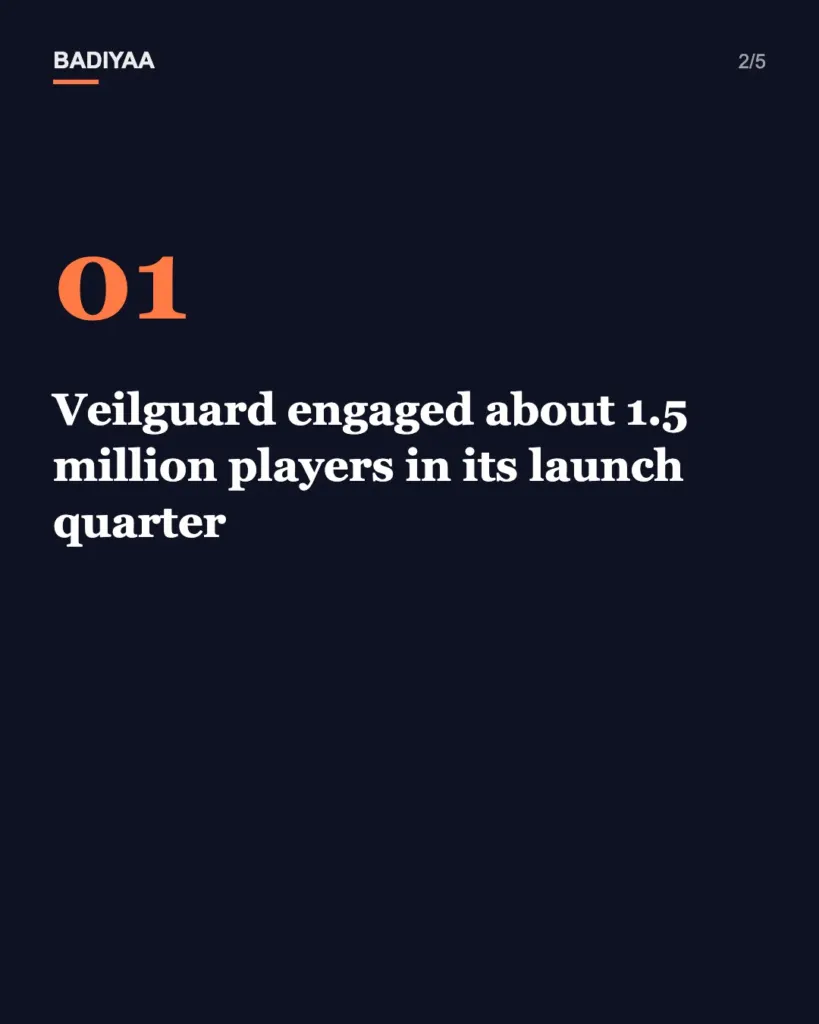
BioWare developed Veilguard and EA published it on October 31, 2024, for PlayStation 5, Xbox Series X/S and Windows PCs. Twelve weeks later, on January 22, 2025, EA cut its full-year outlook in a release filed with US securities regulators. “Dragon Age engaged approximately 1.5 million players during the quarter, down nearly 50% from the company’s expectations,” it said. Chief executive Andrew Wilson added that “Dragon Age and EA SPORTS FC 25 underperformed our net bookings expectations.”
Two details in that release matter. First, EA never defined “engaged,” so the 1.5 million is not a sales count and may include people who played through its EA Play Pro subscription. Second, the same release says its soccer series accounted for most of the cut to its live-services forecast, so Veilguard was one problem among several that quarter.
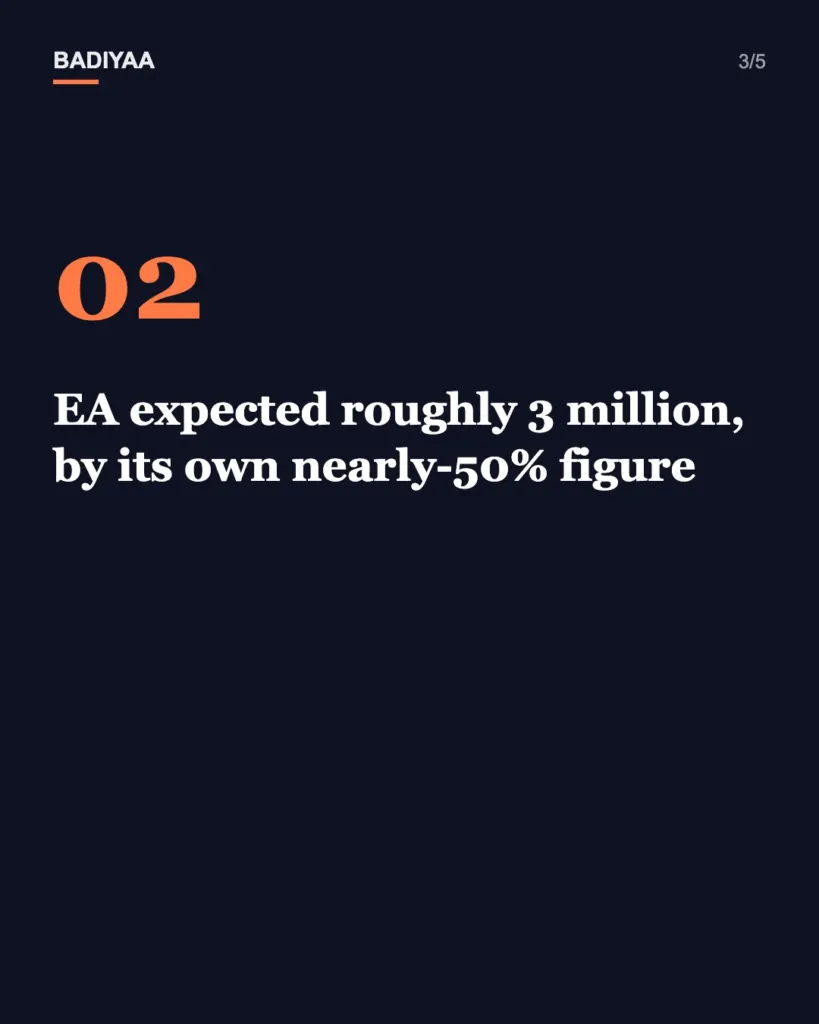
Working backward gives a sense of the target. If 1.5 million players was close to half of what EA planned, the forecast sat at about 3 million (1.5 million divided by 0.5). Because the miss was “nearly” 50%, not a full half, the real figure was probably a little below that, somewhere around 2.7 to 3 million.
The launch was not empty. Veilguard topped Steam’s global best-seller chart on release, passed 85,000 players at once on the PC store during its first weekend (a record for a BioWare game there), and opened at No. 7 in the UK and No. 6 in the US. Critics’ aggregate scores ranged from 76 to 85 out of 100 depending on platform.
The culture-war reading
One camp argues the game lost its audience over identity politics. Veilguard is the first BioWare game in which the player character can be transgender, and a central companion, Taash, is written as nonbinary. Some users flooded Metacritic with negative scores calling the game “woke,” and the site said it would remove reviews that broke its rules. People in this camp, whose view is often reduced to the slogan “go woke, go broke,” treat that user backlash and the sales miss as cause and effect.
The counterpoint inside the same data: user reviews on Steam, where reviewers must own the game, sat at “mostly positive,” and the game won GLAAD’s award for outstanding video game. Neither the backlash nor the praise comes with a measurement of how many buyers it moved.
The execution reading
The other camp blames how the game was made and what EA wanted from it. Its development history, documented in public reporting and summarized in open reference sources, is long and broken:
- Work began in 2015 under the code name “Joplin,” then stopped when staff were pulled onto Mass Effect: Andromeda and Anthem; Joplin was cancelled in October 2017.
- A 2018 restart, “Morrison,” initially had a live-service component built on Anthem’s code. That was dropped after Anthem disappointed, and the team reportedly had about 18 months to rebuild the game as a single-player title.
- Leaders changed repeatedly. Executive producer Mark Darrah left in 2020; creative director Matthew Goldman, his successor Christian Dailey and production director Mac Walters were all gone by early 2023, and about 50 BioWare staff were laid off that August.
Darrah, who came back as a consultant in 2023, has blamed the result on unreasonable expectations EA placed on the studio. EA’s own diagnosis also leaned toward design, not content: Wilson suggested its story games may need to reach “beyond the core audience” with “shared-world features and deeper engagement.”
Did the miss close the studio?
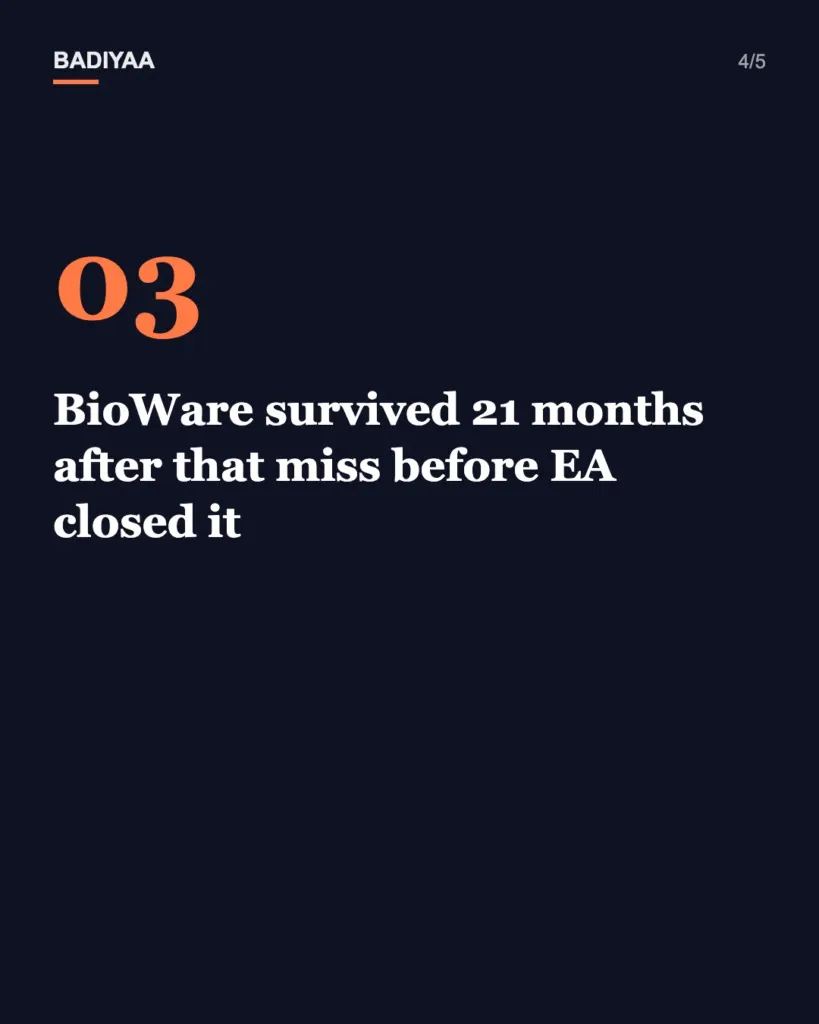
Veilguard’s miss had real consequences. In January 2025, EA restructured BioWare, which went from more than 200 people to fewer than 100, keeping a small team on the next Mass Effect. But the studio survived that cut for 21 months. The October 2026 memo blames the closure on something else: EA’s decision to focus on “larger opportunities” and stop early work on that Mass Effect game, about two months after a $55 billion buyout led by Saudi Arabia’s Public Investment Fund took the company private.
EA has never released Veilguard’s unit sales. Until it does, the only hard number either camp has is the one EA filed in January 2025: about 1.5 million players.
Further reading
- Badiyaa: EA closes BioWare in Edmonton after 31 years and cancels the next Mass Effect game
- Wikipedia: Dragon Age: The Veilguard
- Wikipedia: BioWare
- EA preliminary Q3 FY25 results (SEC filing)
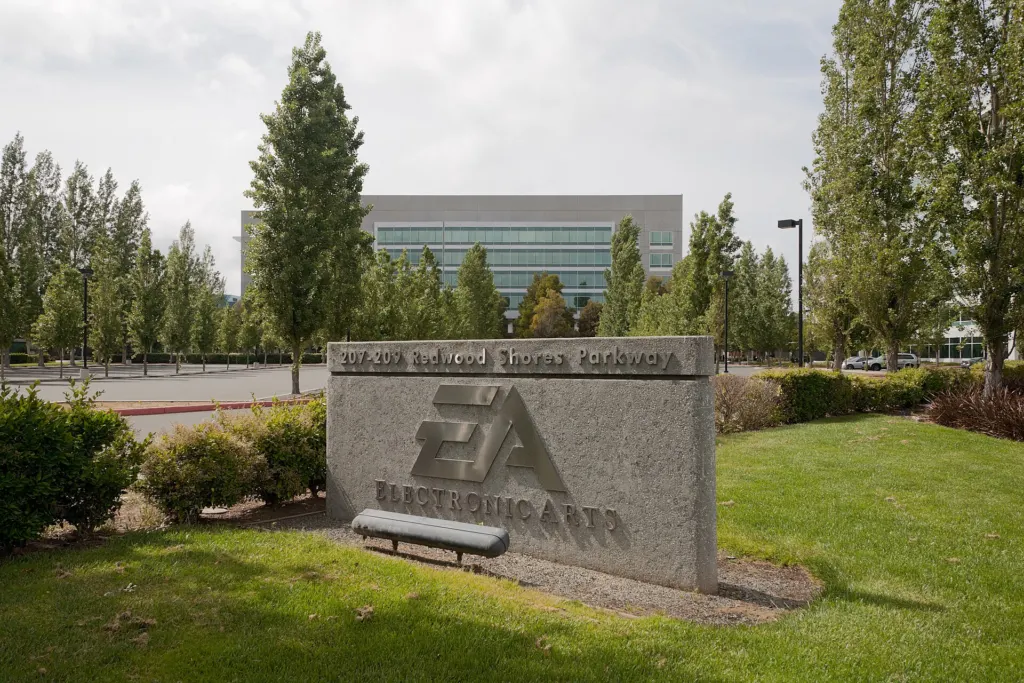
Image: King of Hearts, CC BY-SA 3.0 via Wikimedia Commons
This article was produced with AI assistance and reviewed by our Editorial Desk. How we work.
Spot an error? Help verify this story
The story in 5 slides