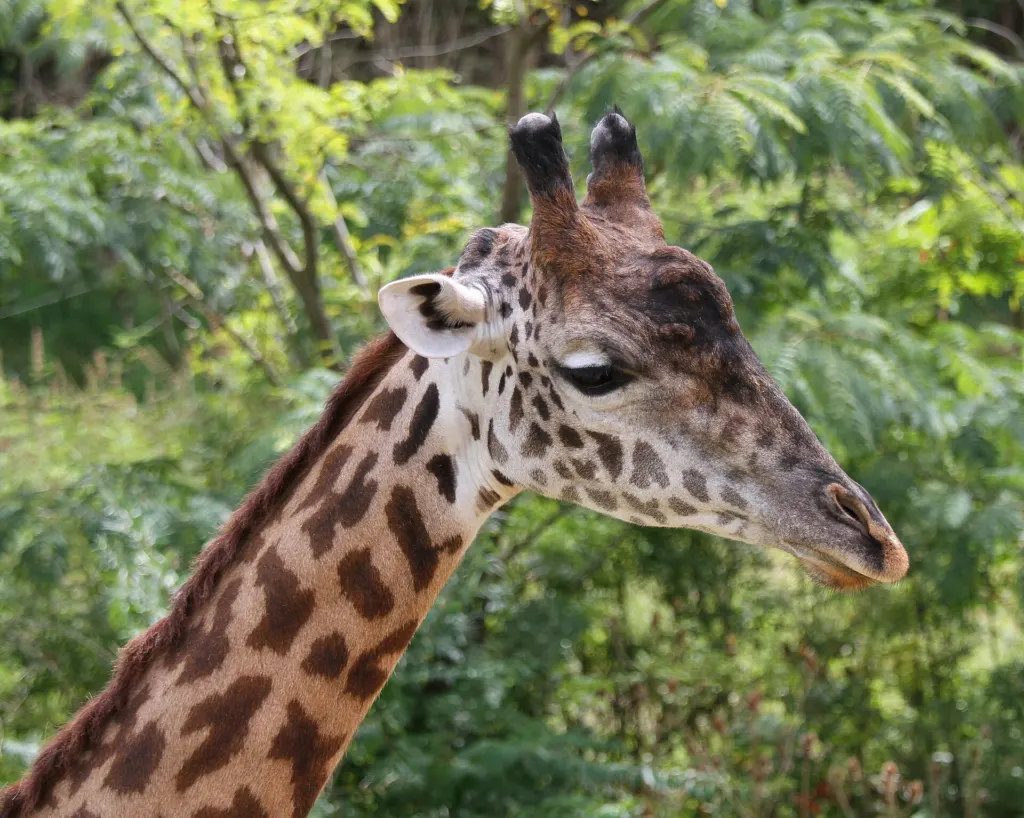
Two cameras have been trained on a 20-year-old Masai giraffe named Tessa at the Cincinnati Zoo & Botanical Garden in Ohio, and anyone with an internet connection can watch. The zoo is streaming her stall and yard on YouTube around the clock while it waits for her fifth calf, the first time in its history it has opened an animal birth to a live audience.
Zoo director Dave Jenike has said the calf could arrive any day and is likely to be Tessa’s last. As of Monday, October 19, the zoo was still waiting, and it had just swapped in a new link for the indoor stall camera.
Why a zoo would broadcast a birth
Jenike framed the decision as a conservation pitch rather than a ratings play. “Our hope is that [Tessa] will make that connection that will inspire people to care,” he said, adding that he wants viewers to “connect and care about the future of giraffes in the wild.”
The species gives him a case to make. Giraffes as a whole are listed as vulnerable on the IUCN Red List, the global register of threatened species, because of habitat loss, poaching, trophy hunting and war in parts of their range. Tessa’s own kind fares worse. Since a 2016 genetic study split giraffes into four species, the Masai giraffe of Kenya, Tanzania, Uganda and Zambia has been rated endangered, with roughly 32,550 left in the wild after a 52% fall in recent decades. Two labels, then, and the gap between them matters: the familiar “vulnerable” tag understates the position of the giraffe on screen.
Zoos are part of that picture. More than 100 Masai giraffes live in zoos accredited by the Association of Zoos and Aquariums in the United States, and the association’s Species Survival Plan, which manages breeding across member zoos, will decide where Tessa’s calf eventually lives. For now the herd stays in Cincinnati, where construction began this month on a new Giraffe Tower habitat in the former elephant house that Jenike says will let the zoo double the size of its giraffe herd.
The father is a male giraffe named Zeke. The zoo announced the pregnancy in March, and giraffe gestation runs 13 to 15 months. Badiyaa did the arithmetic: counting back 13 to 15 months from a mid-October due date puts conception somewhere between roughly mid-July and mid-September 2025, which is why keepers could narrow the watch only to “any day” rather than a fixed date.
What the zoo’s clip shows, and its limits
Alongside the live feeds, the zoo has posted short explainers on its own channel. The one embedded here, “Who’s Watching Tessa Overnight? Meet Our Giraffe Birth Watch Volunteers,” runs just over two minutes and introduces the people who keep an eye on the camera after hours. Staff and volunteers monitor the feeds 24 hours a day so the care team can be called in if labor starts at night.
That is the strongest part of the zoo’s approach. It shows the unglamorous labor behind a moment that will look effortless on screen, and it treats viewers as people who can learn what a pregnant giraffe looks like rather than as an audience waiting for a reveal. Cincinnati has form here: during Tessa’s previous pregnancy it became, by its own account, the first zoo to live-tweet a giraffe birth.
There are fair caveats. Births do not always go to plan, and Jenike has been candid about it. “We can’t ever predict the future, so we’ll be prepared if something … if we have to intervene or jump in,” he said. The zoo has said the cameras may be switched off at the care team’s discretion, so viewers should not count on seeing every minute. And the stream is also a fundraiser: the zoo is selling $20 giraffe adoptions, and one adopter will win the right to name the calf. Paying to name an animal is a long-standing zoo model, but it is worth seeing the stream for what it is, part education, part campaign.
None of that takes away from the basic appeal. A calf from one of the world’s tallest animals, born to a mother who has delivered four healthy calves before, is a rare thing to see live.
How to follow along
- The indoor stall and outdoor yard feeds both run on the Cincinnati Zoo’s YouTube channel.
- The zoo plans to post updates on its social media accounts when labor begins.
- Naming rules for the adoption lottery will be posted on the zoo’s website after the birth.
Once the calf arrives, it will join a herd at the start of a building project designed to give Cincinnati room for twice as many giraffes as it has today.
Further reading
Image: Greg Hume, CC BY-SA 3.0 via Wikimedia Commons
This article was produced with AI assistance and reviewed by our Editorial Desk. How we work.