Twenty years after its monster first crawled out of Seoul’s Han River, Bong Joon Ho’s The Host is heading back to American cinemas in a new 4K restoration. Magnolia Pictures, the same company that first released it in the US in 2007, lists the film in theaters on November 21 and November 23, with a digital release following on November 30.
The screenings come with an exclusive conversation with Bong, the Oscar-winning director of Parasite, according to Magnolia’s announcement of the restoration. The studio’s October announcement had given November 20 as the opening; its own site now lists the two dates above.
The film that made Bong a global name
The Host stars Song Kang-ho as Park Gang-du, a dozy snack-bar worker by the river whose teenage daughter, played by Go Ah-sung, is snatched by an amphibious creature. Byun Hee-bong, Park Hae-il and Bae Doona play the father, brother and sister who break out of a government quarantine to hunt for her.
It was Bong’s first movie with visual effects, and his budget was tight. Of roughly $11 million, about $4.5 million went on more than 100 effects shots handled by the American studio The Orphanage, with New Zealand’s Wētā Workshop modeling the creature. The opening scene drew on a real February 2000 case in which an American civilian at a US military mortuary in Seoul ordered some 470 bottles of formaldehyde poured down a drain feeding the Han.
A 20-year timeline
- May 21, 2006: an unfinished cut premieres in the Directors’ Fortnight at Cannes.
- July 27, 2006: South Korean release on a then-record 620 screens; it ends its run with 13,019,740 admissions and becomes the country’s top-grossing film.
- March 9, 2007: Magnolia opens it in the United States.
- 2011: a 3D remaster premieres at the Busan International Film Festival.
- 2019: a long-planned sequel, The Host 2, is reported canceled; a Universal remake announced in 2008 never reached cameras.
- 2024: a 10-meter sculpture of the monster is removed from Hangang Park after locals complained about it.
- November 2026: the 4K restoration returns to US theaters.
Small in America, huge everywhere else
The numbers explain why a theatrical return matters. Box office trackers put the film’s take in the US and Canada at about $2.2 million, against a worldwide total of roughly $89 million to $93 million. Using $90 million as a midpoint, North America supplied only about 2.4% of the money. Many American fans found it later on DVD, which arrived in July 2007, and then streaming.
Its influence ran far beyond those ticket sales. The writers of A Quiet Place have credited it, the director of Kong: Skull Island cited its early, in-daylight reveal of the monster, and in March 2025 Takashi Yamazaki told Bong that The Host had inspired him. Yamazaki’s own sequel just set a record in North America, as covered in our report on Godzilla Minus Zero’s record opening weekend.
The filmmakers behind Netflix’s KPop Demon Hunters, Maggie Kang and Chris Appelhans, have also named The Host’s tone as an influence; Kang chose it for a screening at the 30th Busan festival. Their film’s reach is still growing, as our piece on Netflix’s official Golden dance video shows.
Viewers in the early 2020s also found the film newly pointed: its government-declared virus, quarantines and face masks played very differently after COVID-19. The restored version runs 119 minutes and is rated R, and it reaches digital platforms on November 30.
Further reading
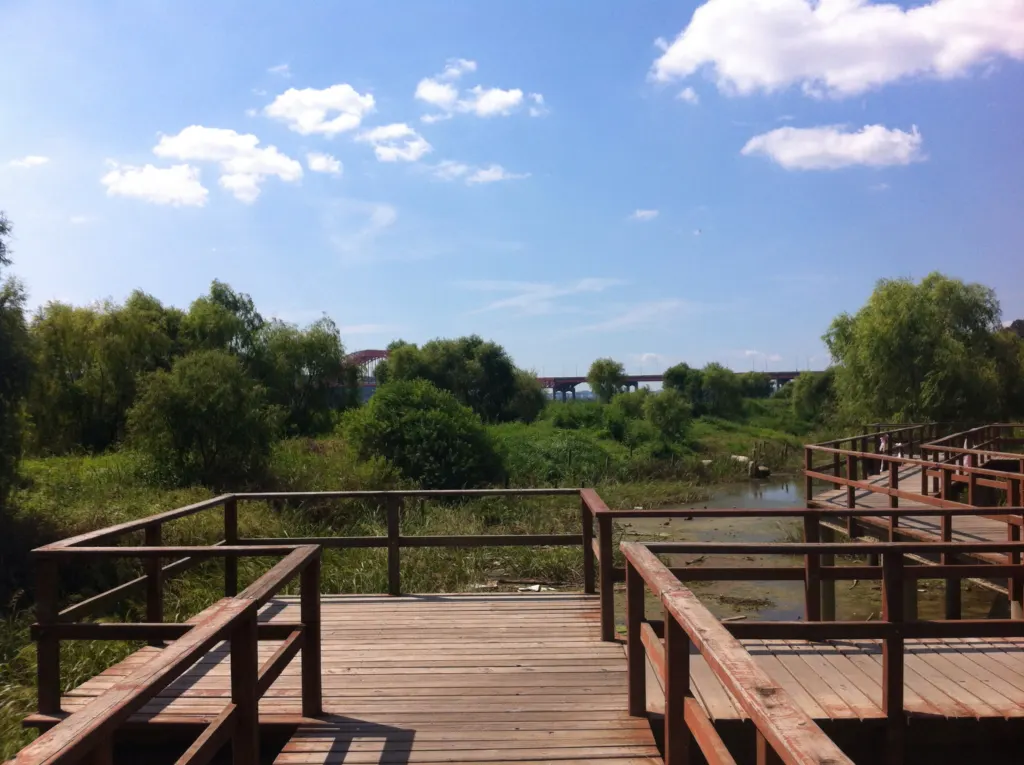
Illustrative image. Image: Michael Sean Gallagher, CC BY-SA 2.0 via Wikimedia Commons
This article was produced with AI assistance and reviewed by our Editorial Desk. How we work.